










Do You Have To Clean Breast Milk Storage Bags?
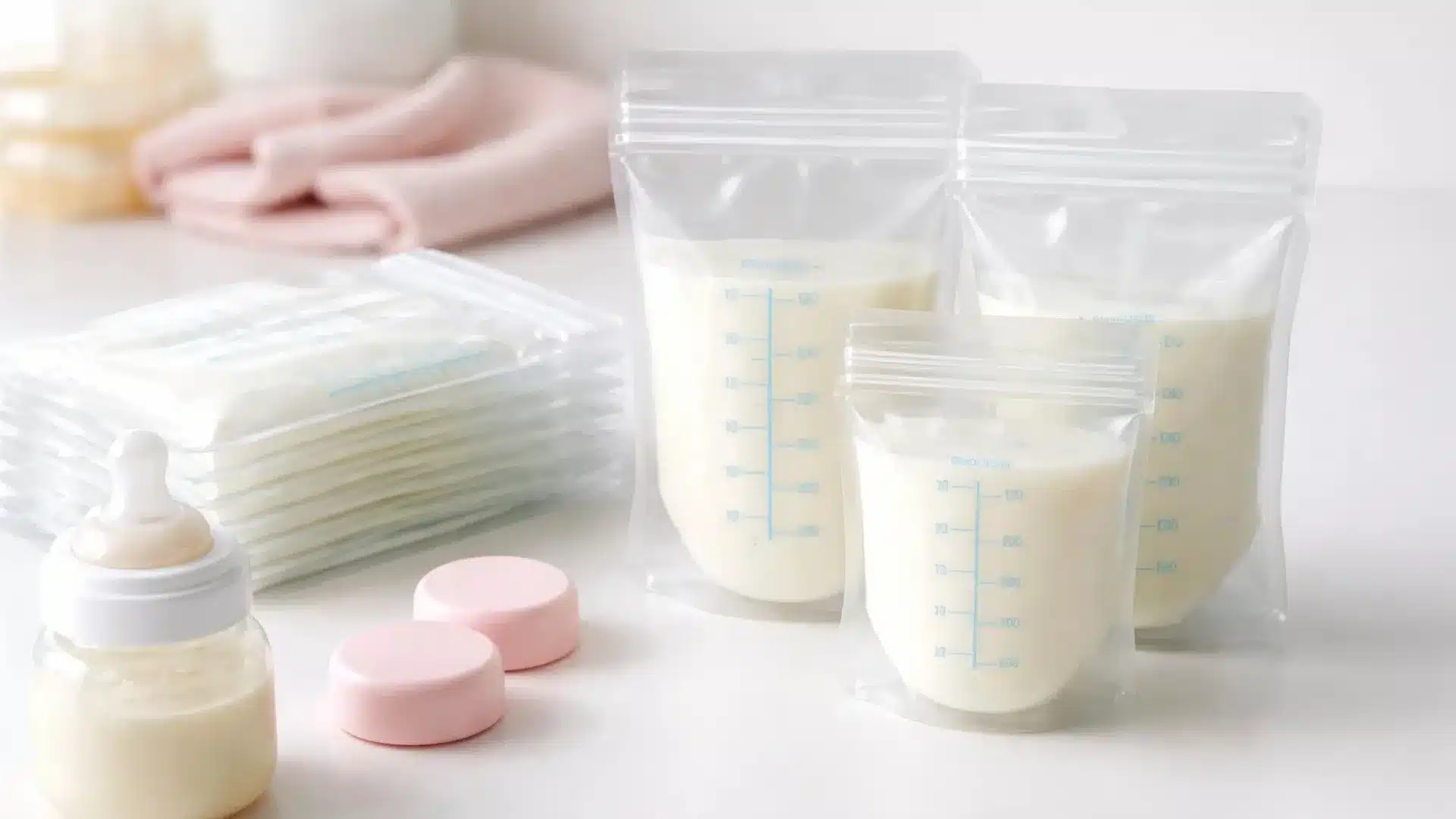
Storing breast milk requires careful attention to ensure it stays safe and uncontaminated. You’re pouring out your energy, and the idea of contamination or spoilage can make you anxious every time you reach for a storage bag.
Research from the Journal of Translational Medicine shows that proper cleaning of pumping and storage equipment significantly reduces harmful bacteria, keeping breast milk closer to sterile conditions and safer for your baby.
This highlights that cleanliness isn’t optional when you want to protect your baby’s health without turning storage into a stress spiral. In this blog, we will explain do you have to clean breast milk storage bags, when cleaning or sterilizing is needed, and how to safely handle and store milk.
Key Takeaways
- Single-use breast milk storage bags are pre-sterilized and should not be washed or reused.
- Reusable storage bags must be cleaned properly according to the brand instructions.
- Opened, damaged, or contaminated bags should always be discarded.
- Proper handling and correct storage times help keep breast milk safe.
- Insurance-covered pumps and supplies can support safer, more affordable milk storage.
Do You Have To Clean Breast Milk Storage Bags Before Use?
If you’re using pre-sterilized, single-use breast milk storage bags, you can use them straight out of the package. There’s no washing, rinsing, or extra prep needed on your end.
Here’s what makes them safe to use as-is:
- They’re factory-sterilized and sealed in a controlled environment
- They’re meant for one-time use, so cleanliness is built in
- They stay sterile until you open them
The only thing to double-check before pouring in your milk is the bag itself. If the seal is intact and the packaging is dry and undamaged, you’re good to go. If a bag looks torn, wet, or already opened, it’s best to grab a fresh one.
This setup exists for a reason: it removes extra steps for you and reduces the chance of contamination when you’re already doing a lot.
Understanding the emotional and practical reasons behind this question can make the answer feel more reassuring.
Why Moms Often Wonder If Breast Milk Storage Bags Need Cleaning
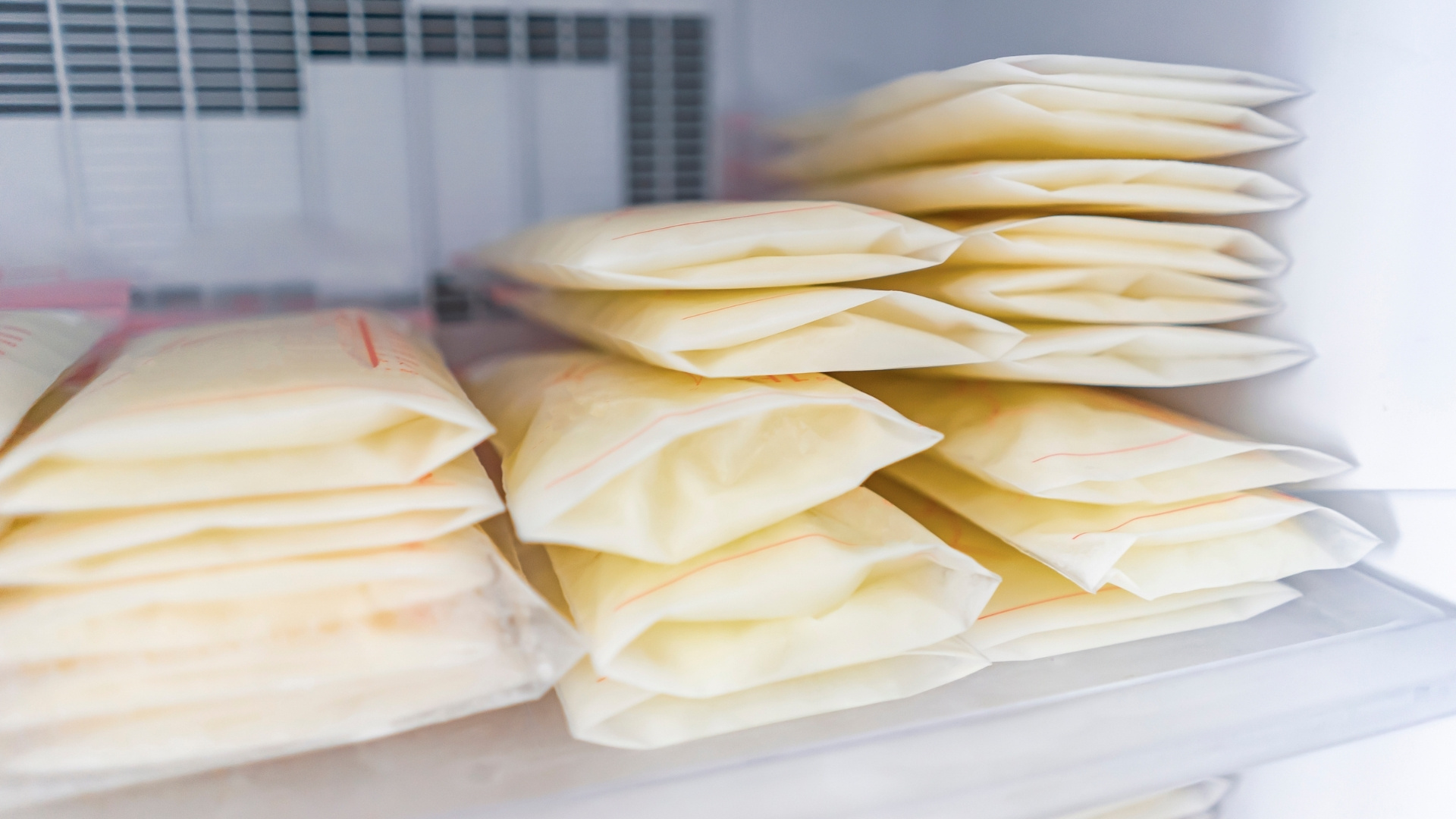
Do you have to clean breast milk storage bags? If this question crossed your mind, it didn’t come out of nowhere. It usually shows up after a long day, when you’re tired and just want to be sure you’re not missing something important.
A few very real reasons this doubt is so common:
- Pumping takes time, patience, and energy. When something requires that much effort, it’s natural to want to protect it.
- You hear “sterilize everything” a lot. Bottles, pump parts, pacifiers, the message is everywhere, so it’s easy to assume storage bags fall into the same category.
- Advice comes from all directions. A social post says one thing, a relative says another, and suddenly you’re left second-guessing yourself.
Pausing to ask this question doesn’t mean you’re unsure or inexperienced. It means you’re paying attention and making thoughtful choices for your baby, and that’s exactly what careful parenting looks like.
Also read: How to Get Free Enfamil Formula for Premature Babies.
The next step is knowing that not all breast milk storage bags are designed to be handled the same way.
What Types Of Breast Milk Storage Bags Require Cleaning
Not all breast milk storage bags are made the same, and that’s where most of the confusion starts. Some bags are designed to be used once and tossed, while others are meant to be washed and reused over time.
Knowing which category your bag falls into helps you avoid unnecessary steps while still keeping milk safe for your baby. Instead of treating every bag the same, it’s more helpful to look at how it’s made and how it’s intended to be used.
Below, we’ll break down the most common types of breast milk storage bags and what each one needs from you before and after use.
Pre-Sterilized, Single-Use Breast Milk Storage Bags
These bags are made for convenience and safety, especially on busy days when you don’t have extra time or mental space. They come ready to use straight from the package and are meant to support your routine, not complicate it.
What to know about them:
- They’re intended to be used once, then discarded.
- There’s no prep step needed before filling them.
- Once milk has been stored, the bag’s job is done.
Attempting to wash or reuse these bags may compromise their integrity and increase the risk of leaks or contamination. Using them as intended ensures safety.
Using the right pump can make milk handling easier and safer. Insurance Covered Breast Pumps (ICBP) helps you get a medical-grade, insurance-covered pump delivered straight to your home, so your milk stays safe from the start.
Reusable Or Silicone Breast Milk Storage Bags
These bags are built to stick around, which means they need a little more attention between uses. Think of them as part of your feeding tools rather than disposable supplies.
Here’s how to care for them properly:
- Give them a thorough wash before the first time you use them.
- Clean them again after every use with hot water and a gentle dish soap.
- Check the brand’s care instructions; some recommend an added sanitizing step, especially for younger babies.
Regular cleaning prevents residue buildup and ensures that stored milk remains fresh and safe.
Pump-Compatible Or Direct-Pump Storage Bags
These bags are designed to connect straight to your pump, which can make milk transfer easier and reduce spills. Because they interact with pump parts, their care instructions can be a little more specific.
A few things to keep in mind:
- Cleaning needs may differ depending on how the bag attaches to your pump.
- Some components may be reusable, while the bag itself is not.
- Manufacturer instructions matter here, since both the pump and the bag play a role in how milk flows and is stored.
Taking a moment to check the guidance for each product helps ensure everything works together safely and as intended.
Also read: Everything You Need to Know About Ameda Pumps
Even when you’re using the right type of bag, certain situations call for extra caution.
When You Should Clean Or Discard A Breast Milk Storage Bag
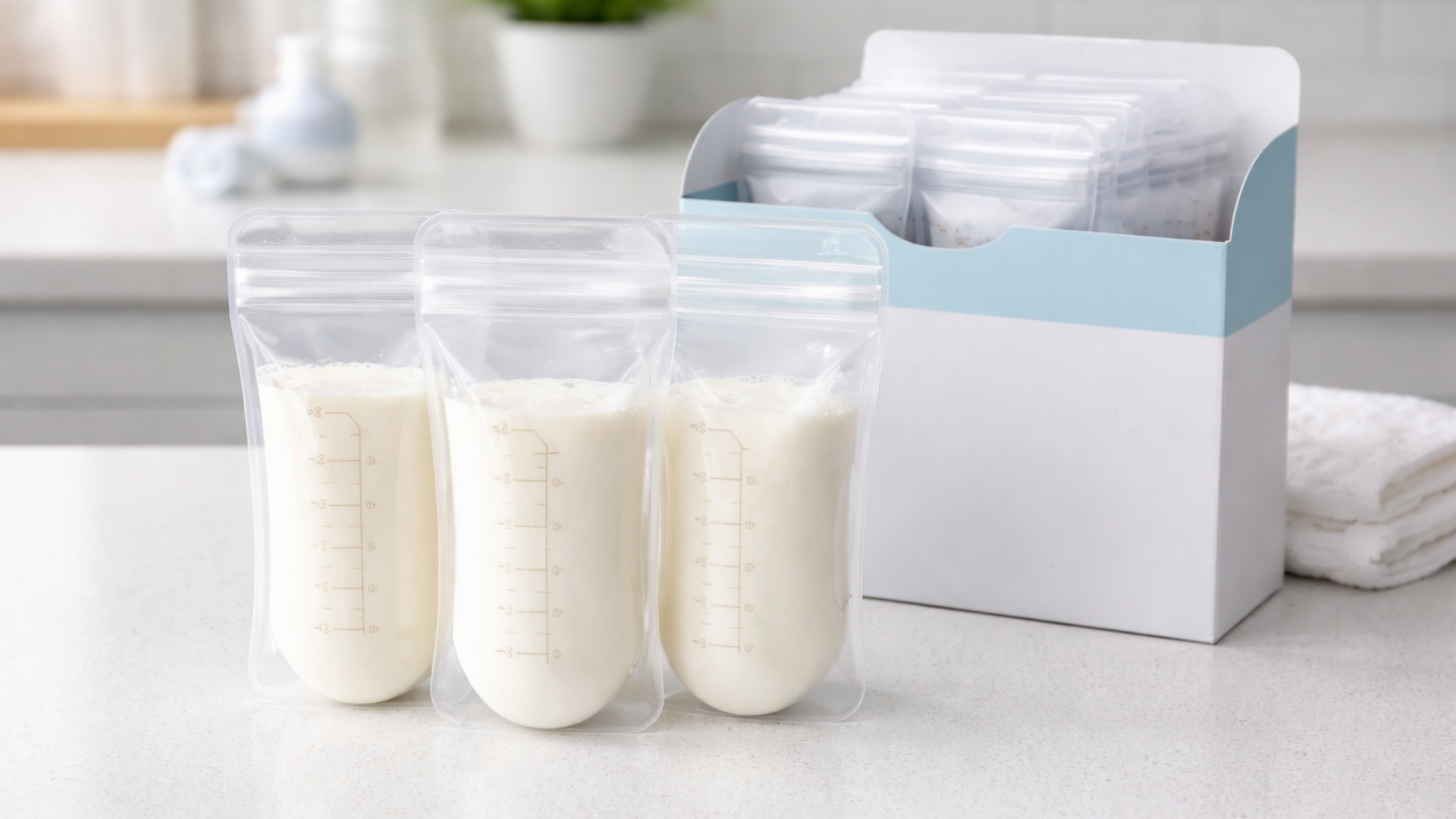
Most of the time, things go smoothly. But every now and then, a bag ends up in a gray area where it’s worth stopping and reassessing. When that happens, choosing safety over saving a bag is the better call.
It’s best to clean or discard a bag if:
- The bag was already opened or resealed. Once that seal is broken, it can’t offer the same level of protection.
- The inside of the bag was touched; even clean hands can introduce bacteria without you realizing it.
- The packaging looks torn, wet, or damaged; moisture or air exposure can compromise cleanliness.
- The bag fell onto an unclean surface, especially if it landed open or partially open.
- For premature or medically fragile infants, extra precautions are recommended to reduce potential risks.
Once you know when a bag is safe to use, proper handling helps keep it that way.
How To Safely Use Pre-Sterilized Breast Milk Storage Bags
Once the bag is ready to use, focus on maintaining hygiene during milk transfer. A few mindful steps can go a long way.
Follow this simple flow:
- Start with clean, dry hands so you’re not carrying anything extra into the process.
- Open the bag only when you’re ready to pour to limit exposure to air.
- Keep fingers away from the inside of the bag and the opening.
- Pour slowly and seal firmly, pressing along the closure to make sure it’s fully closed.
- Write the date and time right away so there’s no guesswork later.
For storage, a couple of small habits help protect milk quality:
- Lay bags flat when freezing to save space and allow even freezing.
- Place them toward the back of the freezer, where temperatures stay more stable.
Also read: How Breastfeeding Affects Fertility
Reusable options follow a different routine, and consistency matters most here.
Step-by-Step Cleaning Routine for Reusable Breast Milk Bags
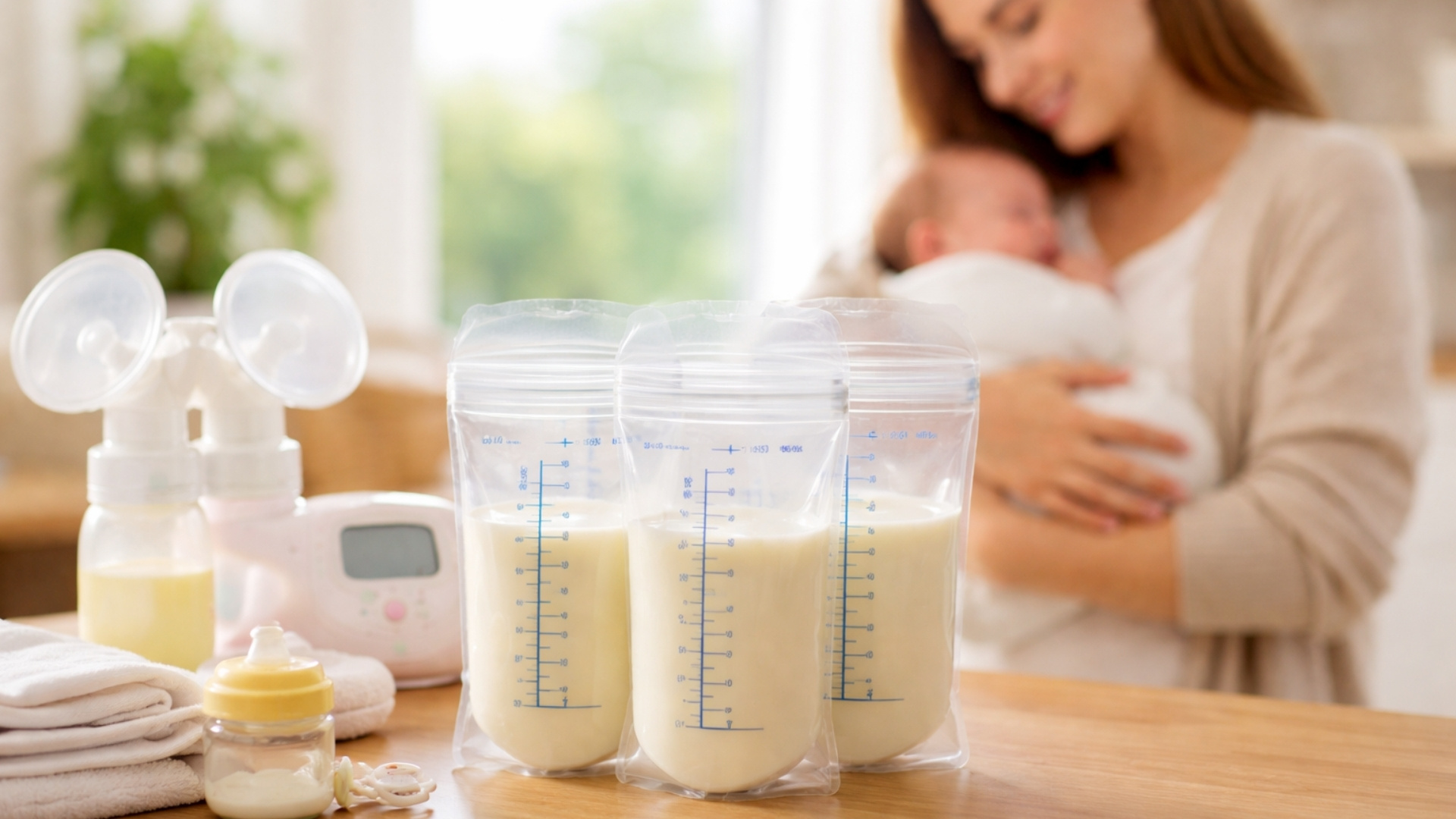
Reusable milk storage bags need a consistent cleaning routine, so they’re ready each time you reach for them. Instead of guessing or overcomplicating things, sticking to a simple sequence keeps the process manageable and effective.
Think of it as a reset after every use:
- Start with a cool rinse to remove leftover milk and prevent residue from sticking.
- Wash using hot water and a mild dish soap, focusing on seams and corners.
- Use a dedicated brush that’s reserved only for feeding items.
- Rinse thoroughly so no soap remains behind.
- Let the bag air-dry fully, keeping it open so moisture doesn’t get trapped.
Once the bag is clean and dry, there may be additional care steps depending on the material or brand. The next section covers when and how extra sanitizing methods come into play.
Can You Use a Dishwasher or Sterilizer? What Moms Should Know
Some reusable milk storage bags are dishwasher-safe, but this depends on the manufacturer’s instructions. Before tossing anything into an appliance, it helps to know what’s actually safe for that specific bag.
Here’s how to think about it:
- Some bags can be washed in the dishwasher, typically on the top rack and away from high-heat drying.
- Steam sterilizers are sometimes recommended for added protection, especially for younger babies or during early use.
- Brand instructions matter most; materials, seals, and closures can react differently to heat.
Keeping your storage bags and pump parts ready for use is easier with ICBP. ICBP helps you get insurance-covered milk storage bags, tubing, and other replacement supplies so you never run out of essentials.
Taking a moment to follow the manufacturer’s care guidance helps the bag last longer and keeps it performing the way it should. Clean storage is only half the equation; how long milk is stored also plays a key role in safety.
How Long Can You Safely Store Breast Milk at Different Temperatures
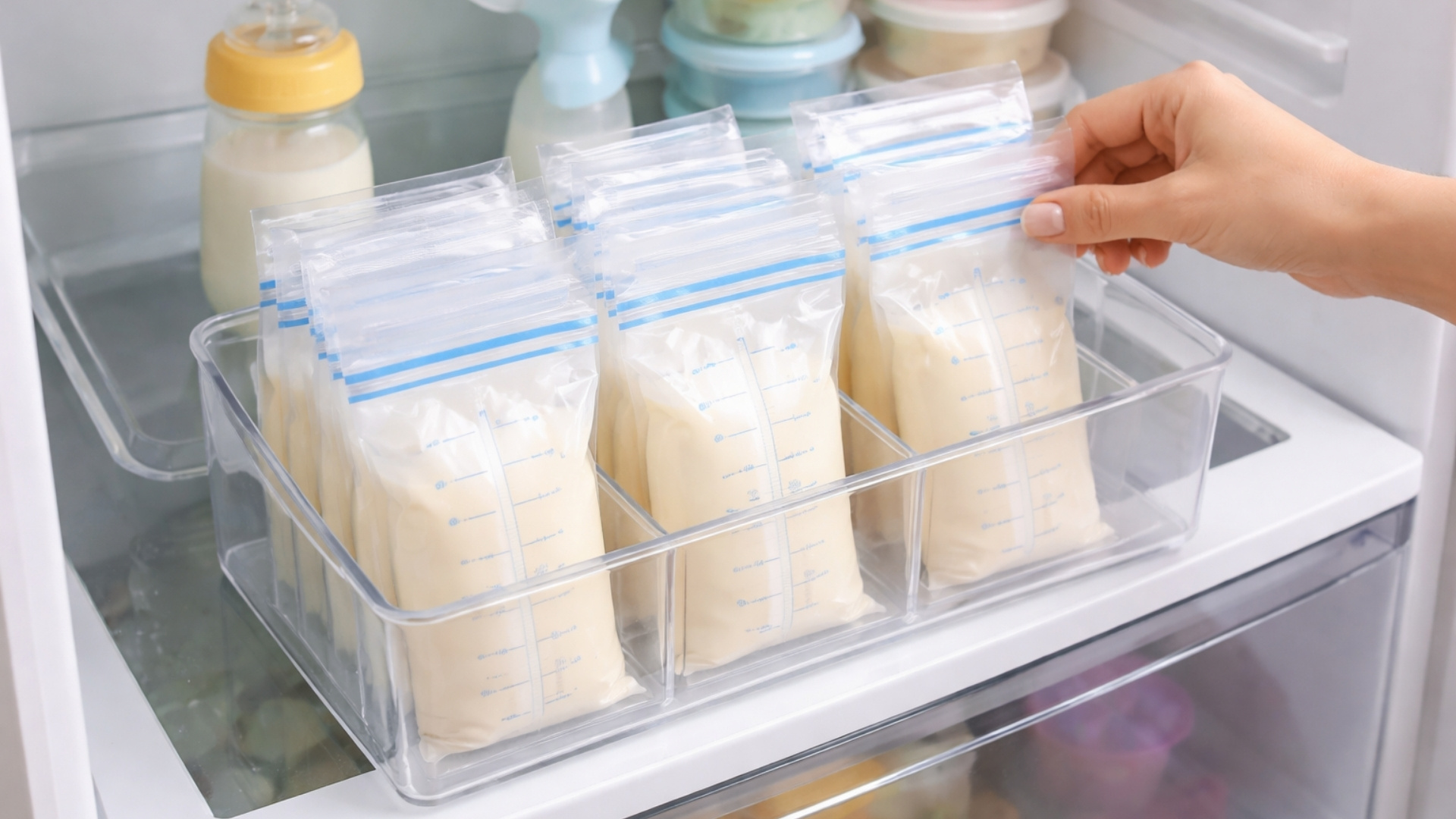
Clean handling gets milk safely into the bag, and proper storage keeps it safe until feeding time. Knowing how long breast milk can stay at different temperatures helps you plan ahead without second-guessing every bag in your fridge or freezer. Use this as a simple reference you can come back to whenever you need it.
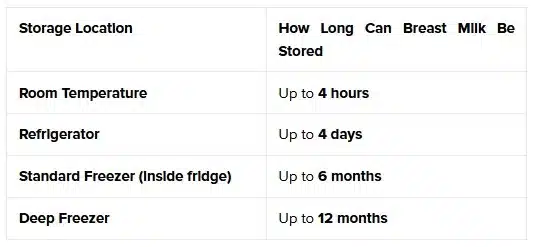
A couple of easy reminders:
- Cooler temperatures help preserve milk quality longer.
- Freezers work best when bags are placed toward the back, where temperatures stay steady.
Even with best practices, real-life moments can raise quick questions.
Quick Fixes for Common Breast Milk Storage Oops Moments
Minor mishaps can occur, especially when you’re tired or multitasking. Here’s how to handle some of the most common ones without overthinking them.
- You accidentally rinsed a pre-sterilized bag: Once water touches the inside, it’s better to skip using it. Grab a fresh bag for peace of mind.
- You briefly touched the inside of the bagEven a quick touch can introduce bacteria. This is one case where using a new bag is the safer choice.
- You dropped the bag before filling it: If the bag stayed closed and the inside wasn’t exposed, it’s still usable. If it opened or landed face down, discard it.
- You’re unsure whether the seal was intact: When in doubt, trust your instinct and use another bag. A secure seal matters.
- You stored milk but forgot to label it: If you’re unsure when it was expressed, it’s safest not to use it.
Having the right supplies from the start can prevent many of these concerns altogether.
How Insurance Covered Breast Pumps Supports Safe Milk Storage
Storing milk safely isn’t just about the bag; it’s about having the right tools, supplies, and guidance from the start. That’s where Insurance Covered Breast Pumps steps in, helping you feel prepared instead of piecing things together on your own. By simplifying access to essential pumping and storage items, they remove a lot of guesswork from your daily routine.
Below are some of the ways this support makes a real difference for you:
- Insurance-Covered Milk Storage Bags: Many insurance plans include breast milk storage bags as eligible supplies, helping you maintain a steady, hygienic supply without added stress over cost.
- Compatible Pump And Storage Systems: Pumps and accessories are matched thoughtfully, reducing leaks, contamination risks, and handling errors during milk transfer.
- Ongoing Supply Eligibility Guidance: Clear information on when you can reorder storage-related supplies through insurance, so you’re not stretching items longer than recommended.
- Educational Support For Safe Handling: Access to practical guidance that helps you use, store, and manage expressed milk confidently at home or on the go.
- Streamlined Insurance Coordination: Coverage verification and paperwork are handled for you, freeing up time and mental energy during an already full season of life.
Read Next: Why Does My Breast Milk Smell When Pumping? Understanding High Lipase Activity!
With the right information and tools, safe milk storage becomes far less stressful.
Conclusion
Once you understand how breast milk storage bags are made and used, the uncertainty around cleaning them starts to fade. Knowing when a bag is ready to use, when it needs extra care, and when it’s better to toss it helps you protect your milk without adding unnecessary steps to your routine.
Insurance Covered Breast Pumps supports you beyond just providing equipment. By helping you access insurance-eligible pumps, storage bags, and ongoing supplies, they make it easier to stay consistent with safe milk handling while reducing out-of-pocket costs and administrative stress.
Check your insurance eligibility today and get the breast pump and storage supplies that fit your needs.
FAQs
1. Can You Pour Warm Breast Milk Directly Into A Storage Bag?
Yes, freshly pumped breast milk can go straight into a storage bag. Just make sure the bag is sealed properly and handled with clean hands. If you’re combining milk later, cooling it first helps maintain consistent temperatures and milk quality.
2. Is It Safe To Combine Milk Pumped At Different Times In One Bag?
You can combine milk from different pumping sessions, but it’s best to cool the newer milk first. Mixing warm and cold milk can affect quality. Always label the bag using the oldest pumping time for safe storage tracking.
3. Do Breast Milk Storage Bags Leach Plastic Into Milk?
Most reputable storage bags are made from food-grade materials designed for breast milk. They’re tested to be free from harmful chemicals like BPA. Using bags as intended and avoiding heat exposure beyond guidelines helps maintain milk safety.
4. Can Breast Milk Storage Bags Be Used For Formula Or Other Liquids?
Breast milk storage bags are specifically designed for breast milk. While they can technically hold other liquids, doing so may weaken seals or affect hygiene. It’s best to reserve them solely for breast milk to avoid contamination or confusion.
5. How Do You Thaw Frozen Breast Milk Stored In Bags Safely?
Frozen milk should be thawed slowly in the refrigerator or under cool running water. Avoid microwaving or boiling, as uneven heating can damage nutrients. Once thawed, gently swirl the bag instead of shaking to mix separated layers.