










Tips to Increase Breast Milk Supply When Pumping

If you’re pumping every three hours but your supply still isn’t increasing, it can feel incredibly discouraging. You’re staying consistent, setting alarms, waking up tired, and yet the bottles don’t look any fuller.
That frustration is real. And it’s more common than people talk about. In fact, research on human milk expression has shown that effective milk removal, not just pumping frequency, is one of the strongest predictors of milk production. This helps explain why some parents can pump often and still struggle with low output.
The truth is, milk supply depends on more than just how often you pump. Small adjustments in technique, equipment, and self-care can often make a meaningful difference.
This guide shares gentle, realistic tips to help support your supply, without pressure, guilt, or overwhelm.
Quick Summary
- Pumping every 3 hours is helpful, but supply depends on effective milk removal, not timing alone.
- Extend sessions by 5–10 minutes, try power pumping, and check flange fit for better output.
- Worn pump parts and an ineffective pump can quietly reduce suction and milk removal.
- Hydration, nutrition, rest, and stress levels all influence letdown and supply.
- A structured pumping schedule can support consistency and gradual improvement.
- ICBP can help with insurance-covered pumps, upgrades, and access to professional lactation support.
Why Pumping Every 3 Hours Isn’t Always Enough?

Pumping every three hours is often recommended, but if your supply isn’t increasing, it can feel confusing and discouraging. The truth is, milk supply isn’t based on timing alone. It depends on how effectively your breasts are being emptied and how supported your body feels overall.
There are several common reasons why frequent pumping may still not lead to higher output:
- Your breasts aren’t fully emptying: If milk isn’t being removed effectively, your body doesn’t get the signal to make more.
- Flange size isn’t the right fit: A poor fit can reduce milk flow and make pumping less efficient.
- Pump suction or settings aren’t ideal for your body: Some pumps (or settings) simply don’t work as well for certain people.
- Worn-out pump parts: Valves, membranes, and tubing lose effectiveness over time and can quietly lower output.
- Sessions may be too short: Stopping right when milk slows can limit stimulation for increased supply.
- Stress and exhaustion affect letdown: Your nervous system plays a role in milk release; feeling tense or overwhelmed can make pumping harder.
- Hydration and nutrition may be low: Your body needs fuel and fluids to maintain milk production.
If any of these sound familiar, you’re not failing; your body is just asking for a slightly different kind of support.
10 Tips to Increase Breast Milk Supply When Pumping
If you’re pumping consistently but not seeing the increase you hoped for, it can feel discouraging. You don’t need to overhaul everything at once; simple shifts in how you pump, how long you pump, and how supported your body feels can make a real difference over time.
Below are ten supportive strategies to try:
1. Pump Past the Last Drops
What to do: Instead of stopping as soon as milk slows down, continue pumping for 5–10 additional minutes.
Why this matters: Your body responds to stimulation, not just milk flow. Even if no milk is coming out, the extra time tells your brain:
“More milk is needed here.”
Over time, this can help increase production.
Helpful tip: If the pump feels uncomfortable during those extra minutes, lower the suction but keep the stimulation going.
2. Use Power Pumping to Mimic Cluster Feeding
What to do: Once per day (or once every other day), try this pattern:
- Pump 20 minutes
- Rest 10 minutes
- Pump 10 minutes
- Rest 10 minutes
- Pump 10 minutes
Why this matters: Babies naturally cluster feed during growth spurts to increase supply. Power pumping copies that demand pattern and can help nudge your body to produce more.
Helpful tip: Don’t expect huge changes after one session. Most people notice results after 3–5 consecutive days.
3. Make Sure Your Flange Size Actually Fits

What to do: Check that:
- Your nipple moves freely in the tunnel
- The areola is not being pulled too far in
- You don’t feel pinching, rubbing, or sharp discomfort
Why this matters: A poor flange fit can:
- Reduce milk removal
- Cause nipple trauma
- Make pumping less effective
- Lead to consistently low output
Helpful tip: Many people need a smaller flange than the one included with their pump. A correct fit often leads to an immediate improvement in comfort and output.
4. Use Hands-On Pumping (Massage + Compression)
What to do: Massage your breasts before pumping and gently compress them while pumping.
Why this matters: Hands-on pumping helps:
- Trigger stronger letdowns
- Drain more milk from deeper ducts
- Increase overall output per session
Helpful tip: Use slow, gentle movements rather than firm squeezing. Think supportive, not aggressive.
5. Use Warmth Before Pumping
What to do: Apply a warm compress, take a warm shower, or use a heating pad for a few minutes before pumping.
Why this matters: Warmth helps:
- Improve blood flow
- Relax milk ducts
- Make letdown easier and faster
This can be especially helpful if your milk tends to “take a while” to start flowing when you pump.
6. Replace Pump Parts More Often Than You Think
What to do: Regularly replace:
- Duckbill valves
- Membranes
- Tubing (if stretched or loose)
Why this matters: Even slightly worn parts can significantly reduce suction, which means your pump may not be emptying you well, even if it seems to be working.
Helpful guideline (general):
- Valves/membranes: every 4–8 weeks if pumping frequently
- Tubing: if moisture, stretching, or loss of suction appears
7. Make Sure Your Pump Is Truly Supporting Your Body

Ask yourself:
- Do my breasts feel softer after pumping?
- Do I feel like I’m emptying well?
- Does the suction feel effective but not painful?
Why this matters: Some pumps simply work better for certain bodies. If you’re pumping every three hours and still struggling, access to a stronger or more efficient pump can make a big difference.
Helpful tip: Many insurance plans cover higher-quality pumps or upgrades. Checking eligibility can open options you didn’t realize were available.
8. Eat Regularly (Especially Protein + Carbs)
Try to include:
- Protein (eggs, yogurt, chicken, tofu, beans)
- Carbohydrates (rice, oats, bread, fruit)
- Healthy fats (nuts, avocado, olive oil)
Why this matters: Milk production requires energy. Skipping meals or running on empty can quietly affect supply.
This doesn’t mean you need a perfect diet, just consistent nourishment.
9. Stay Gently Hydrated (Not Overhydrated)
What to do: Sip fluids throughout the day instead of forcing large amounts at once.
Why this matters: Dehydration can affect milk production, but overhydrating doesn’t increase supply either. Aim for steady, comfortable hydration.
Helpful sign: Light-colored urine usually indicates adequate hydration.
10. Reduce Stress Around Pumping When Possible
What to do:
Create small calming rituals around pumping:
- Sit somewhere comfortable
- Play relaxing music
- Look at photos or videos of your baby
- Take slow breaths before starting
Why this matters: Stress can interfere with the letdown reflex. Your body releases milk more easily when it feels safe and relaxed.
If you’re doing all of this and still struggling, it does not mean you’ve failed. Sometimes, underlying factors (hormones, recovery, medical issues, latch history, etc.) need professional support, and reaching out to a lactation consultant can be incredibly helpful.
Also read: Best Nipple Care Creams for Breastfeeding Moms
Now that you’ve learned several ways to support your milk supply, it can help to see what this looks like in a real day-to-day routine. A simple pumping schedule can bring structure to your day and make consistency feel more achievable.
Sample Pumping Schedule for Low Supply
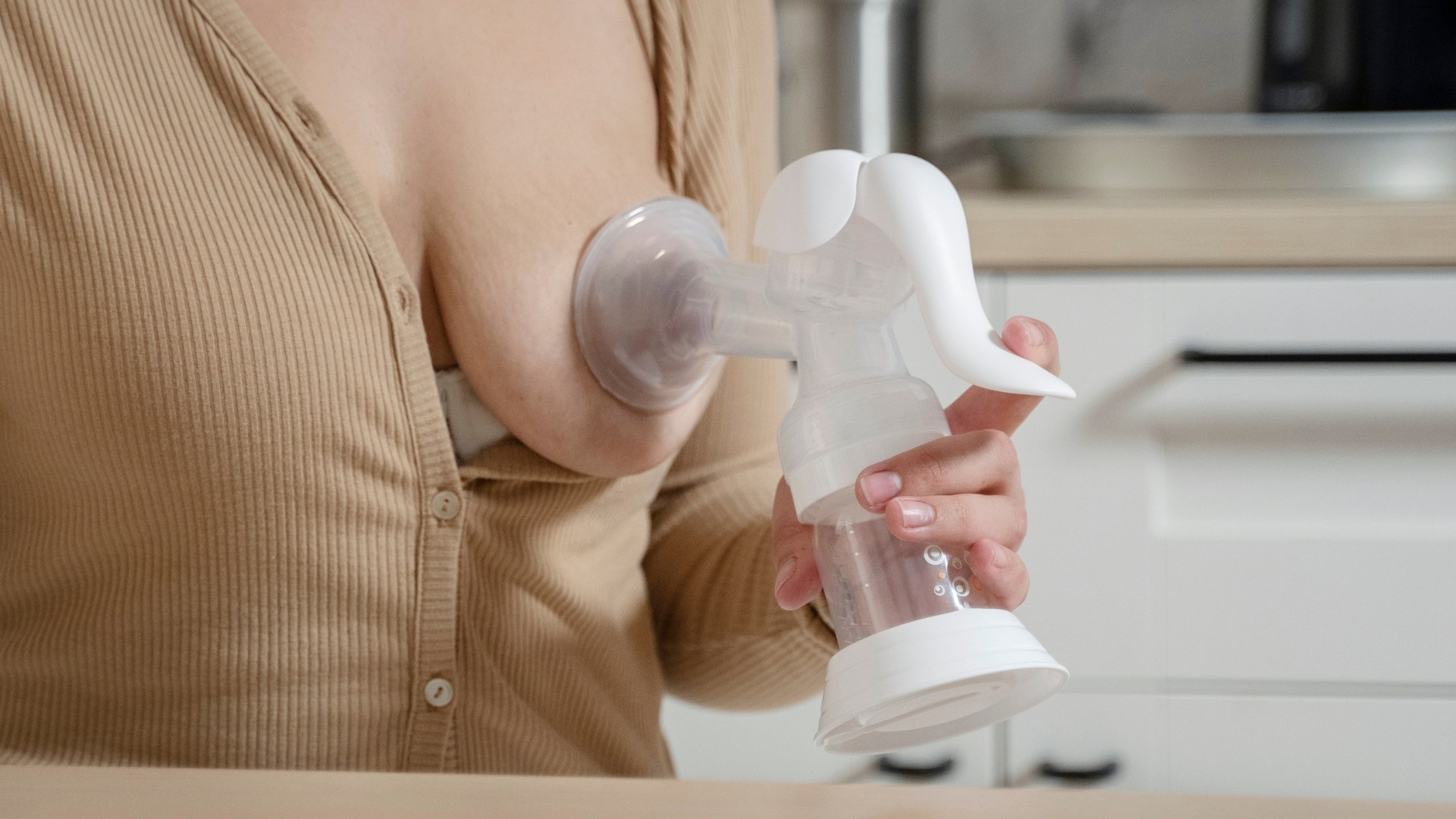
When supply feels low, having a predictable pumping routine can make things feel more manageable. A consistent schedule helps your body receive regular signals to produce milk, while also giving you structure during an already exhausting season.
This sample schedule is designed for someone who is pumping every 2–3 hours, with one optional power-pumping session to gently support increased supply.
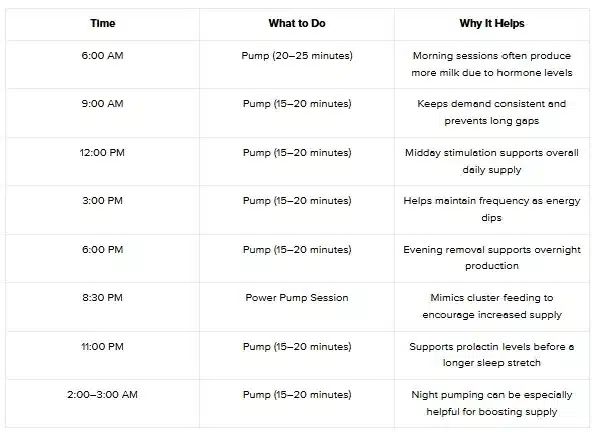
Even small shifts, like adding one extra session, extending pumping time slightly, or including power pumping a few times per week, can support gradual improvement.
Suggested read: Newborn and Infant Breastfeeding Frequency Chart
When It Might Be Time to Seek Extra Support?
If you’ve tried adjusting your routine, checked your pump setup, and stayed consistent, but your supply still isn’t improving, it doesn’t mean you’ve done anything wrong. Sometimes, low supply is connected to factors that need extra guidance or medical support.
Reaching out for help can be especially important if:
- You’re pumping regularly, but output continues to decrease
- Your breasts never feel softer after pumping
- You’ve tried multiple adjustments with little or no change
- You’re feeling emotionally overwhelmed, anxious, or defeated by pumping
- You’ve experienced hormonal issues, thyroid concerns, PCOS, or significant blood loss during birth
- Feeding and pumping together still feel confusing or stressful
A lactation consultant can help assess things like:
- Flange fit
- Pump effectiveness
- Pumping technique
- Milk removal patterns
- Personalized strategies for your body
Sometimes, a few small tweaks from a trained professional can make a meaningful difference.
How Insurance Covered Breast Pumps (ICBP) Can Support Your Journey

If pumping feels harder than it should, your equipment or support system may be part of the challenge, and managing insurance on your own can feel like another heavy task.
Insurance Covered Breast Pumps (ICBP) help make things easier by:
- Verifying your insurance coverage for breast pumps and accessories
- Helping you access higher-quality pump options if your current one isn’t working well
- Coordinating prescriptions with your OB/GYN
- Delivering approved equipment directly to your home
- Connecting families with professional lactation consultant support
Check your insurance eligibility today to explore pumps, upgrades, and support options designed to make pumping feel more manageable.
Final Thoughts
If you’re pumping every three hours but your supply still isn’t increasing, please know that you’re not failing; you’re handling something genuinely challenging. Small adjustments, the right equipment, and compassionate support can make a meaningful difference over time.
Insurance Covered Breast Pumps (ICBP) is here to support you with insurance-covered pump options, equipment guidance, and access to professional lactation consultant support.
Check your insurance eligibility today and explore tools and support designed to make your pumping journey feel easier and more supported.
FAQs
1. Why is my supply not increasing even though I’m pumping every 3 hours?
Milk supply depends on how effectively milk is removed, not just how often you pump. Flange fit, pump strength, session length, stress, sleep, and worn pump parts can all impact output.
2. How long does it take to see an increase in supply after making changes?
Many moms notice small improvements within 3–7 days, but more noticeable changes often take 1–2 weeks of consistent adjustments.
3. How long should each pumping session last for low supply?
Most sessions should last 15–25 minutes, and it can help to continue pumping for 5–10 minutes after milk stops flowing to stimulate increased production.
4. Does power pumping really help boost supply?
For many moms, yes. Power pumping mimics cluster feeding and can signal your body to produce more milk, especially when done consistently for several days in a row.
5. Could my breast pump be the reason for low output?
It’s possible. A pump that doesn’t empty well, has weak suction, or has worn-out parts can reduce milk removal even if you’re pumping frequently.
6. How often should I replace pump parts?
As a general guide for frequent pumping:
- Valves/membranes: every 4–8 weeks
- Tubing: replace if stretched, loose, or showing moisture
Worn parts can quietly lower suction and output.
7. Is it normal to only pump 1–2 ounces per session?
Yes, especially in the early weeks or when building supply. Output varies widely between individuals, and low volume doesn’t always mean low overall supply.
8. When should I talk to a lactation consultant?
If you’ve tried adjustments and still feel stuck, or pumping feels painful, stressful, or ineffective, a lactation consultant can provide personalized support.