








Breastfeeding Hygiene Tips For New Mothers

Breastfeeding often comes with questions about comfort, cleanliness, and whether everyday care is being done correctly. Concerns about sore nipples, infection risk, and pump hygiene are common, especially in the early weeks when routines are still forming.
Research shows that targeted education on breast hygiene can increase a mother’s knowledge from 36% to 70%, and is associated with healthier feeding practices and fewer problems, such as cracked nipples and blocked ducts.
This guide explains simple, practical breast hygiene practices that help protect your skin, reduce infection risk, and support safe, comfortable feeding for your baby.
Key Takeaways
- Gentle, consistent breast hygiene protects both you and your baby without overdoing washing or using harsh products.
- Proper cleaning and sanitization of breast pumps are essential to maintain milk safety and prevent bacterial buildup.
- Replacing worn pump parts on time ensures hygiene, comfort, and optimal suction during breastfeeding.
- Real-life routines, shower habits, nighttime feeds, and travel care make hygiene manageable without stress.
- ICBP supports breastfeeding hygiene by providing insurance-covered pumps, replacement supplies, and expert guidance to simplify care.
Why Breast Hygiene During Breastfeeding Matters
Think of breast hygiene as care, not control. You’re not trying to create a sterile environment; you’re simply supporting your body while it does something incredibly natural.
Here’s why those small, gentle breast hygiene practices during breastfeeding matter:
- It helps your body stay comfortable
- Clean, well-cared-for skin is less likely to crack, sting, or feel irritated
- Healthy nipples heal faster and feel better during frequent feeds
- It lowers the chances of common breastfeeding infections
- Simple hygiene reduces the risk of issues like blocked ducts, mastitis, and thrush
- Less irritation means fewer openings for bacteria or yeast to settle in
Note: Blocked ducts, mastitis, and thrush are common breastfeeding issues. Blocked ducts are milk clogs that cause lumps; mastitis is a painful breast infection; and thrush is a yeast infection that causes nipple or mouth pain.
- It protects your baby in everyday ways
- Reduces exposure to residue from sweat, products, or pump parts
- Keeps feeding safe without disrupting your baby’s natural immune development
- It supports long-term breastfeeding.
- Comfort leads to consistency.
- Fewer infections and less pain make breastfeeding easier to continue over time.
Also read: Breast Pumping Laws Michigan: What Moms Should Know
Now, let’s turn these principles into concrete habits you can actually follow every day.
5 Daily Breast Hygiene Habits Every New Mom Should Follow

Let’s make breast hygiene during breastfeeding simple and realistic. This is what “daily care” actually looks like in real life, not a long checklist you’ll never follow.
Start With Clean Hands (Always)
Before your baby latches or you switch on your pump, pause for one small habit:
- Wash your hands with soap and water
That’s it. Clean hands do most of the heavy lifting when it comes to protecting both you and your baby.
Your Shower Is Enough
You don’t need a special routine.
- A normal daily shower with warm water is sufficient
- Gently cleanse your breasts the way you would any other sensitive skin
- Your nipples already have natural oils that protect them; scrubbing removes that protection, not dirt
Treat Nipples Like Healing Skin
Think gently, always.
- Let nipples air-dry after feeds whenever possible
- If needed, pat dry softly, no rubbing
- Breast milk left to dry on the nipple can actually support healing
Stay Dry Between Feeds
Moisture is the real troublemaker.
- Choose breathable nursing bras
- Change nursing pads as soon as they feel damp
- Dry skin stays calmer, healthier, and more comfortable
What To Avoid (This Matters More Than You Think)
Avoid unnecessary harsh cleaning products:
- Alcohol wipes or disinfectants on nipples
- Scented or antibacterial soaps
- Washing breasts before every single feed
More cleaning doesn’t mean better care. Gentle, consistent habits protect your body far better than overdoing it.
For many new moms, having a reliable, properly fitted breast pump makes daily care much easier. Insurance Covered Breast Pumps (ICBP) helps you find pumps fully covered by your insurance, ensuring safe, hygienic pumping without added stress.
With daily hygiene habits in place, it’s important to extend the same care to your breast pump.
Step-by-Step Guide to Keeping Your Breast Pump Clean and Safe
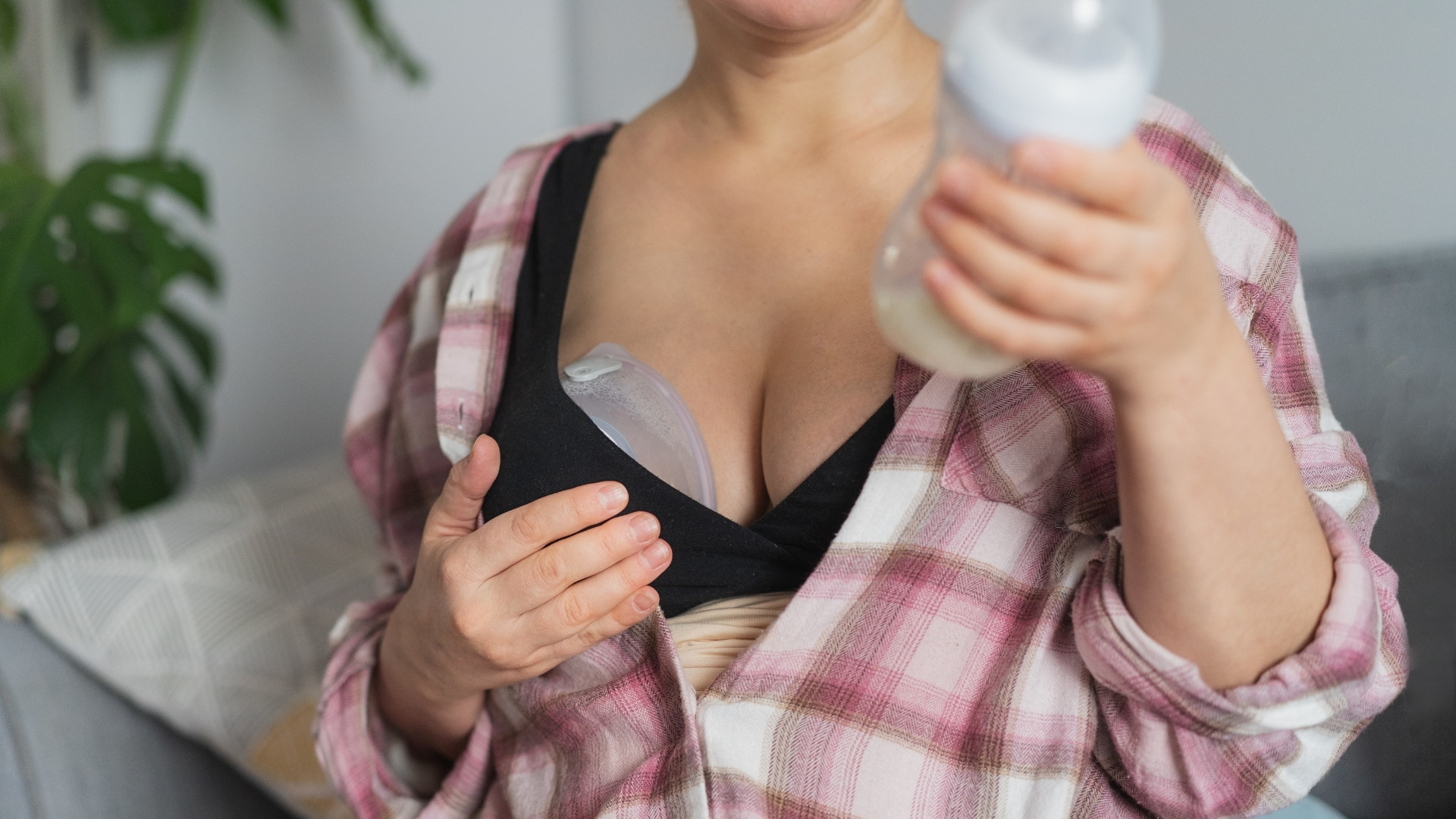
When you’re pumping, your breast pump becomes an extension of your body. Whatever touches your milk also touches your breast health, which is why pump hygiene isn’t a separate topic; it’s part of breast care itself.
Here’s the connection many moms aren’t told about:
- Residual milk can encourage bacterial growth if not cleaned properly
- Those bacteria don’t just stay on the pump; they can travel back to your skin
- Over time, this can lead to nipple irritation, recurring soreness, or infections that feel confusing and hard to pinpoint
Pump hygiene is about protecting the full feeding cycle, from breast to pump to baby and back again.
One important reminder: breast pumps aren’t one-size-fits-all. Each brand and model is designed with specific cleaning and sanitizing instructions for a reason. Following manufacturer guidance, along with medical recommendations, helps ensure your pump works safely, efficiently, and comfortably for your body.
Now let’s break this down into clear, manageable steps, starting with how often pump parts should be cleaned and sanitized so you can build a routine that actually fits your day.
The Simple Daily and Weekly Pump Cleaning Routine Every Mom Needs
Think of this as a rhythm, not a rulebook. Once you know what happens when, pump hygiene feels far less overwhelming.
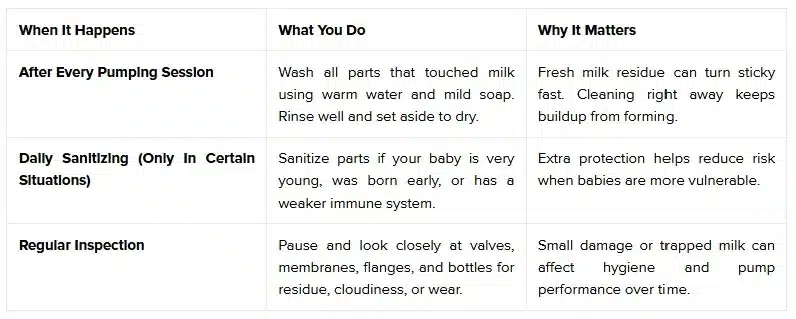
Keeping pump parts clean and functional is easier when you have the right replacement supplies on hand. ICBP offers insurance-covered tubing, valves, and other accessories so you can maintain hygiene and comfort without worrying about unexpected costs.
Now, let us have a look at some sanitization methods and considerations.
Sanitization Methods And Considerations
Sanitizing doesn’t have to be complicated. Choose what fits your routine and stick with it.
- Boiling Water Method
- Place pump parts in boiling water for the recommended time
- Best for deep sanitizing when needed
- Requires full drying afterward to prevent moisture buildup
- Steam Bags
- Convenient for busy days or limited space
- Designed specifically for pump parts
- Follow the bag’s usage instructions carefully
- Dishwasher (Top Rack Only)
- Works well for heat-safe parts
- Use a dedicated basket if possible
- Skip the heated dry if parts feel too hot afterward
- Air-Drying Is Not Optional
- Always let parts dry completely before storing
- Trapped moisture invites bacteria
- A clean drying area matters just as much as washing
Next, we’ll break down how often pump parts should be cleaned and sanitized to keep your routine simple and safe.
When and How to Replace Breast Pump Parts to Protect Your Health

Breast pump parts deteriorate gradually; subtle wear may affect cleanliness and performance before it becomes obvious. Tiny cracks, stretched silicone, or trapped moisture can slowly affect both cleanliness and comfort, even when you’re cleaning everything properly.
Overused parts may hold onto residue you can’t see and reduce suction efficiency, which can strain your nipples and disrupt milk flow. That’s why replacing pump parts isn’t just about performance; it’s a key part of maintaining healthy, hygienic pumping over time.
Let’s break down which parts matter most and how to know when they need attention.
Common Pump Parts That Require Replacement
Not every pump part ages the same way. These are the usual suspects that need regular check-ins:
- Valves And Membranes
- Made from soft silicone that stretches over time
- Even small changes can affect suction and cleanliness
- Tubing
- Can trap moisture if condensation forms
- Cloudiness or odor is a red flag
- Flanges
- Constant contact with skin makes wear easy to miss
- Warping or rough edges can irritate nipples
- Bottles And Connectors
- Micro-cracks can hold residue
- Loose connectors may cause leaks and uneven suction
Suggested Replacement Intervals:
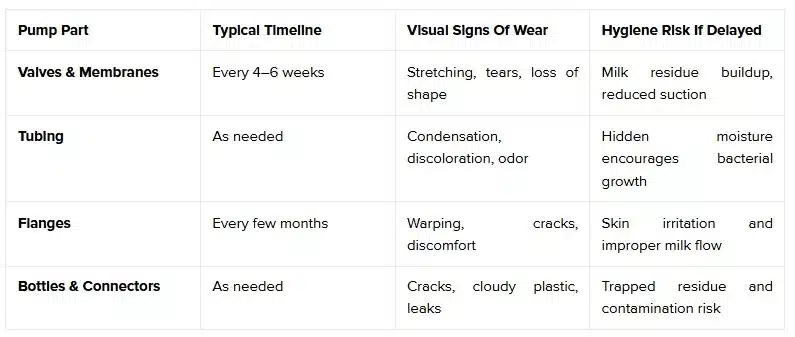
Replacing parts on time keeps your pumping routine smoother, more comfortable, and far easier to keep clean, without adding extra effort to your day.
Also read: Prenatal Vitamins Explained: Finding the Best Formula with Folic Acid
Even with good routines, your body may signal when something needs attention. Let’s review what to watch for.
Signs Your Breasts or Pump May Need Immediate Attention

Your body is very good at sending signals; the challenge is knowing which ones matter and which ones are part of normal adjustment. Not every ache or twinge means something is wrong, and noticing changes early doesn’t mean you’ve failed. It simply means you’re paying attention.
Here’s how to tell the difference.
Signs That May Point To Mastitis
This usually feels like your body waving a clear flag.
- A specific area of the breast looks red or feels hot to the touch
- Swelling that feels firm or painful rather than tender
- Fever, chills, or an overall “coming down with something” feeling
These symptoms often appear together and tend to escalate if ignored.
Signs That May Point To Thrush
Thrush tends to be more subtle and more frustrating.
- Burning or sharp pain that continues after feeding ends
- Ongoing nipple discomfort that doesn’t improve with rest
- White patches inside your baby’s mouth that don’t wipe away easily
Pain that lingers between feeds is an important clue here.
Pain Caused By Latch Or Positioning Issues
Not all pain means infection.
- Sharp discomfort right at latch-on that eases as feeding continues
- Cracked or sore nipples, even when hygiene habits are solid
- Pain that improves when positioning changes
Sometimes, a few tips from a professional make all the difference. Through ICBP, you can connect with Board-Certified Lactation Consultants (IBCLCs) via in-home, office, or virtual visits. Covered by insurance, you get personalized support for a comfortable breastfeeding journey.
Understanding these signals helps separate myths from facts about breast hygiene.
3 Breastfeeding Hygiene Myths That Could Be Stressing You Out
There’s no shortage of advice online, and unfortunately, not all of it is helpful. Let’s gently clear up a few common beliefs that tend to cause more stress than support.
- Myth: You Need To Wash Your Nipples Before Every Feed
Fact: Frequent washing strips away natural oils that protect your skin. Normal daily cleansing is enough, and your body is already designed to keep your nipples safe for feeding.
- Myth: Disinfectants Keep Your Baby Extra Safe
Fact: Harsh products can irritate delicate skin and actually increase discomfort. Clean skin matters, not chemically treated skin.
- Myth: Pain Always Means Infection
Fact: Discomfort can come from many places, including latch position or skin sensitivity. Infection is only one possibility, not the default explanation.
When it comes to breast hygiene, more effort doesn’t equal better care. The most reliable guidance is calm, balanced, and kind to your body, not driven by fear or extremes.
To make hygiene easier, support from insurance-covered pumps and supplies can remove much of the stress.
How Insurance Covered Breast Pumps (ICBP) Supports Breastfeeding Hygiene
Maintaining proper hygiene is key to a safe and comfortable breastfeeding journey. Insurance Covered Breast Pumps (ICBP) simplifies access to high-quality, insurance-covered breast pumps and supplies, helping new mothers focus on care rather than paperwork.
Below are the ways ICBP supports breastfeeding hygiene and overall maternal wellness:
- Insurance-Covered Breast Pumps: ICBP provides top brands like Medela, Spectra, Ameda, Elvie, and Lansinoh, matched to your insurance coverage, ensuring safe, hygienic pumping with minimal out-of-pocket costs.
- Replacement Supplies and Accessories: Extra tubing, valves, membranes, milk bottles, storage bags, and flanges are often fully covered, helping maintain cleanliness and optimal pump performance.
- Maternity and Postpartum Products: Items like support braces, recovery garments, compression socks, and blood pressure monitors complement hygiene and recovery, often eligible for insurance reimbursement.
- Lactation Support Services: Through The Lactation Network, ICBP connects you with IBCLCs for in-home, in-office, or virtual consultations, many of which are insurance-covered.
- Educational Resources: ICBP’s Mama Talk blog guides breastfeeding hygiene, pump use, postpartum care, and an insurance guide, helping you make informed choices.
- Insurance Coordination and Claims Management: ICBP handles benefit verification, Rx coordination with OB/GYNs, claim filing, and communication of coverage limits, removing administrative barriers so you can focus on safe, hygienic breastfeeding.
By combining medical-grade pumps, replacement supplies, expert guidance, and seamless insurance support, ICBP ensures hygiene, comfort, and peace of mind throughout your breastfeeding experience.
Read Next: Pregnancy-Safe Sunscreens for 2025: Gentle Protection for You and Your Baby
Recognizing patterns early allows you to respond calmly and maintain both hygiene and comfort.
Conclusion
Breast hygiene during breastfeeding isn’t about doing more; it’s about doing what truly supports your body and your baby. When your routine feels manageable, comfortable, and informed, breastfeeding becomes less stressful and far more sustainable.
Insurance Covered Breast Pumps (ICBP) makes that journey easier by removing the insurance confusion that often gets in the way of good care. From helping you access medical-grade breast pumps to ensuring eligible replacement supplies arrive when you need them, ICBP supports hygiene, comfort, and peace of mind throughout your breastfeeding experience.
Check your insurance eligibility today and get your breast pump covered with ease.
FAQs
1. Should You Clean Your Breasts After Breastfeeding?
In most cases, there’s no need to clean your breasts after every feed. Your skin naturally balances moisture and protection. If there’s visible milk residue or sweat, gently wipe with warm water. Frequent washing can actually increase dryness and irritation.
2. Is It Safe To Use Breast Milk To Heal Sore Nipples?
Yes, expressed breast milk can be safely used on sore nipples for many mothers. It contains natural antibacterial and soothing properties. Applying a few drops and letting it air-dry may support healing, especially for mild soreness, as long as skin remains intact.
3. How Do You Prevent Bacterial Growth While Breastfeeding?
Bacteria thrive in warm, damp environments. Keeping skin dry, changing nursing pads regularly, and allowing airflow between feeds help reduce risk. Clean hands before feeding and proper care of pump parts also play an important role in maintaining a healthy breastfeeding environment.
4. Can Poor Breast Hygiene Affect Milk Supply?
Poor hygiene doesn’t directly reduce milk production, but discomfort, skin irritation, or infection can interfere with feeding or pumping consistency. When breastfeeding becomes painful, mothers may nurse less often, which can impact supply over time. Comfortable routines help support consistent milk removal.
5. Is It Normal For Breasts To Smell During Breastfeeding?
Mild odor can occur due to sweat, milk residue, or hormonal changes and is usually harmless. Strong or persistent smells may indicate trapped moisture or skin irritation. Keeping the area dry and wearing breathable fabrics often resolves the issue without requiring special products.