









How to Freeze Breast Milk in Bags Safely (Step-by-Step Guide)
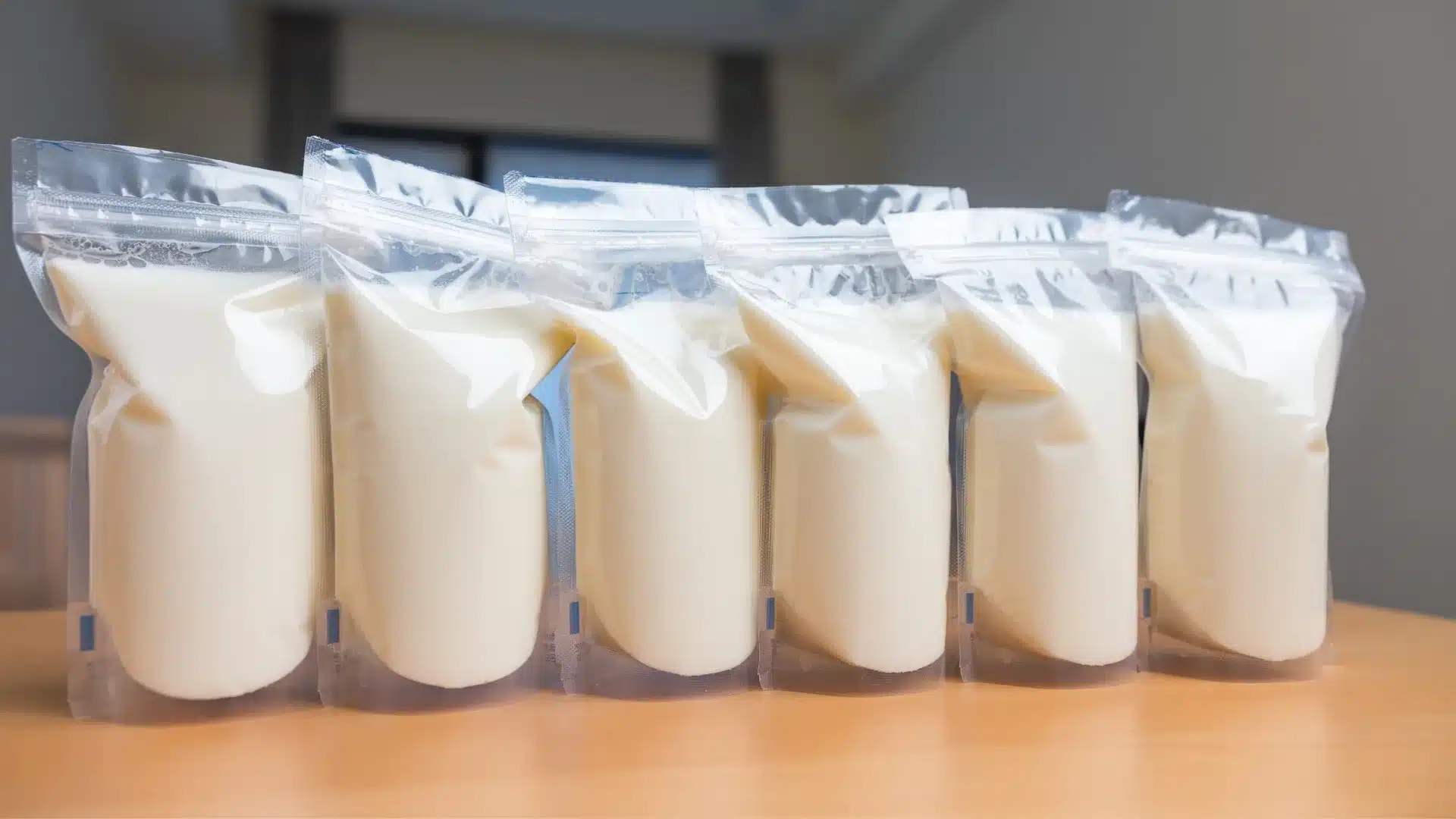
That moment when you finally sit down after pumping, stare at a few precious ounces, and wonder if you are storing it the right way can feel overwhelming. Learning how to freeze breast milk in bags often comes with second-guessing, especially when all you want is to protect every single drop.
Between feeding schedules, diaper changes, and very little sleep, figuring this out should not feel like another full-time job. You are already doing something incredible, and a little clear guidance can make this part feel much easier.
Understanding how to properly freeze breast milk in bags helps keep it safe, organized, and ready when your baby needs it most. The good news is, it is much simpler than it sounds once you know the exact steps.
In this guide, we will walk through everything you need to freeze, store, and use your milk with confidence.
Key Takeaways
- Using proper breast milk storage bags, leaving headspace, and freezing flat protects milk structure, prevents leaks, and makes thawing faster and more efficient.
- Milk lasts best 6 months in a standard freezer and up to 12 months in a deep freezer when stored at consistent, correct temperatures.
- Refrigerator thawing or warm water methods preserve nutrients, while microwaving or high heat can damage proteins and create dangerous hot spots.
- A soapy smell after thawing is usually caused by natural fat breakdown, not spoilage, and milk is typically still safe if stored properly.
- Extra storage bags, organizers, and an insurance-covered breast pump can make pumping, freezing, and feeding much more manageable for busy moms.
Why Proper Freezing Matters for Your Baby
Every ounce of breast milk contains living immune cells, protective enzymes, and delicate nutrients. Freezing it correctly helps keep those benefits intact, so your baby receives milk that is as close as possible to freshly expressed.
Here is what proper freezing protects and prevents inside stored milk:
- Protects Immune Factors: Consistent freezer temperatures help preserve antibodies like secretory IgA (SIgA) and enzymes such as lysozyme that support your baby’s developing immune system.
- Slows Vitamin Loss: Vitamin C and certain antioxidants gradually decline during storage. Prompt freezing and correct storage duration help reduce that nutrient drop.
- Controls Bacterial Growth: Quick cooling followed by freezing slows bacterial multiplication that can occur if milk remains at room temperature too long after pumping.
- Prevents Heat Damage: Avoiding high-heat thawing methods protects temperature-sensitive proteins that can be damaged when milk is overheated.
- Maintains Acceptable Taste: Stable freezing slows fat breakdown caused by lipase activity, reducing strong soapy odors that sometimes lead babies to refuse thawed milk.
Freezing milk with care keeps its protective qualities stronger, its nutrients more stable, and its flavor more familiar for your baby.
How To Freeze Breast Milk In Bags
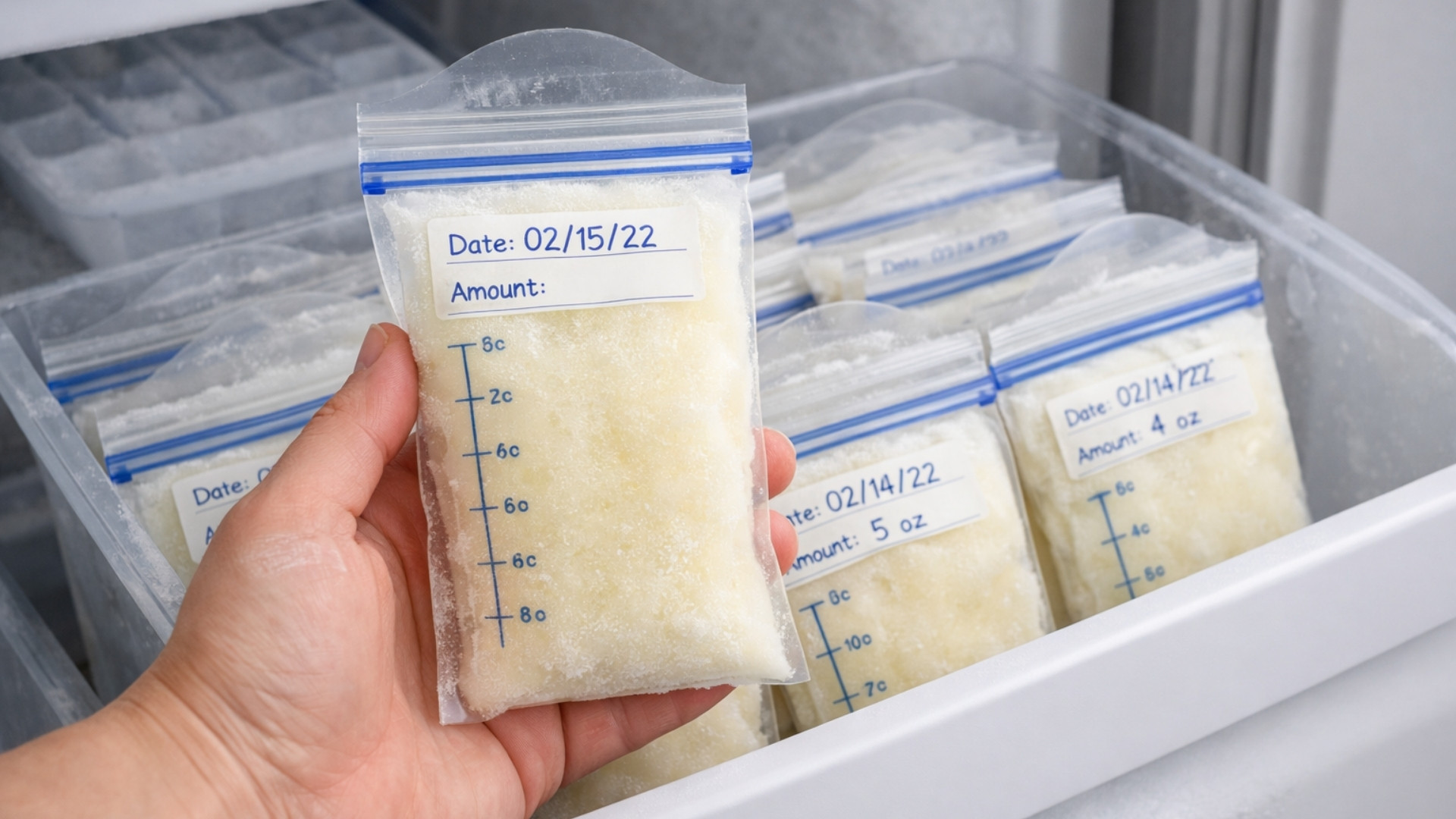
Freezing breast milk in storage bags correctly keeps milk safe, organized, and easy to thaw later, while protecting quality and preventing leaks, waste, or accidental contamination.
Step 1: Choose And Prepare Storage Bags
Using the correct bags and handling milk safely before freezing prevents contamination, protects milk quality, and ensures frozen portions stay stable when combined or stored long-term.
- Use Milk-Specific Bags: Select pre-sterilized, BPA-free breast milk storage bags designed for freezing, since household bags and bottle liners can leak, tear, or allow contamination.
- Wash Hands Thoroughly: Clean hands with soap and water before touching bags or milk to reduce bacterial transfer that could multiply during cooling and freezing.
- Cool Milk Before Combining: Refrigerate freshly pumped milk before adding it to already frozen milk to prevent partial thawing, which can shorten safe storage time and affect quality.
Step 2: Fill And Label Bags Correctly
Proper filling and labeling prevent burst bags, reduce milk waste, and make it easier to track freshness, especially when multiple caregivers or daycare providers handle stored milk.
- Freeze Small Portions: Store milk in 2 to 4 ounce amounts so unfinished bottles do not lead to wasted milk that must be discarded after a feeding.
- Leave Expansion Space: Keep about one inch of space at the top because breast milk expands when frozen, and overfilled bags can split or leak.
- Label With Details: Write the pumping date and number of ounces using waterproof ink; add the baby’s name when milk will be used in childcare settings.
Step 3: Use The Flat-Freeze Method
Freezing bags flat saves freezer space, creates thin layers that thaw faster, and makes organizing and rotating stored milk much simpler during busy feeding days.
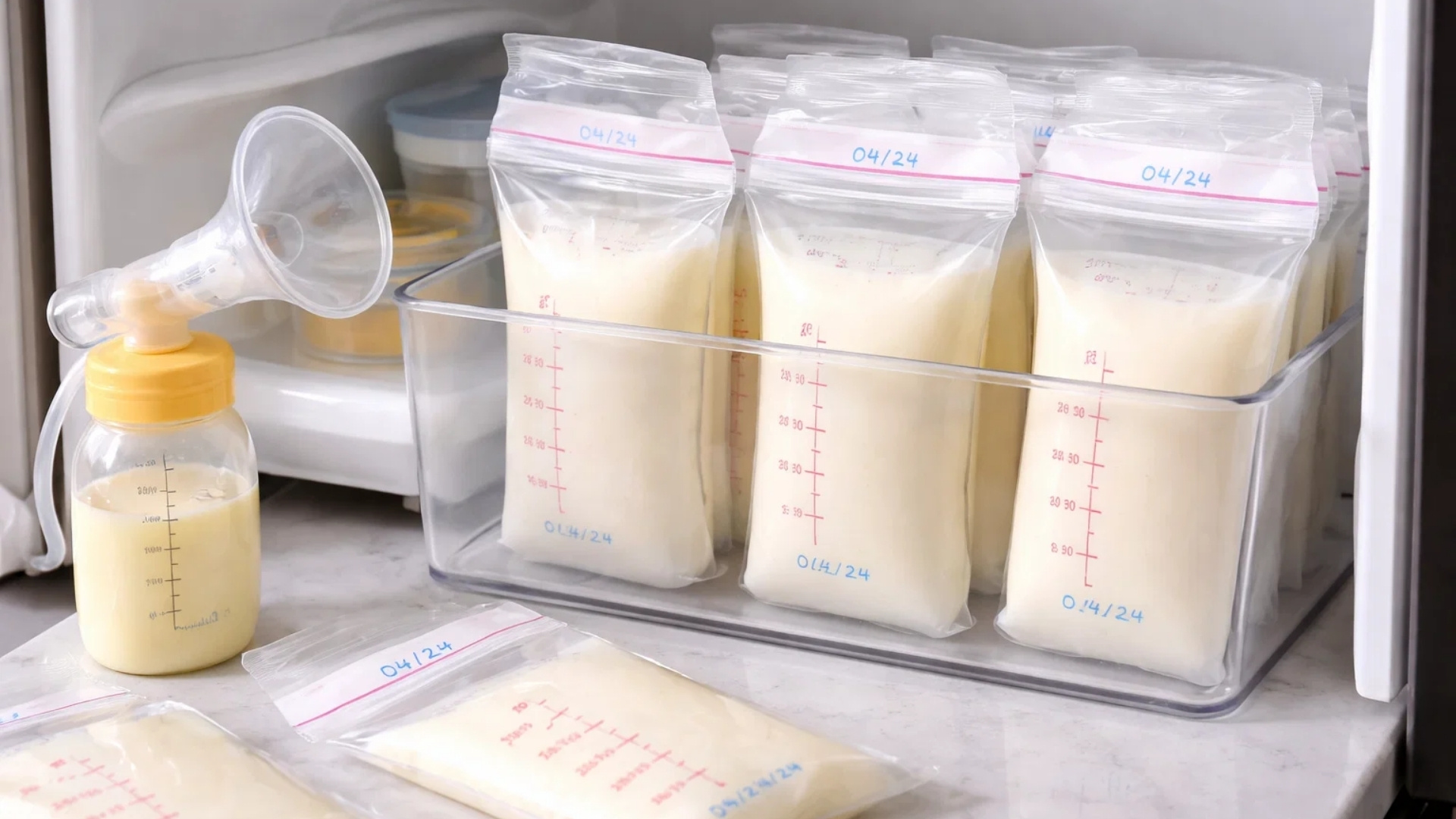
- Lay Bags Flat First: Place filled bags flat on a freezer shelf or tray so milk freezes into thin layers instead of bulky shapes.
- Speed Up Thawing: Thin frozen sheets warm more evenly and can thaw quickly under warm water, which is helpful when a hungry baby needs milk soon.
- Stack After Freezing: Once solid, stand or stack flat bags upright in a bin to keep portions visible and maximize limited freezer space.
Step 4: Store And Organize In The Freezer
Where and how frozen milk is stored affects temperature stability, milk quality over time, and how easily the oldest milk gets used first.
- Place In Back Area: Store bags toward the back of the freezer, where temperatures stay more consistent, instead of the door, where frequent opening causes warming.
- Rotate Oldest First: Use a first-in, first-out system so older milk gets used before newer batches, supporting better taste and nutritional quality.
- Use Simple Organizers: Repurpose a small bag or use a milk storage organizer to keep frozen bags upright and easy to pull out in order.
Freezing milk with these steps keeps storage safe, organized, and efficient, helping every ounce stay usable and ready when feeding time comes around.
Want to make pumping more comfortable, efficient, and flexible for your daily routine? Learn why the right equipment matters in The Importance Of A Breast Pump.
How Long Can Breast Milk Stay Frozen?
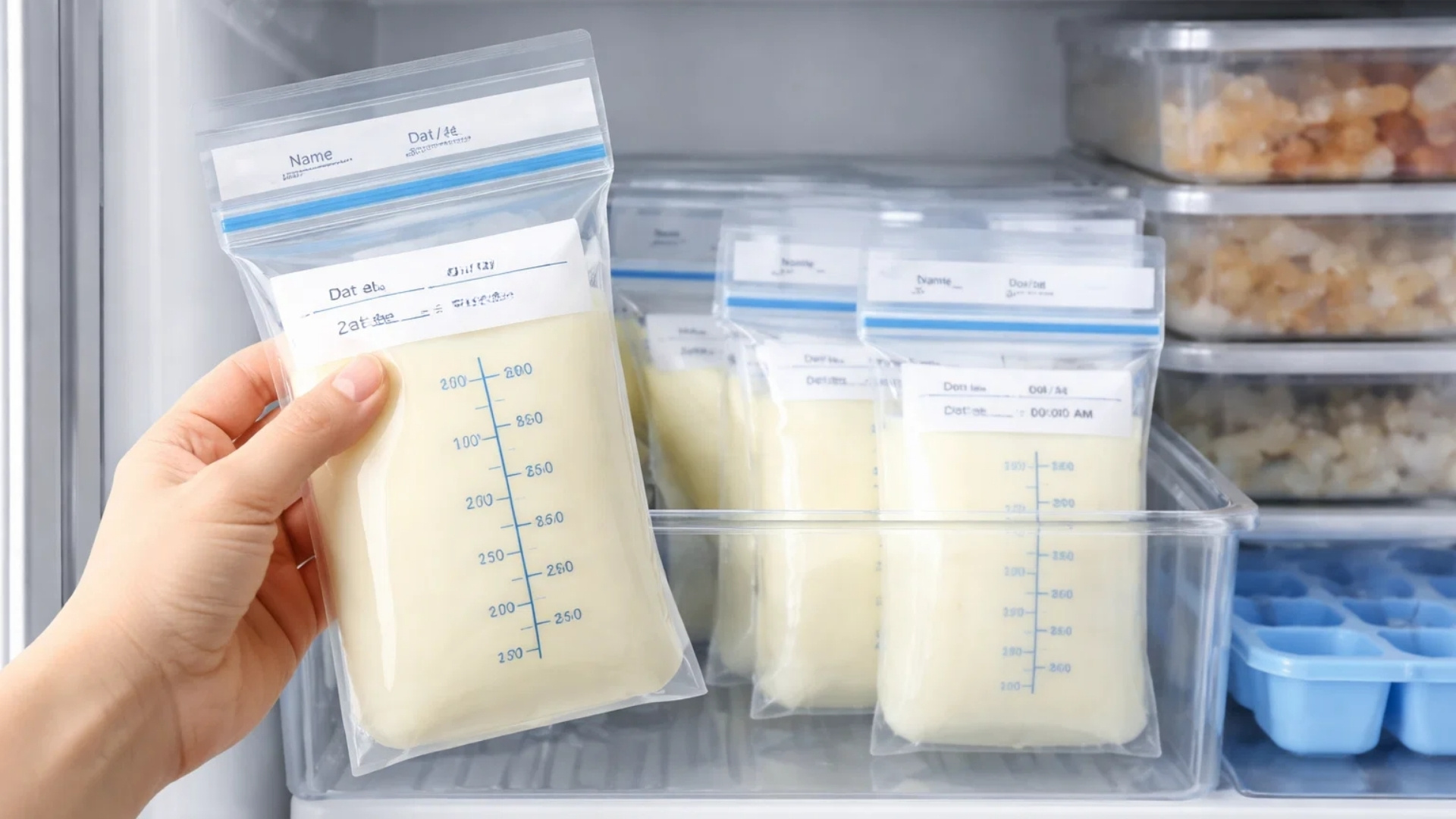
Frozen breast milk stays safe for months, but timing, freezer type, and handling all affect nutrient strength and feeding quality when it is finally thawed.
Here is how storage time changes based on freezer conditions and handling:
- Standard Freezer Range: In a refrigerator freezer at 0°F (-18°C), milk is best used within six months, though acceptable use may extend to nine months.
- Deep Freezer Capacity: In a chest or deep freezer holding -4°F (-20°C) or colder, milk can remain safe and of high quality for up to 12 months.
- Hygiene Extends Quality: Milk expressed with fully sanitized pump parts and clean hands tends to maintain optimal quality toward the longer end of recommended storage windows.
- Nutrient Decline Over Time: Vitamin C levels gradually decrease during frozen storage, and antioxidant activity slowly lowers, making earlier use nutritionally preferable when possible.
- Developmental Nutrition Changes: Milk made for a newborn differs in fat and immune composition compared to milk produced months later, so fresher milk may better match the baby’s current needs.
Using frozen milk within recommended timeframes helps preserve more of its natural nutrients and protective benefits, giving your baby the best possible version of stored milk.
How to Thaw Frozen Breast Milk Safely?
Thawing breast milk the right way protects delicate immune proteins, prevents overheating, and keeps milk safe from bacterial growth while making feeding smoother for your baby.
These steps keep thawed milk safe, evenly warmed, and ready to feed:
- Refrigerator Overnight Thaw: Place the sealed bag in the refrigerator for about 12 hours, allowing gradual defrosting that keeps temperatures stable and limits nutrient damage.
- Warm Water Bath Method: Submerge the sealed container in lukewarm water, gently rotating to thaw evenly without overheating sensitive milk proteins.
- Warm Running Water Option: Hold the bag under a steady stream of warm tap water, keeping the flow below body temperature to prevent hot spots and uneven warming.
- Observe Post-Thaw Time Limits: Use milk within 24 hours once fully thawed in the refrigerator, or within 2 hours after warming or reaching room temperature.
- Handle Milk Gently After Thawing: Swirl slowly to blend separated fat layers; avoid shaking, which can disrupt fragile proteins and change milk structure.
Safe thawing keeps breast milk closer to its natural state, so your baby receives milk that is gentle, nourishing, and safe when feeding time arrives.
Still have questions about handling thawed milk safely during busy feeding days? Get clear, mom-friendly answers in How Long Is Breast Milk Good After Warming?
Common Freezing Mistakes to Avoid
Freezing breast milk seems simple, but small missteps can affect safety, nutrient quality, and how easily milk is used later. These are the most common technical errors.
Here are frequent freezing mistakes and what to do instead:
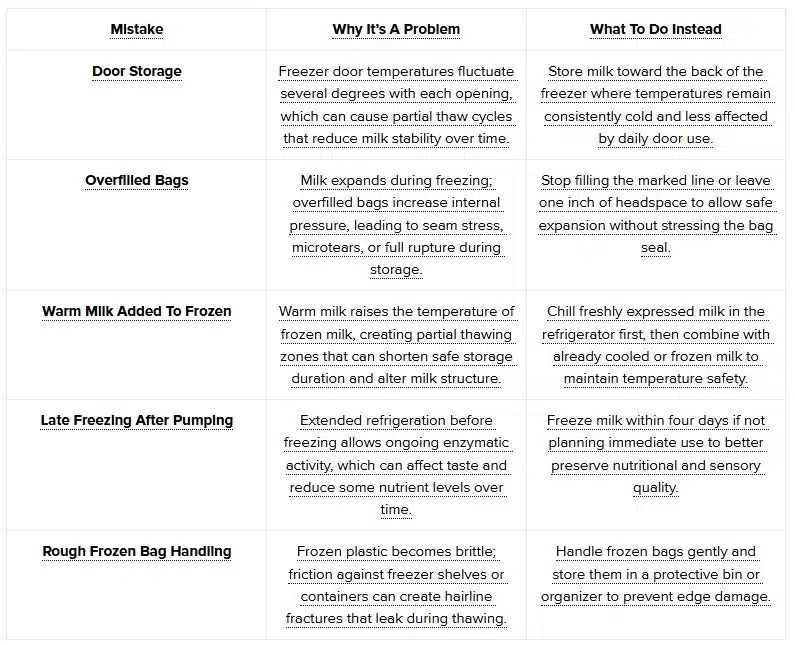
Avoiding these small but important mistakes helps keep stored milk safer, nutritionally stronger, and ready to use when your baby needs it most.
Choosing the right storage bags can make freezing, organizing, and thawing your milk so much easier. See our top mom-approved picks in Best Breast Milk Storage Bags for 2025.
What If My Thawed Milk Smells Funny? (Lipase Explained)
A soapy or unusual smell after thawing can feel alarming, but it often relates to normal enzyme activity, not spoilage. Understanding lipase helps make sense of it.
Here is what is happening inside the milk and what it means for feeding:
- Lipase Breaks Down Fats: Lipase splits milk fats into fatty acids, which helps limit harmful bacterial growth but can create a sharp or soapy odor after storage.
- Enzymes Keep Working Cold: Freezing slows lipase activity but does not fully stop it, so flavor changes can develop even when milk was handled safely.
- Smell Does Not Equal Spoiled: If storage guidelines were followed, milk with a soapy or metallic scent is usually safe, even though it smells different from fresh milk.
- Some Babies Notice Taste Changes: A stronger fatty acid flavor may cause refusal; others accept it without issue, especially if introduced gradually.
- Scalding Can Slow Future Changes: Heating freshly expressed milk until small bubbles form, then cooling quickly, can deactivate lipase before freezing.
A different smell can be surprising, but in many cases, the milk remains safe and nourishing. Small adjustments can help if taste changes bother your baby.
When You Might Need Extra Storage Supplies
As pumping routines grow or feeding patterns change, basic storage may not be enough. Certain situations call for more bags, labels, or organization tools to keep milk safe.
These are common scenarios where extra or specialized supplies become necessary:
- Increasing Daily Output: Extra pumping sessions, supply-building routines, or medications that raise milk volume can quickly exceed the number of bags included with a standard pump kit.
- Storing Small Feeding Portions: Freezing milk in 2 to 4 ounce servings, or even 1 ounce boosters, uses more bags but helps match real feeding amounts.
- Building A Larger Freezer Stash: As frozen milk accumulates, organizers or storage bins help protect bags from punctures and make date-based rotation easier to manage.
- Pumping Away From Home: Work, travel, or daycare transport requires insulated cooler bags, extra storage containers, and backup labels to maintain safe temperatures during transit.
- Replacing Damaged Supplies: Frozen bags can weaken from friction or seam stress over time, so keeping spare storage bags prevents milk loss from unexpected leaks.
Having the right supplies on hand makes pumping feel more manageable and keeps every ounce stored safely, organized clearly, and ready when your baby needs it.
Need a Pump First? Insurance May Cover It
Getting a breast pump does not have to mean paying full price. Most health plans are required to cover a pump, and the process can be simpler than expected.
Here is how insurance-covered pump access typically works for new moms:
- ACA Preventive Benefit: Under the Affordable Care Act, most private plans must cover a breast pump as a preventive maternal benefit with little or no out-of-pocket cost.
- Prescription Requirement: Many insurers require a prescription from an OB, midwife, or primary care provider before approving a pump through an in-network medical equipment supplier.
- In-Network Supplier Rules: Insurance usually only covers pumps ordered through contracted durable medical equipment providers, not retail stores, to qualify for reimbursement or direct coverage.
- Pump Type Based On Medical Need: Standard double electric pumps are commonly covered, while hospital-grade or wearable options may need additional documentation showing medical necessity.
- Timing Matters For Approval: Some plans allow ordering during pregnancy, while others require delivery first, so verifying coverage early helps avoid delays once the baby arrives.
If you are unsure what your specific plan includes, checking your eligibility for insurance-covered breast pumps can give you clarity before the baby arrives.
Checking benefits early helps avoid last-minute stress and makes sure the right pump is ready when feeding and storage routines begin. Get in touch with us!
Final Thoughts
Feeding plans rarely go perfectly, and that is completely okay. Having milk stored safely gives you breathing room on busy days, during growth spurts, or when unexpected schedule changes occur. It creates flexibility without taking away the comfort of knowing your baby is still getting your milk. A little preparation today can make tomorrow feel much calmer.
If any part of pumping or storing milk feels overwhelming, support is always available. Lactation consultants, pediatric providers, and experienced parents can help troubleshoot when things feel uncertain. You do not have to figure it all out alone. One step at a time is more than enough.
FAQs
1. Can I refreeze milk if there are still ice crystals in it?
Yes. If the milk still contains visible ice crystals and has stayed refrigerator-cold, it can be refrozen safely because it has not fully thawed.
2. Why does thawed milk sometimes look separated or watery?
Fat naturally rises during storage. Gently swirling, not shaking, redistributes the fat without damaging delicate proteins.
3. Is it okay if frozen milk changes color slightly?
Yes. Milk can look bluish, yellow, or even slightly creamy depending on fat content and diet. Color changes alone do not mean it has spoiled.
4. Can I store milk from different pumping sessions in the same bag?
Yes, but cool freshly pumped milk in the refrigerator first. Combining warm milk with already chilled milk can raise the overall temperature.
5. Why does my baby drink less thawed milk than fresh milk?
Frozen milk can taste slightly different due to normal fat breakdown. Some babies notice the change and take smaller amounts, even though the milk is still safe.