












Can You Get Pregnant While Breastfeeding? Signs & Risk

You’re breastfeeding and may have heard that it can delay pregnancy, but how reliable is that, really? It’s a common question, especially when your period hasn’t returned, and your body still feels unpredictable.
Many moms assume breastfeeding offers full protection, which can make this phase feel uncertain when you’re trying to avoid or plan another pregnancy.
In this guide, you’ll learn exactly how you can get pregnant while breastfeeding, what actually controls your fertility during this time, and how your chances can change without obvious signs.
We’ll break down the science in a simple way and walk you through what to watch for so you can feel clearer and more confident about what’s happening in your body.
Key Takeaways
- Longer gaps, night sleep stretches, or mixed feeding can quietly restart ovulation without clear physical signals.
- Protection stays effective for only six months with exclusive breastfeeding, no periods, and frequent day-night feeding.
- Fussiness during feeds or sudden disinterest can signal milk composition changes linked to hormonal shifts or early pregnancy.
- Reduce feeding frequency if trying to conceive, or maintain consistent nursing patterns if you want to delay fertility return.
- Increased calories, protein, iron, and hydration are critical when breastfeeding and pregnancy demands occur together.
Can You Get Pregnant While Breastfeeding?
Yes, you can get pregnant while breastfeeding, even if your period has not returned. Breastfeeding can delay ovulation by influencing hormones, but this effect depends on very consistent feeding patterns. If those patterns change, your body may release an egg again without obvious signs.
Breastfeeding affects fertility through specific biological signals that control whether ovulation stays paused or starts again:
- Your Baby’s Latch Sends Signals To Your Brain: When your baby suckles, it triggers a hormone signal (GnRH, which controls egg release) to slow down, helping pause ovulation for a while.
- Milk-Making Hormones Also Affect Fertility: Prolactin, the hormone that produces breast milk, stays high during frequent feeding and helps delay ovulation, but it needs consistent stimulation to stay effective.
- Long Gaps Between Feeds Can Shift Hormones: If your baby starts sleeping longer or feeding less often, hormone levels can change, allowing your body to begin preparing to release an egg again.
- Ovulation Can Happen Before Your Period Returns: This means your body may release an egg before you see any bleeding, which can feel unexpected and confusing for many moms.
- Feeding Patterns Naturally Change Over Time: As your baby grows, feeds may become less frequent, and this gradual shift can quietly restart your fertility cycle.
It can feel overwhelming trying to read your body during this stage. You are doing your best, and understanding how this works can help you feel more in control of what comes next.
Keeping things clean can feel like one more thing to manage, but small habits make a big difference. Learn simple, practical steps in Breastfeeding Hygiene Tips For New Mothers.
What Are the Chances of Getting Pregnant While Breastfeeding?
The chances of pregnancy while breastfeeding can be very low, but only when specific conditions are consistently followed. As soon as those conditions change, the likelihood increases. Many moms assume protection continues longer than it actually does.
The probability of pregnancy depends on how closely your feeding routine maintains hormonal suppression:
- Strict LAM Use Offers The Highest Protection: When all Lactational Amenorrhea Method conditions are met, pregnancy risk stays below 2% during the first six months postpartum.
- Any Bleeding Signals Changing Fertility: Even light spotting after eight weeks may indicate that reproductive hormones are becoming active again, increasing the chance of ovulation.
- Feeding Frequency Directly Affects Risk: Nursing fewer than eight times daily can reduce prolactin levels, allowing ovarian activity to slowly restart.
- Mixed Feeding Raises Pregnancy Likelihood: Introducing formula or other liquids reduces breast stimulation, weakening hormonal suppression, and increasing the chance of egg release.
- Risk Increases After Six Months: As solids are introduced and feeding frequency drops, the protective effect of breastfeeding decreases significantly.
Breastfeeding can offer strong temporary protection, but only when everything stays consistent. Small changes can increase your chances more quickly than expected.
What Is the Lactational Amenorrhea Method (LAM)?
LAM is a natural method of delaying pregnancy that relies on frequent breastfeeding to pause ovulation. It can be highly effective, but only when very specific conditions are met at the same time.
The effectiveness of LAM depends on maintaining strict biological and feeding criteria:
- No Menstrual Cycle Should Be Present: Amenorrhea means your period has not returned. Any bleeding may indicate that fertility is starting to come back.
- Exclusive Breastfeeding Is Required: Your baby must receive only breast milk, as supplements reduce the hormonal signals needed to suppress ovulation.
- Feeding Must Remain Frequent Day And Night: Feeding or pumping based on your baby’s hunger cues, especially 8–12 times in 24 hours for newborns, helps maintain steady milk production and hormone response..
- Effectiveness Is Limited To Early Months: As breastfeeding becomes less frequent or longer gaps occur between feeds, hormonal signals that suppress ovulation decrease, making ovulation more likely over time.
LAM can feel like a simple approach, but it works only when all conditions are met together. Once one factor changes, protection can drop quickly.
What Birth Control Options Are Safe While Breastfeeding?

If you are not ready for another pregnancy, choosing the right birth control can help you feel more secure while continuing to breastfeed.
Safe options are chosen based on how they affect hormones and milk supply:
- Progestin-Only Pills Protect Milk Supply: These avoid estrogen, which can reduce milk production.
- Hormonal Iuds Offer Long-Term Protection: They release low levels of hormones locally without major impact on milk.
- Implants Provide Consistent Protection: A small device releases hormones steadily over time.
- Barrier Methods Have No Hormonal Effect: Condoms and diaphragms do not affect breastfeeding.
- Copper IUD Works Without Hormones: It prevents pregnancy without altering hormone levels.
Speaking with your doctor can help you choose what feels right for you.
If you are wondering how breastfeeding supports both you and your baby, this guide breaks it down clearly. Explore the full Benefits of Breastfeeding for Moms and Baby.
What If You Want to Get Pregnant While Breastfeeding?
If you are planning another baby, you may not need to stop breastfeeding completely. Small changes can help your body return to a fertile state.
Fertility can be supported through gradual adjustments:
- Reducing Feeding Frequency Helps Ovulation Return: Less frequent feeding lowers prolactin levels.
- Night Weaning Can Trigger Hormonal Shifts: Longer gaps allow fertility hormones to restart.
- Introducing Solids Supports Transition: Reduced dependence on milk helps fertility return.
- Fertility Timing Varies Between Moms: Each body responds differently.
- Tracking Body Signals Can Help: Subtle changes may indicate returning ovulation.
Your body will adjust at its own pace, and gentle changes can support that process.
How Does Breastfeeding Affect the Taste of Milk During Pregnancy?
If you are breastfeeding while pregnant, you may notice your older baby reacting differently during feeds. That is because pregnancy hormones gradually change both the composition and taste of your milk. These shifts are normal, but they can affect how your baby responds.
As pregnancy progresses, specific biological changes influence how breast milk tastes and feels to your nursing child:
- Milk Transitions Back To Colostrum: Around mid-pregnancy, your body begins producing colostrum, the early milk for newborns, which has a thicker texture and a noticeably saltier taste.
- Electrolyte Levels Increase In Milk: Sodium and chloride levels rise during pregnancy, which alters flavor balance and makes milk taste less sweet compared to mature breast milk.
- Lactose Content Decreases Over Time: Lactose, the natural sugar in breast milk, gradually reduces, leading to a less sweet taste that some babies quickly notice.
- Milk Volume Typically Drops: Hormonal changes reduce overall milk production, which can make feeds feel shorter and less satisfying for your older baby.
- Babies May Respond By Self-Weaning: Because of taste and supply changes, some babies naturally lose interest in breastfeeding and begin to wean without much resistance.
These changes can feel surprising, but they are your body’s way of preparing for your new baby. Many moms notice this shift, and it is completely normal.
If feeding feels uncomfortable or confusing, the right position can change everything. Find what works best for you in Popular Breastfeeding Positions and Step by Step Instructions.
What Nutritional Changes Are Needed for Breastfeeding While Pregnant?

When you are breastfeeding and pregnant at the same time, your body is working harder than usual. You are supporting your own health, your growing baby, and your nursing child, which increases your nutritional needs.
Meeting these increased demands requires consistent and well-balanced nutritional support:
- Calorie Intake Must Increase Appropriately: You may need an additional over 400 calories daily, depending on your pregnancy stage and breastfeeding frequency.
- Protein Supports Growth And Milk Production: Around 75 to 100 grams daily helps support fetal development and maintain your milk supply.
- Iron Intake Prevents Fatigue and Anemia: Iron supports oxygen transport in your blood, which is essential for both your baby and your energy levels.
- Hydration Supports Multiple Functions: Drinking fluids regularly helps your body function well while breastfeeding, but milk production depends more on how often milk is removed than on a fixed fluid intake.
- Prenatal Nutrients Fill Nutritional Gaps: Supplements with folic acid, calcium, and DHA support your baby’s development when dietary intake may fall short.
It may feel like a lot to manage, but small, steady choices can support both your babies and help you feel more energized.
Not sure what you actually need for breastfeeding? This guide helps you choose with confidence. See Top Breastfeeding Essentials for New Moms: What to Buy and Why.
What Are the Signs of Pregnancy While Breastfeeding?
If you are breastfeeding, early pregnancy signs can feel confusing because your cycle may not be regular yet. Many symptoms overlap with postpartum recovery. Still, certain physical changes, feeding shifts, and hormonal signals can help you recognize when something feels different.
The most reliable signs combine changes in your body, your milk, and your baby’s feeding behavior:
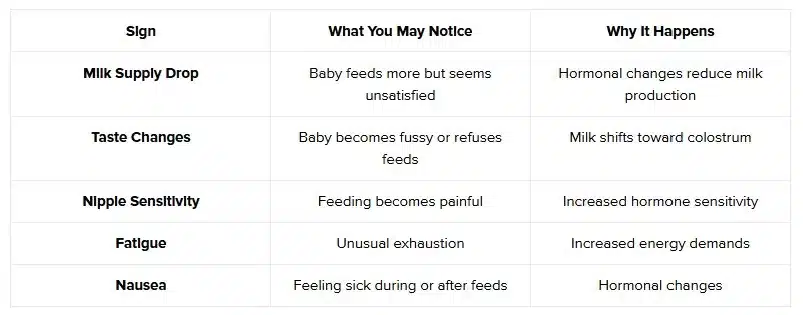
It can be hard to tell what is normal and what is new during this stage. If something feels different in your body or your baby’s feeding pattern, it is okay to trust that instinct and check further.
If you are trying to balance feeding, pumping, and rest, having a routine can help. Build one that fits your day with Breastfeeding and Pumping Schedule for New Moms.
How Does Breastfeeding Affect the Health of the Unborn Child?
If you are breastfeeding and pregnant at the same time, it is completely natural to wonder if your unborn baby is getting enough. Many moms feel this quiet worry. In most healthy pregnancies, your body is designed to support both, especially when your nutrition and rest are well managed.
The impact on your unborn baby depends on how your body balances nutrients, energy, and pregnancy conditions:
- Your Body Prioritizes Your Unborn Baby First: Even while breastfeeding, nutrients are directed to the fetus first, but low-calorie or iron intake can still affect steady and healthy growth.
- Energy Intake Affects How Your Baby Grows: If you are not eating enough, your body may conserve energy, which can slow down weight gain during later stages of pregnancy.
- Breastfeeding Hormones Cause Gentle Contractions: Oxytocin, the hormone released during nursing, can cause mild uterine tightening, but in healthy pregnancies, this is usually not a concern.
- Some Situations Need Closer Care And Attention: If you have a history of miscarriage, bleeding, or early labor, your doctor may monitor you more closely to keep both you and your baby safe.
It is okay to feel unsure or even a little overwhelmed. With the right support and nourishment, many moms safely breastfeed during pregnancy while keeping their growing baby healthy.
Final Thoughts
You’ve taken the time to understand what’s really happening in your body, and that matters. If you’ve been wondering, can you get pregnant while breastfeeding, the answer is not always straightforward, but now you have the clarity to make decisions with more confidence.
As your baby grows and feeding patterns change, your fertility can return in ways that are not always obvious. Knowing this helps you stay one step ahead, whether you are trying to avoid pregnancy or thinking about growing your family again.
If you are in this stage, it may also help to review your pump coverage and eligibility, especially as your feeding journey evolves. Speaking with a lactation consultant can give you personalized guidance based on your routine, your goals, and your baby’s needs.
Understanding whether you can get pregnant while breastfeeding puts you back in control, so you can move forward feeling informed, supported, and ready for what comes next.
FAQs
1. Does breastfeeding prevent pregnancy completely?
No, breastfeeding does not completely prevent pregnancy. It can delay ovulation under strict conditions, but once feeding patterns change, fertility can return even without obvious signs.
2. Does breastfeeding make you more fertile?
Breastfeeding does not make you more fertile. In fact, it usually suppresses fertility. However, once this suppression drops, fertility can return quickly and sometimes unpredictably.
3. Can getting pregnant while breastfeeding affect milk supply?
Yes, pregnancy can reduce milk supply due to hormonal changes. Many moms notice a drop in production within the first few weeks of pregnancy, even before confirming it.
4. Can you get pregnant while exclusively pumping?
Yes, pregnancy is possible while exclusively pumping. Pumping may not maintain the same hormonal suppression as direct breastfeeding, which can allow ovulation to restart sooner.
5. What happens to breastfeeding if you get pregnant?
Breastfeeding can continue during pregnancy, but you may notice changes like lower milk supply, increased nipple sensitivity, or your baby feeding differently due to taste changes.