










Can You Pump Both Breasts Into the Same Container? What You Need to Know

When you’re pumping multiple times a day, small decisions can make a big difference. You may be wondering if you can pump both breasts into the same container, and whether doing so is safe. The answer depends on timing, storage practices, and hygiene.
In many cases, pumping both breasts into the same container during a single session is perfectly safe and commonly done. However, there are a few important guidelines to follow to make sure your breast milk stays safe and properly stored.
This guide explains when combining milk is okay, when it’s best to keep it separate, and how to handle storage correctly.
Quick Summary
- You can pump both breasts into the same container if the milk is collected during the same pumping session.
- Combining milk is safe as long as you use clean equipment and follow proper storage guidelines.
- Milk from both breasts is nutritionally similar, and combining it does not reduce quality.
- Storage time is based on the earliest pumping time when milk is combined.
- Do not mix warm milk with cold milk unless both batches are cooled to the same temperature first.
- Using one bottle can save time and reduce cleanup, but separate bottles may help if you need to track output.
Why Pump Both Breasts Into the Same Bottle?

Pumping both breasts into the same bottle can be a convenient option for many people, especially when you’re pumping frequently. When done correctly during the same session, combining milk from both breasts is generally safe and can help simplify your routine.
Here are some common reasons people choose this approach:
- Reduces the number of bottles to wash: Fewer containers can mean less time spent cleaning and sterilizing pump parts.
- Saves time during pumping sessions: Collecting milk in one bottle can make setup and cleanup quicker.
- Simplifies milk storage and labeling: One container per session can be easier to track than multiple smaller bottles.
- Helps balance milk from both breasts: Combining milk may even out differences in fat content between breasts during a session.
- Works well with double electric pumps: Many pumps are designed to collect milk from both breasts simultaneously into one container.
- Can make feeding preparation easier: Having milk already combined may reduce the need to mix bottles later.
As long as milk is pumped at the same time and stored properly, using one bottle can be a practical and safe choice for many pumping routines.
How to Pump Both Breasts Into the Same Bottle
Pumping both breasts into the same bottle can be done safely when you follow a few simple guidelines. The key is making sure milk is collected during the same session, using clean equipment, and stored properly afterwards. This approach can help streamline your pumping routine without compromising milk safety.
Step-by-step guide:
- Start with clean pump parts and a clean bottle: Wash and fully dry all pump parts and the bottle before each session to prevent contamination.
- Use a double electric pump: Pump both breasts at the same time to ensure the milk comes from a single session.
- Attach both flanges to one collection bottle: If your pump setup allows, connect both collection lines to the same bottle or container designed to handle combined volume.
- Monitor the bottle’s capacity: Make sure the bottle is large enough to hold milk from both breasts to avoid overflow.
- Pump as usual: Use comfortable suction and cycle settings until milk flow slows and your breasts feel softer.
- Seal the bottle immediately after pumping: Cap the bottle once the session ends to maintain hygiene.
- Label the milk: Write the date and time of the pumping session on the container.
- Store milk promptly: Place the bottle in the refrigerator or freezer according to storage guidelines.
- Avoid adding milk from another session: Only milk pumped at the same time should be combined. If adding milk later, be sure both batches are cooled to the same temperature first.
Following these steps helps ensure that pumping both breasts into the same bottle stays safe, efficient, and easy to manage.
Suggested read: Breastfeeding and Pumping Schedule for New Moms
Practical Tips for Pumping Into One Bottle

While pumping both breasts into the same bottle can be convenient, a few thoughtful considerations can help keep milk safe and your routine running smoothly. Paying attention to storage, volume, and hygiene ensures that combining milk doesn’t create avoidable issues.
Here are helpful tips to keep in mind:
- Use only during the same pumping session: Combining milk is safest when both breasts are pumped at the same time.
- Choose a bottle with enough capacity: Make sure the container can comfortably hold milk from both breasts without overflowing.
- Label milk clearly: Always note the date and time of pumping, even when using a single bottle.
- Store promptly after pumping: Refrigerate or freeze milk as soon as possible to maintain freshness.
- Avoid mixing warm and cold milk: If combining milk later, ensure both portions are cooled to the same temperature first.
- Check pump compatibility: Not all pumps are designed for single-bottle collection; use approved accessories only.
- Watch for signs of contamination: Discard milk if it smells off, looks unusual, or if storage guidelines weren’t followed.
- Adjust based on your routine: Some people prefer separate bottles for tracking output; choose what works best for you.
These small considerations can help you decide whether this approach fits your pumping routine while keeping milk handling safe and stress-free.
Does Milk From Each Breast Have Different Nutrients?
It’s common to wonder whether milk from each breast is different, especially when you’re combining milk into one container. While breast milk composition can vary slightly, these differences are normal and not a safety concern.
Here’s what to know:
- Milk composition can vary throughout a session: Milk expressed at the beginning may be lower in fat than milk expressed later, regardless of which breast it comes from.
- Both breasts produce nutritionally complete milk: Each breast produces milk that meets your baby’s nutritional needs.
- Differences are usually minor and temporary: Variations in fat content or volume don’t affect milk safety or quality.
- Combining milk can help balance fat distribution: Mixing milk from both breasts may actually even out natural variations.
- Nutrient differences do not require separate storage: There’s no medical reason to store milk from each breast separately when pumped at the same time.
- Output differences don’t equal quality differences: One breast producing more milk doesn’t mean it produces “better” milk.
Milk from both breasts is equally valuable, and combining it during the same pumping session is generally safe.
Suggested read: How to Choose the Best Breast Pump for Exclusive Pumping
How to Handle Issues When Combining Pumped Milk

While pumping both breasts into the same container works well for many people, it can come with a few practical challenges. Most of these are easy to manage once you know what to watch for and how to adjust your routine.
Here are common challenges and simple solutions:
- Bottle overflow during pumping
Challenge: Milk volume from both breasts may exceed the bottle’s capacity.
Solution: Use a larger collection bottle or pause midway to transfer milk into a storage container. - Difficulty tracking output from each breast
Challenge: Combining milk makes it harder to see how much each breast produces.
Solution: Periodically pump into separate bottles if output tracking is important for you or your provider. - Accidentally mixing milk from different sessions
Challenge: Adding freshly pumped milk to already stored milk can affect safety.
Solution: Only combine milk from the same session, or cool both batches to the same temperature before mixing. - Pump setup compatibility issues
Challenge: Not all pumps are designed to collect milk into a single bottle.
Solution: Use manufacturer-approved accessories or follow pump-specific guidelines. - Milk contamination risks
Challenge: Improperly cleaned parts can introduce bacteria when milk is combined.
Solution: Thoroughly wash and fully dry all pump parts and containers before each use. - Uneven suction or flow
Challenge: One breast may respond differently during pumping, affecting flow.
Solution: Adjust flange placement or suction individually to support balanced pumping. - Storage confusion after combining milk
Challenge: Unclear labeling can lead to storage errors.
Solution: Label milk based on the oldest expression time once combined.
With small adjustments, these challenges can be easily addressed, allowing you to choose the setup that best fits your pumping routine.
Also Read: Breast Pumping Tips: Finding the Right Pump and Making It Work for You
Does Combining Milk Affect Storage Guidelines?
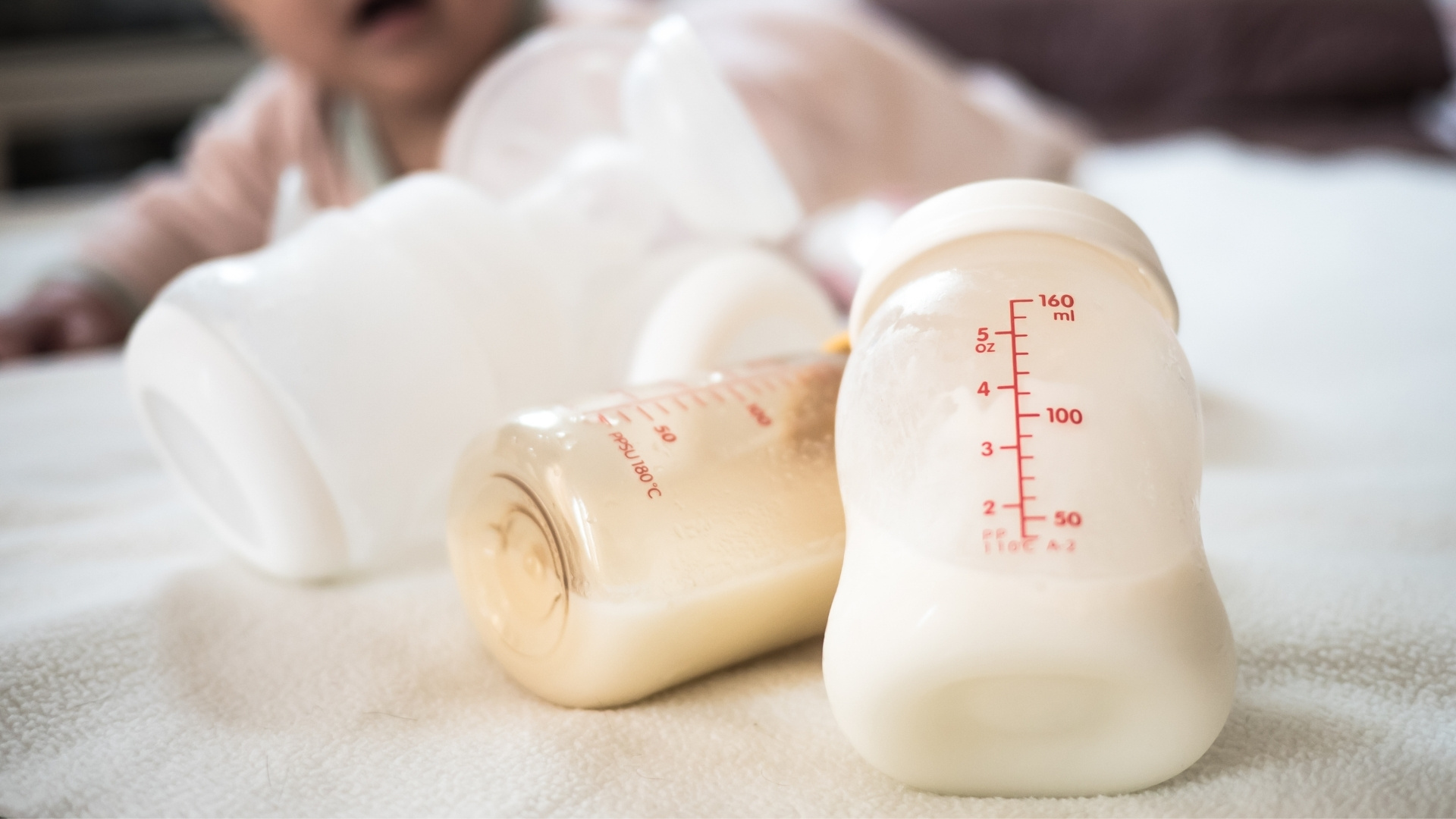
Combining milk from both breasts during the same pumping session does not change standard breast milk storage guidelines. What matters most is when the milk was pumped and how it’s handled afterward, not whether it came from one breast or both.
Here’s how storage works when milk is combined:
- Storage time is based on the oldest milk: If milk is combined from the same session, use that session’s time and date for labeling.
- Same-session milk follows normal guidelines
Milk pumped at the same time can be stored using standard room temperature, refrigerator, or freezer recommendations. - Mixing milk from different sessions requires cooling first: If you plan to combine milk pumped at different times, make sure both batches are fully cooled to the same temperature before mixing.
- Warm milk should not be added to cold milk: Adding freshly pumped warm milk to already chilled milk can affect safety and quality.
- Label clearly after combining: Always label the container with the earliest pumping time when milk is mixed.
- Use clean storage containers: Combining milk increases volume, so ensure containers are clean, food-grade, and properly sealed.
- Follow discard guidelines carefully: If storage limits are exceeded or handling guidelines weren’t followed, it’s safest to discard the milk.
When handled correctly, combining milk does not shorten storage life; it simply requires careful timing and labeling.
Suggested read: How Long Is Breast Milk Good After Warming?
Choosing the right support can make a noticeable difference during pregnancy, especially when there’s already so much to manage.
How Expert Support Can Simplify the Process
Handling insurance coverage on your own can feel surprisingly complicated. Between phone calls, paperwork, and coordinating with healthcare providers, it’s easy for the process to become stressful and time-consuming, especially during pregnancy.
Insurance Covered Breast Pumps (ICBP) simplifies this experience by managing the process from start to finish. The team works directly with insurance providers and your OB-GYN to help ensure you receive an eligible, medical-grade breast pump without unnecessary delays or confusion.
ICBP supports families by offering:
- Free insurance eligibility checks with major providers, including Blue Cross Blue Shield plans nationwide
- Direct coordination with your OB-GYN to obtain the required prescriptions
- Access to trusted breast pump brands, such as Spectra, Medela, Elvie, and Motif
- Fast, no-cost delivery so your pump arrives when you need it
By handling the details for you, ICBP helps reduce stress so you can focus on preparing for feeding and postpartum care.
Final Thoughts
Managing pregnancy comes with enough decisions, and navigating breast pump coverage doesn’t have to be one of the difficult ones. With the right information and support, preparing for pumping and feeding can feel far more manageable and less stressful.
If you’re planning to pump, having a medical-grade breast pump ready ahead of time can make a real difference once your baby arrives. Insurance Covered Breast Pumps (ICBP) helps simplify the process by handling insurance verification, prescriptions, and delivery, so you don’t have to.
Check your insurance eligibility today and take one simple step toward feeling more prepared for your breastfeeding journey.
FAQs
Can you pump both breasts into the same container?
Yes. If you are pumping both breasts during the same session, it is generally safe to collect the milk into one container, as long as clean equipment and proper storage guidelines are followed.
Is it safe to combine milk from both breasts?
Milk from both breasts is nutritionally similar and safe to combine when pumped at the same time. Combining does not affect milk quality.
Can you mix milk from different pumping sessions?
You can combine milk from different sessions only after both batches have been cooled to the same temperature. Never add warm milk directly to chilled milk.
Does combining milk affect storage time?
Storage time is based on the oldest milk in the container. Always label combined milk using the earliest pumping time.
Will combining milk change fat content or nutrition?
No. Breast milk naturally varies in fat content during a session. Combining milk may actually help balance these natural variations.
Should I use one bottle or two when pumping?
Either option is safe. Some parents prefer one bottle for convenience, while others use two bottles to track output from each breast. Choose what works best for your routine.
When should milk be kept separate?
You may want to keep milk separate if tracking output for medical reasons, managing supply differences, or pumping at different times.