











Lansinoh Discreet Duo vs Wearable Pump: What Actually Works for You?

Trying to figure out Lansinoh Discreet Duo vs wearable pump can feel more confusing than it should. You read one site that says one thing, another that says something different, and suddenly it is hard to tell what actually matters for you.
What you really want is a clear, honest answer that helps you choose a pump that feels comfortable, works with your body, and fits into your day without added stress.
In this guide, we bring everything together in one place and break down Lansinoh Discreet Duo vs wearable pump in a simple, practical way so you can feel confident about your choice.
Key Takeaways
- Suction Strength vs Comfort: Wearable Pump offers stronger suction (280 mmHg), while DiscreetDuo provides gentler, more controlled adjustment based on how your body responds.
- Capacity and Session Flow: 8 oz cups in the Wearable Pump support longer sessions, while 6 oz cups in DiscreetDuo may need mid-session emptying for higher output.
- Flange Fit Matters: More flange sizes in the Wearable Pump improve fit flexibility, which supports better comfort and milk removal.
- Control vs Battery Life: DiscreetDuo offers timed sessions, while the Wearable Pump supports longer use without frequent charging.
- Insurance and Cost: Coverage depends on your insurance plan. Many moms find DiscreetDuo fully covered, while the Wearable Pump may involve eligibility checks or an upgrade fee depending on benefits.
What Is the Difference Between Lansinoh Discreet Duo and Wearable Pumps?
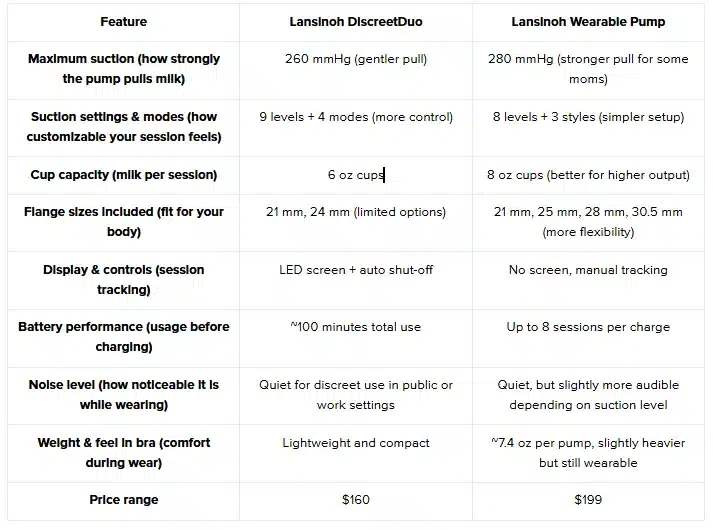
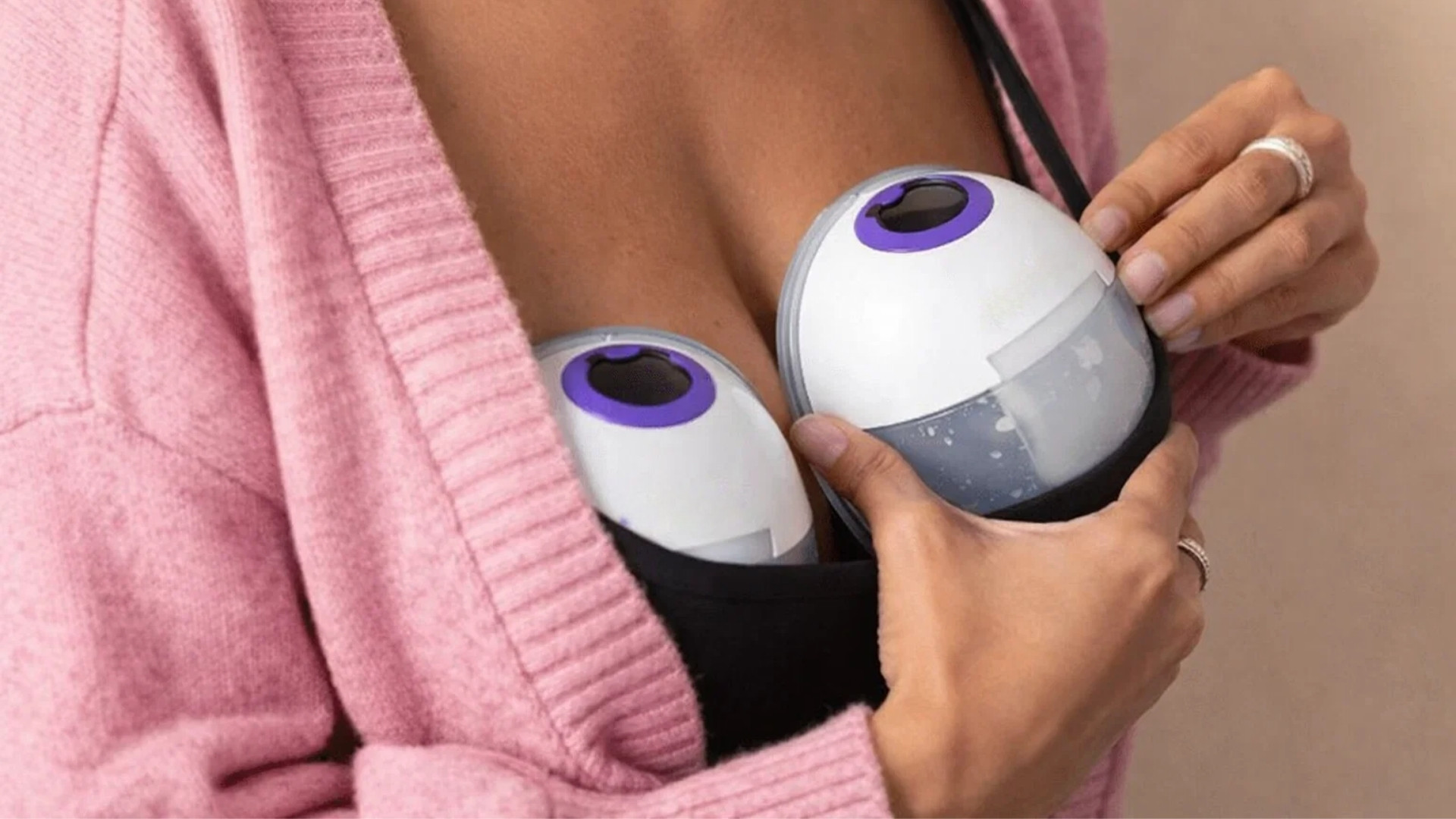
Both pumps are designed to sit inside your bra and let you move freely while pumping. The difference comes down to how strongly they pull milk, how much they can hold, how they fit your body, and how much control you have during each session.
Lansinoh Discreet Duo vs Wearable Pumps
Key differences that affect the daily pumping experience:
What these differences mean for your routine
- Stronger suction (mmHg) means the pump pulls milk more forcefully. Some moms respond better to higher suction, while others feel more comfortable with a gentler setting.
- More flange sizes matter if you struggle with fit. A poor fit can reduce output or cause discomfort, so having more size options can make a real difference.
- Larger cups (8 oz vs 6 oz) are helpful if you tend to produce more milk in one session and want to avoid stopping midway.
- Display and auto shut-off can reduce mental load. You do not have to track time or worry about over-pumping.
In simple terms, if you want more control and a simpler option that is commonly covered depending on your plan, the DiscreetDuo may feel easier to manage. If you need higher capacity, stronger suction, and more sizing flexibility, the Wearable Pump may fit your routine better.
Choosing the right pump becomes much easier when you walk through a clear framework like How to Choose the Best Breast Pump for Exclusive Pumping
Real-Life Use Cases: Which Pump Fits Your Routine Better?
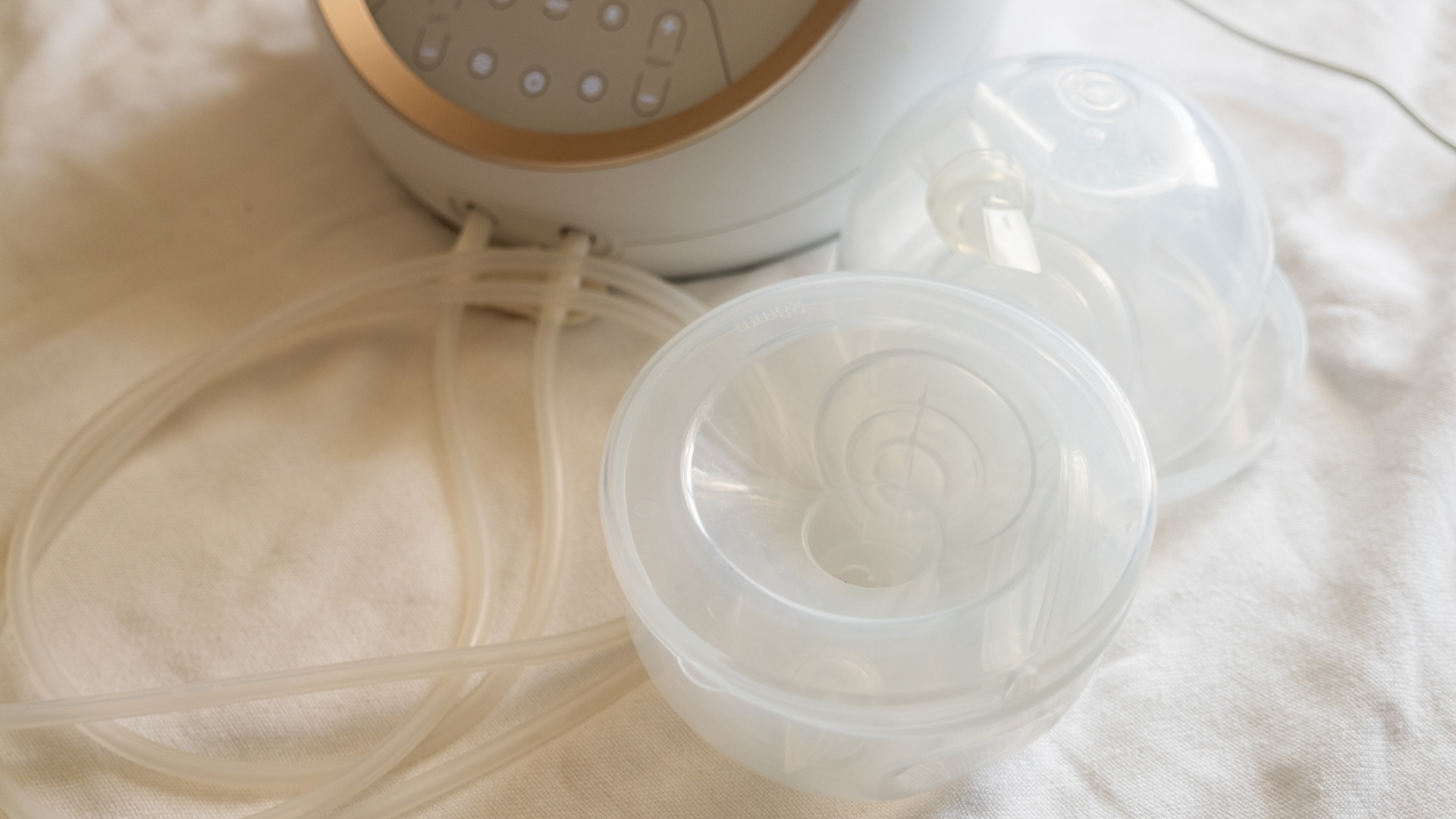
Choosing between these two pumps often comes down to how your day actually looks. Your milk volume, how long you stay away from charging, and whether you need guided sessions or flexibility all play a role in what will feel easier to manage.
Choose Lansinoh DiscreetDuo if your routine looks like this
The following scenarios highlight when structured sessions and predictable use matter more than extended capacity:
- Time-tracked sessions: Built-in timer with auto stop at 20 minutes helps prevent over-pumping and keeps sessions consistent when you are multitasking or feeling mentally stretched.
- Insurance-first decision: Coverage depends on your specific plan, but many moms find DiscreetDuo included as a covered option, which can help lower or avoid upfront costs.
- Controlled stimulation needs: Nine suction levels and four modes allow gradual adjustments, helpful if your body responds better to slower transitions between let-down and expression phases.
Choose Lansinoh Wearable Pump if your routine looks like this
The following scenarios reflect situations where higher output, fewer interruptions, and flexibility matter more than guided features:
- High-volume sessions: Eight-ounce cups reduce the need to pause mid-session, which can interrupt milk flow and make it harder to fully empty the breast.
- Long hours away from charging: Battery designed for multiple sessions supports extended use during travel days, long shifts, or outings where charging access is limited.
- Immediate fit without trial and error: Four flange sizes included increase the chances of a correct fit from day one, which supports better milk removal and reduces nipple discomfort.
If your day benefits from guided, predictable sessions and lower upfront cost, DiscreetDuo fits well. If your routine demands longer use, higher output handling, and fewer interruptions, the Lansinoh wearable pump is likely the better match.
Getting familiar with how different pumps work can make daily sessions more comfortable, especially with a guide like Electric Breast Pump Guide: Safe, Comfortable Pumping Made Simple
Cleaning, Assembly, and Maintenance (What Moms Care About Most)
Daily pumping becomes easier when cleaning and setup feel manageable. Both pumps are designed to reduce time at the sink, but they differ in part design, assembly precision, and care instructions. Knowing these small details can help prevent leaks, protect suction, and save time.
- Number of parts involved: Wearable Pump uses 3 main parts, while DiscreetDuo uses 4, including a valve, which requires closer attention during cleaning to prevent residue buildup.
- Assembly precision for suction seal: Proper alignment of the diaphragm and flange is critical; even a small gap can reduce suction and affect how effectively milk is expressed.
- Dishwasher safety limits: Both are dishwasher safe, but DiscreetDuo requires temperatures under 90°C (194°F) to prevent material damage and maintain long-term durability.
- Valve maintenance importance: DiscreetDuo includes a valve that must be checked for wear or milk residue, as buildup can reduce suction strength over time.
- Charging and battery care: DiscreetDuo performs best with standard charging blocks instead of fast chargers, which helps maintain battery health and consistent pump performance.
If you want fewer parts and a simpler assembly, the Wearable Pump may feel easier. If you are comfortable managing one extra component for more controlled use, DiscreetDuo works well.
Comfort often comes down to the right fit, which is exactly what Best Breast Pump for Large Breasts 2026: Comfort, Fit, and Support breaks down in detail
Is the Lansinoh Discreet Duo or Wearable Pump Covered by Insurance?
Most U.S. health insurance plans cover a breast pump under the Affordable Care Act (ACA), but the type of pump and cost depend on your plan. The DiscreetDuo is typically insurance-first, while the Wearable Pump may involve eligibility checks or upgrade costs.
- DiscreetDuo insurance availability: Coverage depends on your specific insurance plan. Many providers include DiscreetDuo as a covered option, but full coverage or upgrade fees will vary based on your benefits.
- Wearable pump eligibility check: Coverage varies by plan, and you may need to confirm eligibility online or through a supplier to see if partial or full coverage applies.
- Upgrade fee differences: Some plans cover only basic pumps, so choosing a wearable model like the standard Wearable Pump may require an additional out-of-pocket upgrade payment.
- Prescription requirement explained: Most insurance providers require a doctor’s prescription, which is a simple approval confirming medical need for a breast pump under your maternity benefits.
- FSA and HSA usage flexibility: If insurance does not fully cover your pump, you can use Flexible Spending Accounts (FSA) or Health Savings Accounts (HSA) to pay with pre-tax funds.
DiscreetDuo is often easier to get fully covered, while the Wearable Pump may need eligibility checks or an upgrade fee, depending on your plan.
Common Problems Moms Face (and How to Fix Them)
Even with a well-designed wearable pump, small technical issues can affect comfort and milk output. Most problems come down to fit, sealing, or handling. The good news is that these are usually easy to fix once you know exactly what to look for.
- Weak suction or inconsistent pulling: Small gaps between parts break the vacuum seal, which is the airtight suction needed to draw milk effectively during each pumping cycle.
- Milk leaking into the bra: Misaligned cup edges or an uneven diaphragm can cause milk to escape, especially if the pump is not sitting flush against your breast.
- Nipple pain or redness: A flange is the tunnel-shaped piece that fits over your nipple, and the wrong size can cause rubbing, swelling, or restricted milk flow.
- Pump not emptying the breast fully: If suction feels uneven or stops early, it may be due to incorrect positioning or a worn valve that reduces consistent milk expression.
- Battery draining faster than expected: Using incompatible charging blocks or not fully charging between sessions can reduce battery efficiency, leading to shorter pumping time than expected.
Most issues are fixable with small adjustments. Once fit and assembly are correct, pumping usually feels smoother, more comfortable, and much more effective.
Planning ahead for delivery can ease a lot of uncertainty, and Does the Hospital Give You a Breast Pump? What to Expect After Delivery explains what you can expect step by step
How to Choose the Right Pump for You (Simple Decision Guide)
Choosing between these two pumps becomes easier when you focus on how your body responds to pumping and what your day demands. Small technical differences, like cup capacity or flange fit, can directly affect comfort, output, and how smoothly your routine runs.
- Prioritize cost through insurance: If your plan covers only specific models, DiscreetDuo is often approved without upgrade fees, reducing upfront cost while still meeting standard pumping needs.
- Assess milk volume per session: If you regularly pump larger volumes in one sitting, an 8-oz capacity prevents interruption, which helps maintain consistent milk flow and reduces session breaks.
- Match flange size to your body: A flange is the part that fits around your nipple, and having multiple sizes increases the chance of a proper seal and better milk removal.
- Evaluate session control preferences: If you prefer structured sessions with automatic timing, built-in tracking reduces the need to monitor duration manually and helps maintain consistent pumping habits.
- Plan for daily usage conditions: If your routine involves extended hours away from charging, a pump designed for multiple sessions per charge will reduce interruptions and keep your schedule steady.
The right choice depends on what your body needs and how your day flows. Once those align, pumping feels more predictable and far less stressful.
Tips to Get the Most Out of Your Lansinoh Wearable Pump or DiscreetDuo
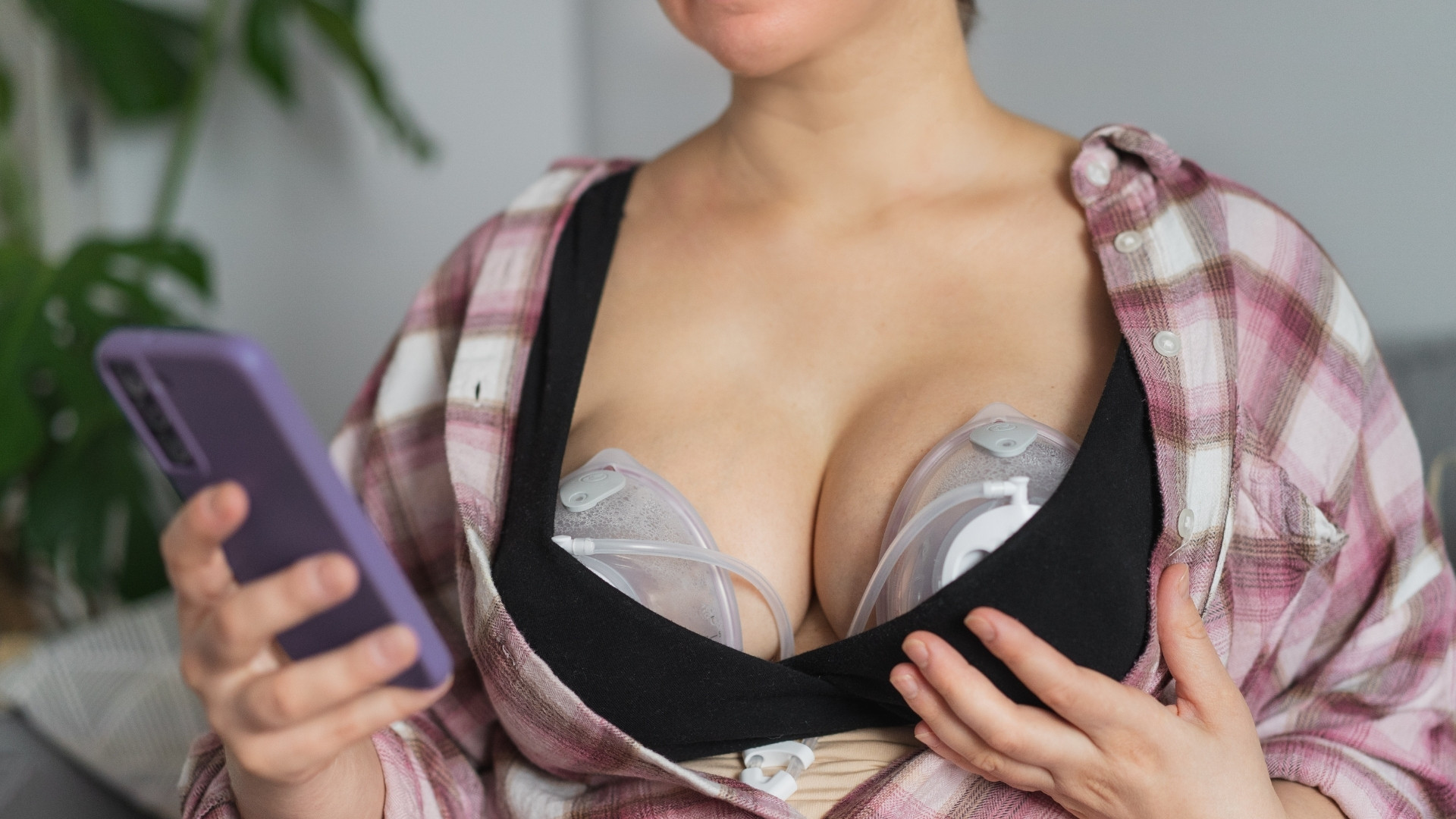
Small adjustments can improve how both the Lansinoh Wearable Pump and DiscreetDuo perform during daily use. Since both rely on proper sealing, positioning, and suction patterns, fine-tuning these details can help improve comfort, milk flow, and consistency across sessions.
- Use stimulation mode to trigger let-down: Both Lansinoh Wearable Pump and DiscreetDuo offer multi-phase settings that begin with faster suction to trigger milk flow before switching to deeper expression.
- Align the flange correctly for consistent suction: The flange tunnel should center your nipple without touching the sides, which helps both pumps maintain steady suction and reduce irritation during longer sessions.
- Adjust suction gradually based on response: With 8–9 suction levels across both models, increasing slowly helps your body adapt and improves milk flow without causing discomfort or tension.
- Keep the pump stable inside your bra: Both models sit inside the bra, so keeping them upright supports proper milk collection and prevents shifting that can break the suction seal.
- Follow a consistent pumping schedule: Regular use signals your body to maintain supply, which helps both Lansinoh models perform more predictably across different times of the day.
When fit, positioning, and suction are adjusted correctly, both Lansinoh pumps tend to feel more comfortable and work more consistently throughout your day.
Final Thoughts
You now have a clearer picture of Lansinoh Discreet Duo vs wearable pump, and more importantly, how each one fits into your own routine and body needs. That clarity can make a real difference when you are trying to keep pumping consistently without added stress.
If you are still unsure, a quick conversation with a lactation consultant can help you fine-tune your choice, especially when it comes to fit and pumping comfort. It is also worth checking your insurance eligibility so you can access the option that works best for you without unnecessary costs.
As you move forward, trust that choosing between Lansinoh Discreet Duo vs wearable pump is not about finding a perfect answer, but about finding what supports you and your baby day after day.
FAQs
1. Does suction feel different in Lansinoh Discreet Duo vs Lansinoh wearable during let-down?
Yes, some moms notice a difference during let-down, which is when milk starts flowing. The Lansinoh wearable may feel slightly stronger, while the Discreet Duo allows more gradual adjustment.
2. Can Lansinoh wearable vs discreet duo affect how fully the breast empties?
It can. Breast emptying depends on fit and suction pattern. If the flange fit is off or suction feels uneven, either pump may leave some milk behind.
3. Is the Lansinoh wearable double electric breast pump better for building milk supply?
A double electric pump can support the supply by stimulating both breasts at once. The Lansinoh wearable double electric breast pump offers this, but consistency matters more than the model itself.
4. How does Elvie Stride vs Lansinoh Discreet Duo compare for daily wear under clothes?
Elvie Stride uses external tubing, while Discreet Duo sits fully inside the bra. This can make Discreet Duo feel less noticeable under fitted clothing.
5. Do Lansinoh discreet duo vs lansinoh wearable differ in how they handle movement?
Yes, movement can affect positioning. Both are wearable, but stability depends on bra support and alignment, which helps maintain consistent suction during activity.