












How to Keep a Newborn Awake While Breastfeeding: 10 Practical Tips

Feeding a newborn doesn’t always go as smoothly as expected. Many parents notice that their baby begins nursing but quickly falls asleep before finishing a full feed. This can feel frustrating, especially when you’re unsure whether your baby is getting enough milk.
If you’re wondering how to keep a newborn awake while breastfeeding, you’re not alone. Sleepiness during feeds is common in the early weeks as newborns adjust to life outside the womb. Fortunately, a few simple techniques can help keep your baby engaged long enough to feed effectively.
This guide explains why newborns fall asleep while nursing and offers practical ways to help them stay awake during breastfeeding.
A Quick Summary
- Newborns commonly fall asleep during breastfeeding because feeding requires effort, and the warmth of nursing can make babies feel relaxed and sleepy.
- Recognizing early signs of sleepiness, such as slower sucking or longer pauses, can help parents gently stimulate their baby to continue feeding.
- Simple techniques like switching breasts, breast compression, skin-to-skin contact, and gentle stimulation can help keep babies engaged during nursing.
- Creating a slightly more alert feeding environment and feeding when early hunger cues appear may support longer feeding sessions.
- If your baby frequently falls asleep within a few minutes of feeding or is not gaining weight as expected, consulting a pediatrician or lactation consultant can help ensure feeding is progressing well.
Why Do Newborns Fall Asleep While Breastfeeding?
It is very common for young babies to fall asleep while breastfeeding, especially during the first few weeks of life. Newborns spend a large portion of their time sleeping. In the first few weeks, it’s normal for babies to sleep 11–17 hours per day, according to the National Sleep Foundation. The warmth, closeness, and comfort of breastfeeding can also make babies feel relaxed and sleepy.
In most cases, occasional sleepiness during feeding is normal. However, understanding why babies fall asleep can help parents support more effective feeding sessions.
Common reasons newborns fall asleep while nursing include:
- Newborns sleep a lot in the early weeks: Most newborns sleep between 14 and 17 hours a day, so becoming sleepy during feeds is normal.
- Breastfeeding is soothing: The warmth, skin contact, and rhythmic sucking can naturally relax babies and make them drowsy.
- Feeding requires energy: Newborns are still learning to coordinate sucking and swallowing, which can tire them quickly.
- Milk flow may slow during feeding: When milk flow slows, some babies lose interest and drift off to sleep.
- Babies have small stomachs: Because newborn stomachs are small, they may feed briefly and fall asleep before completing a full feeding.
While sleepiness is common, gentle stimulation techniques can help babies stay engaged long enough to receive adequate milk during feeding.
Also read: Breastfeeding Hygiene Tips For New Mothers
Signs Your Baby Is Falling Asleep Too Early

During the early weeks, it’s common for newborns to become sleepy while breastfeeding. However, sometimes babies drift off before completing a full feeding. Recognizing these early signs can help you gently stimulate your baby and encourage them to continue nursing.
Here are some signs that your baby may be falling asleep too soon during feeding:
- Sucking becomes slow or weak: Active sucking gradually slows down, and your baby may take longer pauses between each suck.
- Swallowing sounds stop: You may notice fewer or no swallowing sounds, indicating that milk transfer has slowed.
- Long pauses between sucks: Instead of a steady sucking rhythm, your baby pauses frequently or stops sucking altogether.
- Jaw movement becomes minimal: The strong jaw movement seen during active feeding becomes softer or stops.
- Baby releases the breast early: Your baby may unlatch or loosen their latch shortly after starting the feed.
- Body becomes relaxed and limp: Arms and hands relax completely, and your baby appears fully drowsy or asleep.
- Eyes remain closed throughout the feed: Babies who stay asleep during most of the feeding session may not feed actively.
Recognizing these signs early can help you respond with gentle stimulation so your baby continues feeding and receives enough milk.
Suggested read: Breastfeeding and Pumping Schedule for New Moms
10 Tips for Waking Up a Sleepy Baby During Breastfeeding

Newborns often become sleepy while nursing because feeding requires effort, and the warmth and closeness of breastfeeding can be very soothing. While occasional sleepiness is normal, gentle stimulation can help encourage your baby to stay awake long enough to complete a full feeding. The goal isn’t to fully wake your baby, but to help them remain alert enough to continue sucking and swallowing effectively.
Here are ten practical tips that can help keep your baby engaged during breastfeeding:
- Switch breasts when sucking slows down: If your baby begins to suck more slowly or pauses frequently, switching to the other breast can help restart active feeding. The change in milk flow often encourages babies to suck more actively again.
- Use breast compression to increase milk flow: Gently squeezing your breast while your baby is nursing can help increase the flow of milk. When milk flows more easily, babies are often more motivated to keep sucking rather than drifting off to sleep.
- Try skin-to-skin contact: Holding your baby against your bare chest can stimulate natural feeding instincts. Skin-to-skin contact can also help regulate your baby’s temperature and encourage more alert feeding behavior.
- Remove extra clothing: Babies who are bundled in several layers may become too warm and comfortable, making them more likely to fall asleep. Nursing your baby in just a diaper or lighter clothing can help them stay more alert.
- Gently stimulate your baby during the feed
Light stimulation can help maintain your baby’s alertness without interrupting feeding. Rubbing your baby’s back, stroking their cheek, or gently tickling their feet can encourage them to continue sucking. - Burp your baby midway through feeding: Some babies fall asleep because they feel full of air rather than milk. Pausing to burp your baby during the feeding can relieve pressure and wake them slightly, allowing them to continue nursing.
- Change your baby’s diaper before feeding: A quick diaper change before starting a feed can help wake your baby enough to nurse more actively. Some parents also find it helpful to change diapers halfway through feeding if their baby becomes sleepy.
- Adjust the feeding environment: A room that is very dark or quiet may encourage sleep rather than feeding. Slightly brighter lighting or gentle talking can help keep your baby more alert during the feeding session.
- Watch for early feeding cues: Feeding your baby when they first show signs of hunger, such as rooting or bringing their hands to their mouth, can make feeding easier. Babies who are overly tired may not have the energy to stay awake during a full feed.
- Try repositioning your baby: Sometimes, a small position change can help wake your baby enough to continue feeding. Sitting your baby more upright or shifting their position slightly may help them stay engaged.
Using gentle techniques like these can help encourage longer and more effective feeding sessions while keeping the experience calm and comfortable for both you and your baby.
Suggested read: How to Choose the Best Breast Pump for Exclusive Pumping
Best Breastfeeding Positions to Help Keep Your Baby Awake
Certain breastfeeding positions can help babies stay more alert during feeding by improving milk flow and encouraging active sucking.
Here are a few positions parents often find helpful:
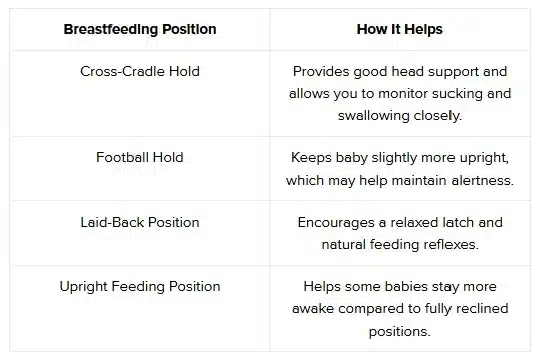
Trying different positions can sometimes make feeding sessions smoother and more productive.
Suggested read: Best Nausea Relief Bands Explained: Benefits, Types, and Top Picks
Common Mistakes That Make Babies Sleep During Breastfeeding

It’s natural for newborns to become sleepy during breastfeeding, but certain habits or feeding conditions can make babies even more likely to fall asleep before finishing a full feed. Being aware of these common mistakes can help parents make small adjustments that support more active and effective feeding sessions.
Here are some common factors that may contribute to babies falling asleep too quickly while nursing:
- Feeding in a very warm environment: Warm rooms, heavy blankets, or multiple layers of clothing can make babies feel overly cozy. When babies become too comfortable, they may drift off to sleep before completing the feeding.
- Waiting until the baby is overly tired: Babies who are already very sleepy may not have enough energy to stay awake and nurse effectively. Feeding when early hunger cues appear can help babies remain more alert.
- Allowing long pauses without stimulation: If your baby’s sucking slows down and pauses become longer, they may fall asleep unless gently stimulated to continue feeding.
- Very dim lighting during daytime feeds: While low lighting is helpful during nighttime feeds, very dim environments during the day can encourage babies to become sleepy rather than alert for feeding.
- Not switching breasts during feeding: Staying on one breast for too long when milk flow slows can cause babies to lose interest and fall asleep. Switching breasts can help restart active sucking.
- Poor latch or slow milk transfer: If milk flow is limited due to latch issues, babies may become frustrated or tired and fall asleep before getting enough milk.
- Feeding immediately after the baby wakes from a deep sleep: Babies who are still very drowsy may not fully wake up for feeding. Gentle stimulation before nursing can help them become more alert.
- Not burping during longer feeding sessions: Trapped air can make babies uncomfortable or sleepy. Burping midway through a feed can help wake them slightly and allow them to continue feeding.
Recognizing these common patterns can help parents make simple adjustments that support longer and more productive breastfeeding sessions.
Suggested read: Common Breastfeeding Pain Questions and Solutions
How Expert Support Can Make Breastfeeding Easier
Breastfeeding a newborn comes with a learning curve for both parent and baby. When your baby frequently falls asleep during feeds, it can raise concerns about whether they’re getting enough milk or feeding effectively. Alongside techniques like stimulation and switching breasts, having the right support and equipment can make a meaningful difference.

Insurance Covered Breast Pumps (ICBP) helps simplify the process by assisting families in accessing high-quality breast pumps through their insurance plans. By coordinating the steps involved, ICBP helps reduce stress so parents can focus on establishing a comfortable feeding routine.
ICBP supports families by offering:
- Free insurance eligibility checks with major providers, including Blue Cross Blue Shield plans nationwide
- Direct coordination with your OB-GYN to obtain required prescriptions
- Access to trusted breast pump brands such as Spectra, Medela, Elvie, and Motif
- Fast, no-cost delivery so your pump arrives when you need it
With the right tools and guidance, parents can feel more confident managing feeding challenges and supporting their newborn’s nutritional needs.
Final Thoughts
Learning how to keep a newborn awake while breastfeeding can take patience and a bit of trial and error. In the early weeks, babies are still adjusting to feeding patterns and often become sleepy during nursing.
Over time, most babies naturally develop stronger feeding stamina and become more efficient at nursing. If sleepiness during feeds continues to affect feeding duration or weight gain, speaking with a pediatrician or lactation consultant can provide helpful guidance and reassurance.
If you’re managing breastfeeding challenges, having the right support and equipment can make the journey easier. You can check your eligibility for an Insurance Covered Breast Pump (ICBP) to access trusted breast pump brands through your insurance plan.
The right pump, combined with helpful feeding techniques, can support consistent milk removal and make breastfeeding feel more manageable for both you and your baby.
FAQs
1. Is it normal for newborns to fall asleep while breastfeeding?
Yes, it’s very common. Newborns sleep a lot during the early weeks, and the warmth and comfort of breastfeeding can easily make them drowsy during feeds.
2. How long should a newborn stay awake while breastfeeding?
Many newborns feed for about 20–40 minutes per session, but this can vary depending on the baby’s age, feeding efficiency, and milk flow.
3. Should I wake my newborn if they fall asleep during feeding?
If your baby falls asleep shortly after starting the feed and hasn’t nursed actively, gently stimulating them to continue feeding can help ensure they receive enough milk.
4. What are the signs my baby is actively feeding?
Active feeding usually includes rhythmic sucking, audible swallowing, steady jaw movement, and a relaxed but alert body posture.
5. How often should I feed a newborn?
Most newborns feed every 2–3 hours, though some may feed more frequently during growth spurts.
6. Can a baby get enough milk if they fall asleep during feeding?
Sometimes yes, but if your baby consistently falls asleep early and feeds briefly, they may not be getting enough milk. Monitoring diaper output and weight gain can help assess feeding adequacy.
7. What should I do if my baby is always sleepy during feeds?
Try techniques like switching breasts, gentle stimulation, breast compression, or adjusting the feeding environment. If sleepiness continues, consider consulting a lactation consultant or pediatrician.