












Freemie Liberty vs Independence: Which Pump Is Right for You?

You’re trying to figure out Freemie Liberty vs Independence, and honestly, it can feel confusing. They look almost identical, promise the same hands-free freedom, and one might even be covered by insurance. So how do you know which one is actually right for you?
You’re not alone if this feels overwhelming. Many moms find themselves stuck between features, pricing, and what will actually work for their body and routine.
In this guide, we’ll walk through Freemie Liberty vs Independence step by step, so you can clearly see what sets them apart, how they feel in real life, and which one will actually work for your day-to-day routine.
Key Takeaways
- Choose between electric, wearable, or manual pumps based on how often you plan to pump each day, so your setup matches your routine and avoids early frustration.
- Use adjustable suction and cycle settings thoughtfully. For example, increasing cycle levels beyond 10 can support stronger draw patterns when standard settings are not triggering a consistent let-down.
- Start with correct flange sizing (25mm or 28mm) as proper fit directly affects comfort, vacuum seal, and milk flow efficiency.
- Make sure tubing and connectors are securely aligned before each session, since even small air leaks can reduce suction strength and overall pumping effectiveness.
- Check insurance eligibility during the third trimester so you can secure options like Freemie Independence in time and avoid delays or unexpected out-of-pocket costs.
Freemie Liberty vs Independence: What’s the Difference?
You might be wondering if the Liberty and Independence actually perform differently or if the changes are minor. The truth is, both pumps offer very similar suction performance and core functionality, but differ in how you control sessions, track output, and manage comfort during longer use.
Freemie Liberty vs Independence: Side-by-Side Comparison 2026
Both pumps offer the same core performance, but the differences in controls and usability can change how easy your daily pumping routine feels.
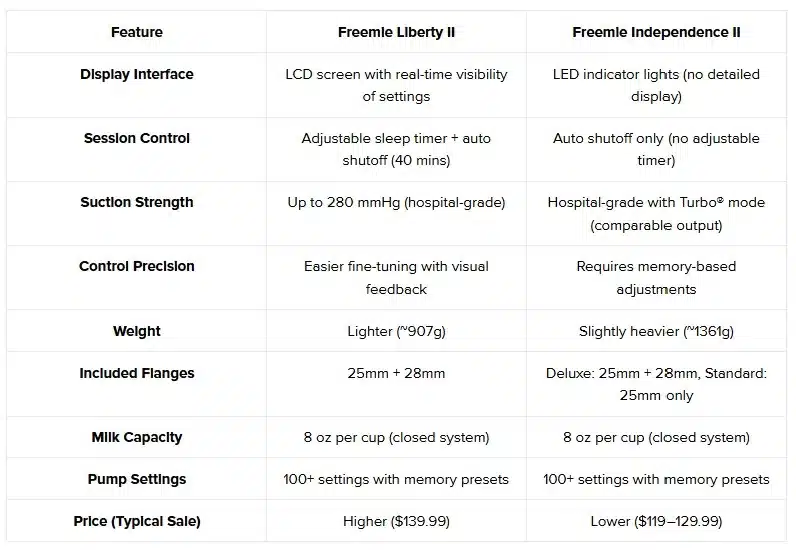
What This Means for You: Differences between the two pumps come down to control and convenience, not output. If tracking and adjusting your sessions visually matters, Liberty offers that ease, while Independence focuses on core performance at a lower cost.
If you prefer visual control and guided sessions, Liberty feels easier to manage, while Independence gives you the same pumping performance without the extra features.
If you’re still unsure how pump design affects hygiene and performance, this guide will walk you through it clearly: What You Need to Know About Open vs. Closed Breast Pump Systems
Real Mom Experience: Output, Comfort, and Daily Use
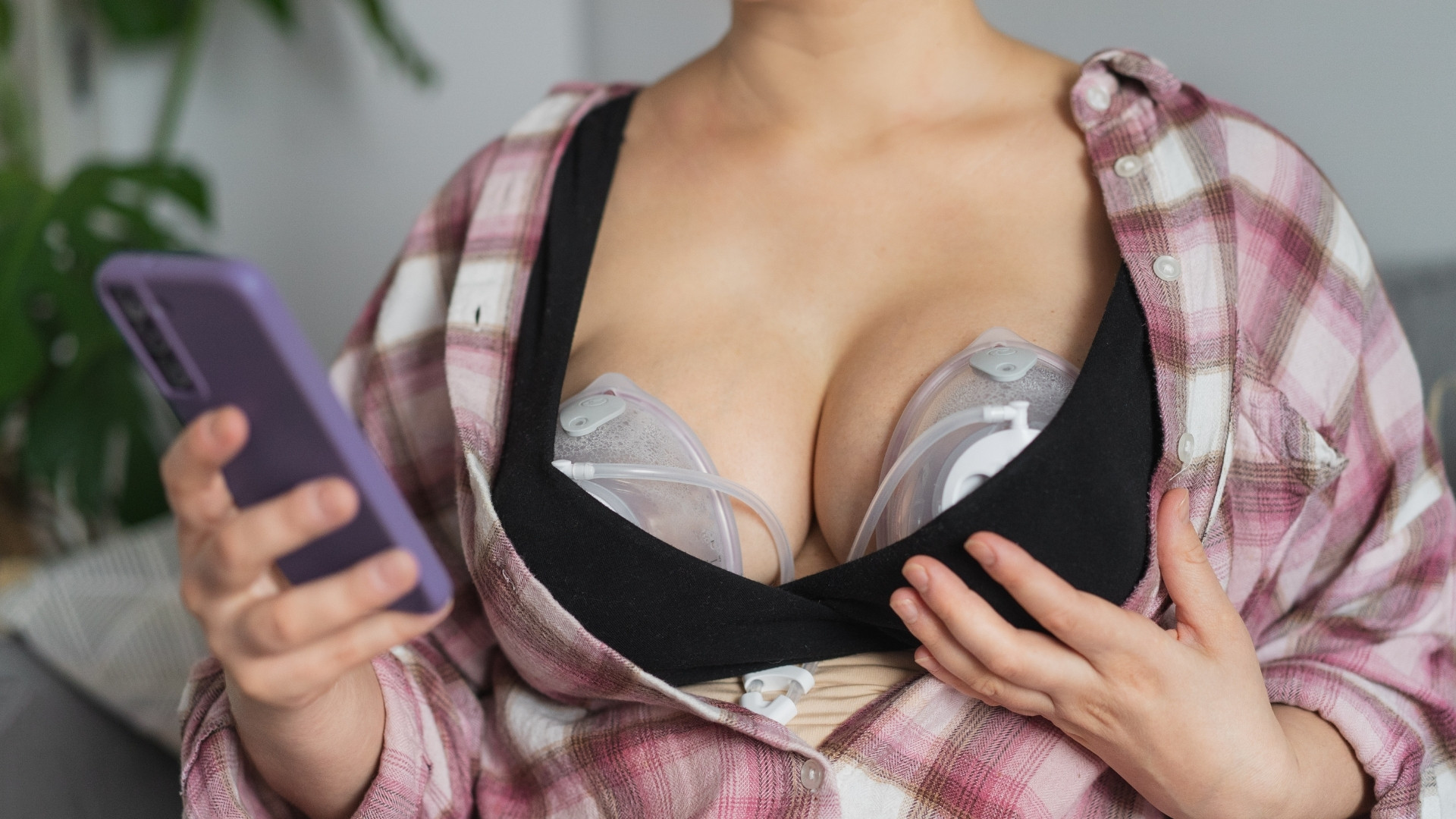
You might be wondering how these pumps actually feel once you start using them in real life. Both Liberty and Independence are built for movement and flexibility, but your experience depends on fit, settings, and how your body responds over multiple sessions.
Key aspects of real-world use that shape output, comfort, and daily routine include:
- Output Consistency: Milk output depends on maintaining steady suction cycles and proper let-down timing, especially when using Turbo® mode for extended draw and release patterns during sessions.
- Flange Fit Precision: Correct flange sizing (25mm vs 28mm or inserts) directly affects milk flow efficiency and comfort, since poor fit can reduce output and cause discomfort.
- Bra Support Stability: A structured, supportive bra keeps cups properly aligned against breast tissue, preventing suction loss and helping maintain consistent pressure throughout the session.
- Mobility and Discreet Use: Lightweight cups and hip-clipped pumps allow movement during pumping, but positioning must remain stable to avoid interruptions in suction or reduced efficiency.
- Session Setup Efficiency: Memory settings for preferred suction and cycle combinations reduce setup time, allowing quicker transitions into effective pumping without repeated manual adjustments.
With the right fit and setup, both pumps can feel natural and manageable during daily use, though a short adjustment period is common for most moms.
Want a deeper look at how electric pumps work and what makes them comfortable for daily use? Start here: Electric Breast Pump Guide: Safe, Comfortable Pumping Made Simple
Pros and Cons of Freemie Liberty and Independence
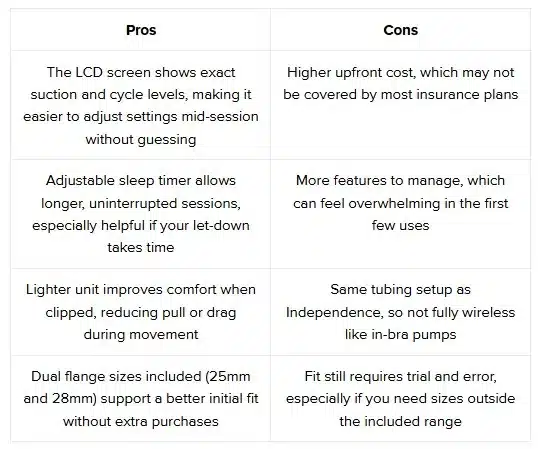
When comparing these two pumps, the differences show up in how much control you have during sessions, how easy it is to manage settings, and what you get out of the box. Both share the same pumping system, but the experience can feel slightly different day to day.
Freemie Liberty II: Pros and Cons
Freemie Independence II: Pros and Cons
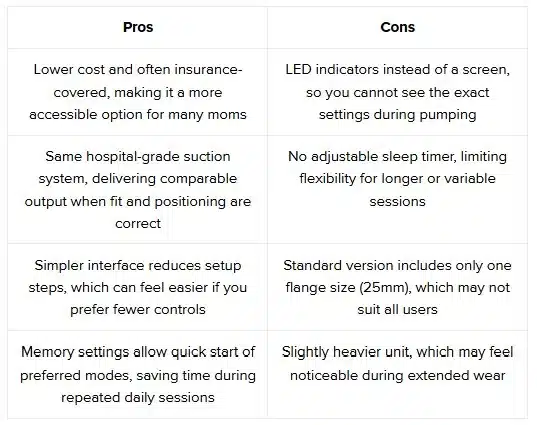
Liberty offers more control and ease during sessions, while Independence gives you the same core performance in a simpler, more budget-friendly setup.
If you’re comparing wearable options with traditional setups, this breakdown can help you decide what fits your routine best: Wearable Breast Pump vs Regular Pumps Pros, Cons, and Differences
Which Freemie Pump Is Right for You?

Choosing between Freemie Liberty and Independence depends on how you prefer to control your sessions, what level of visibility you need, and whether insurance coverage matters. Both deliver similar suction performance, but differ in interface, timing control, and what comes included for fit and daily convenience.
Choose Freemie Liberty If
Situations where Liberty makes daily pumping easier and more predictable:
- You Prefer Real-Time Control Visibility: LCD display shows exact suction and cycle levels, helping you adjust settings precisely during let-down without relying on memory or guesswork.
- Your Sessions Vary in Duration: Adjustable sleep timer supports longer or shorter sessions based on your body’s response, especially useful if let-down timing changes throughout the day.
- You Want Better Out-Of-Box Fit Flexibility: Includes two flange sizes (25mm and 28mm), reducing early trial-and-error and helping you reach effective suction faster in initial sessions.
Choose Freemie Independence If
Situations where Independence is the more practical and cost-effective choice:
- You Plan To Use Insurance Coverage: Commonly included in insurance catalogs, reducing or eliminating out-of-pocket costs compared to Liberty’s higher retail pricing.
- You Prefer A Simpler Control Setup: LED-based interface avoids extra controls, making it easier to start sessions quickly once you are familiar with your preferred settings.
- You Are Comfortable Adjusting Fit Separately: Standard version includes one flange size, which works well if you already know your size or plan to customize inserts as needed.
If you want more control and guided sessions, Liberty feels easier to manage, while Independence works well if you want reliable performance with lower cost and simpler controls.
Why Your Freemie Pump May Not Be Working (And How to Fix It)
If your Freemie pump feels weak, uncomfortable, or inconsistent, you are not alone. In most cases, it is not a faulty pump but a setup or configuration issue. Small adjustments in fit, settings, or assembly can make a noticeable difference in output and comfort.
Common technical reasons that affect suction, output, and overall performance during pumping sessions include:
- Incorrect Flange Fit: A mismatch between nipple diameter and flange size prevents proper vacuum formation, reducing milk flow and causing friction or soreness during extended pumping sessions.
- Suboptimal Cycle And Suction Settings: Staying within lower cycle ranges may not trigger effective let-down, while not activating Turbo® mode limits the draw strength needed for sustained milk expression.
- Air Seal Disruption in System: Loose tubing connections or misaligned cup positioning can break the vacuum seal, leading to inconsistent suction and reduced efficiency during active pumping.
- Timer or Battery Interruption: Built-in auto shutoff or low battery levels can stop sessions early, especially if the pump reaches its preset duration or is not fully charged.
- Worn Or Improperly Assembled Parts: Valves, connectors, or cup components that are not securely fitted or have worn edges can reduce suction strength and overall pumping performance.
Small adjustments can quickly improve how your pump performs, so do not get discouraged if it does not feel right at first.
How to Clean and Maintain Your Freemie Pump Safely

Keeping your Freemie pump clean and well-maintained directly affects suction performance, hygiene, and long-term usability. Since milk never enters the motor, your focus stays on properly cleaning the cups and maintaining connectors to preserve a consistent vacuum seal.
Key cleaning and maintenance practices that protect hygiene and ensure reliable suction performance include:
- Milk Path Separation Design: Closed system keeps milk away from motor components, so cleaning focuses only on cups and connectors without risking internal contamination or pump damage.
- Post-Session Milk Transfer Routine: Removing cups immediately after pumping and transferring milk prevents residue buildup, which can affect hygiene and create sticky surfaces that impact sealing.
- Reusable Cup Cleaning Process: Washing cups thoroughly after each use prevents milk film accumulation, which can interfere with suction consistency and affect how well the system maintains pressure.
- Connector and Tubing Inspection: Checking L-connectors and tubing alignment ensures airflow remains uninterrupted, since even slight blockages or misalignment can reduce suction efficiency during sessions.
- Material Safety And Wear Monitoring: BPA-free components are safe for repeated use, but regular inspection for wear or warping helps maintain proper sealing and prevents gradual suction loss.
With a simple cleaning routine and regular part checks, your pump can stay hygienic and perform consistently across daily sessions.
Not sure if you need a backup or occasional-use pump? This guide can help you think it through: Do You Need a Manual Breast Pump? Exploring Benefits and Considerations
Are You Eligible to Get Freemie Pumps Through Insurance?
You might be wondering if you can get a Freemie pump covered instead of paying out of pocket. In many cases, insurance plans do include wearable pumps like Freemie Independence, but eligibility depends on your provider, plan type, and timing during pregnancy or postpartum.
Key factors that determine whether your Freemie pump is covered and how to qualify through insurance include:
- Insurance Plan Breast Pump Benefit: Most ACA-compliant plans include a breast pump benefit, but coverage depends on approved models listed within your provider’s durable medical equipment catalog.
- Model Availability Through Providers: Freemie Independence is more commonly listed by insurance suppliers, while Liberty is typically excluded due to its premium pricing and added interface features.
- Prescription or Medical Documentation Requirement: Some plans require a doctor’s prescription or proof of pregnancy, especially if you are ordering the pump before delivery or through a third-party supplier.
- Approved Supplier Ordering Process: Insurance claims are usually processed through approved vendors, meaning you cannot purchase directly and request reimbursement unless your plan allows out-of-network claims.
- Timing of Eligibility Window: Many insurers allow ordering your pump during the third trimester or immediately postpartum, so applying too early may delay approval or order processing.
If you are hoping to save money, Independence is usually the easier option to get covered, but checking your plan details early can help you avoid delays and confusion.
Final Thoughts
You’ve taken the time to understand Freemie Liberty vs Independence, and that already puts you in a strong place. Choosing a pump is not only about features, but it is also about what supports your body, your routine, and your comfort during pumping.
As you think through Freemie Liberty vs Independence, consider what will make your daily sessions feel easier, whether that is guidance, simplicity, or insurance eligibility. If you still feel unsure, speaking with a lactation consultant can help you fine-tune your choice and setup.
Take the next step when you feel ready, because the right support can make your pumping journey feel more manageable for both you and your baby.
FAQs
1. Does Freemie Liberty vs Independence affect let-down timing differently?
No, both pumps use similar suction systems, but Liberty’s visual controls can help you adjust timing more precisely during let-down compared to Independence’s LED-based interface.
2. In Freemie Liberty vs Independence, which one is easier to learn for first-time moms?
Independence is often easier to start with because of its simpler interface, while Liberty may take slightly longer to learn due to its advanced controls and settings.
3. Can Freemie Liberty vs Independence be used interchangeably with the same cups and parts?
Yes, both models use the same Freemie cup systems and connection kits, so most accessories and replacement parts are compatible across both pumps.
4. Does Freemie Liberty vs Independence differ in how settings are remembered between sessions?
Both pumps allow saving preferred settings, but Liberty makes it easier to review and adjust them visually, while Independence relies on remembering your previous configurations.
5. In Freemie Liberty vs Independence, does one require more setup time before pumping?
Setup time is similar for both, but Independence may require more manual adjustment at the start since it lacks a detailed display for confirming settings quickly.