












Foremilk vs Hindmilk: What Every Breastfeeding Mom Should Know

Breastfeeding often comes with many questions, especially in the early weeks when you’re learning your baby’s feeding patterns and noticing how your milk changes. One topic that frequently comes up is foremilk vs hindmilk. Some parents worry their baby may be getting “too much foremilk” or missing the richer milk that comes later.
The truth is that breast milk is incredibly dynamic. Its composition naturally changes during a feeding session to meet your baby’s needs. The milk at the start of a feed is slightly different from the milk toward the end, but both are important parts of the same nourishing system.
In this guide, we’ll elaborate on what foremilk and hindmilk are, how they differ, why both matter for your baby’s growth, and what parents should really know about the idea of “foremilk vs hindmilk.”
Key Takeaways
- Foremilk and hindmilk are not two separate types of milk but part of a natural shift in breast milk composition that occurs during a feeding session.
- Foremilk appears at the beginning of a feed and is higher in water and lactose, helping hydrate your baby and provide quick energy.
- Hindmilk appears later in the feeding and contains higher fat levels, which contribute to fullness, sustained energy, and healthy growth.
- Most babies naturally receive a balanced mix of foremilk and hindmilk when they are allowed to feed at their own pace and finish one breast before switching.
- If feeding concerns arise, simple adjustments such as improving latch, adjusting feeding positions, or seeking guidance from a lactation consultant can help support balanced feeding.
What Is Foremilk?
When your baby first latches onto the breast, the milk that flows at the beginning of the feeding is called foremilk. This is the milk that has been sitting closer to the nipple in the milk ducts and is released more easily when feeding begins.
Foremilk typically appears thinner and slightly bluish or watery compared to milk later in the feed. This visual difference is completely normal and reflects the natural composition of early milk flow.
Characteristics of Foremilk
Foremilk has a specific nutritional profile that supports the early part of a feeding session.
Some of its key characteristics include:
- Higher water content, which helps keep your baby hydrated
- Higher lactose levels provide quick and easily digestible energy
- Lower fat concentration compared to milk later in the feeding
- Faster flow, which helps stimulate active feeding in the first few minutes
Lactose, the main carbohydrate in breast milk, plays an important role in your baby’s development. It supports energy needs and helps beneficial bacteria grow in the infant gut, which contributes to healthy digestion and immune development.
Why Foremilk Matters for Your Baby
Although it may look lighter than later milk, foremilk is an important part of every feeding. It helps your baby begin the feeding process comfortably while delivering nutrients that support immediate energy and hydration.
Foremilk also prepares the digestive system for the rest of the feeding. As babies begin nursing, the early milk helps stimulate swallowing and digestion, allowing them to continue feeding effectively.
For newborns who feed frequently throughout the day, foremilk contributes significantly to maintaining hydration and supporting metabolic activity during rapid growth.
What Is Hindmilk?
As your baby continues nursing and milk is removed from the breast, the composition of the milk gradually changes. The milk that becomes available later in the feeding session is commonly referred to as hindmilk.
Hindmilk often appears creamier, thicker, and more opaque than foremilk. This change happens because the concentration of milk fat increases as the breast empties during feeding.
Fat globules tend to stick to the walls of the milk-producing cells inside the breast. As milk continues to flow and the breast is emptied, these fat globules become more easily released into the milk.
Characteristics of Hindmilk
Hindmilk contains nutrients that play an important role in your baby’s long-term energy needs.
Its key characteristics include:
- Higher fat content, which increases calorie density
- Creamier texture and appearance
- Slower digestion, which helps babies feel satisfied for longer
- Higher overall energy contribution to support growth
Fat in human milk is particularly important during infancy because it supports brain development, cell growth, and the absorption of fat-soluble vitamins.
Why Hindmilk Matters for Your Baby

The higher fat concentration in hindmilk helps provide sustained energy and fullness during a feeding session. As babies consume this richer milk, they often become calmer and more relaxed, which is why many infants appear sleepy toward the end of a feed.
Hindmilk also contributes significantly to healthy weight gain. Because fat contains more calories per gram than carbohydrates or protein, this portion of the feeding helps ensure babies receive enough energy to support steady growth.
In a Table:
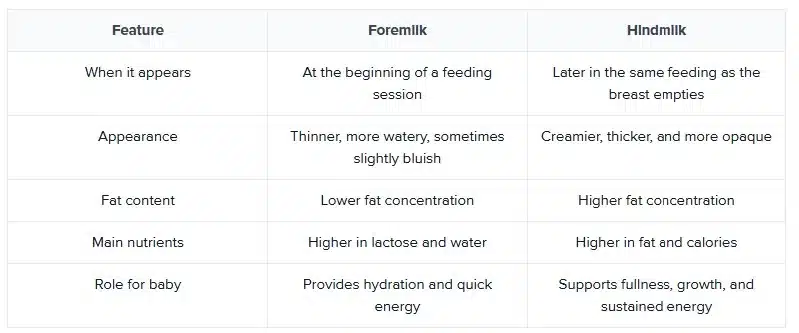
Also read: Milk Allergy in Babies: Best Formula Options for Safe Feeding
While foremilk helps initiate the feeding process, hindmilk completes it by delivering the calorie-rich nourishment that growing babies need. Together, these natural shifts in milk composition ensure that breastfeeding provides both immediate energy and sustained nutrition throughout each feeding.
Do Babies Need to “Reach” Hindmilk?
A common concern many new mothers hear about is whether their baby is getting enough hindmilk, the richer milk that comes later during a feeding. Some parents worry that if a baby switches breasts too quickly or feeds for only a short time, they may miss out on this important part of the milk.
In reality, breastfeeding does not work like a two-stage process where one type of milk suddenly changes into another. Instead, the fat content of breast milk gradually increases as the breast empties during a feeding. This means your baby receives a mix of milk with slightly different fat levels throughout the entire feeding session.
How Babies Naturally Regulate Their Feeding?
Most babies are very good at regulating how much milk they need. When allowed to feed at their own pace, they usually take in the right balance of milk over time.
Healthcare professionals often recommend a few simple practices that support this natural process:
- Let your baby feed until they slow down or release the breast on their own
- Offer the second breast only after the first one feels softer or the baby seems ready
- Follow your baby’s hunger cues rather than watching the clock
By feeding this way, your baby can naturally receive milk as its composition changes during the session.
Also read: When Does Breast Milk Come In During Pregnancy?
What Really Matters Most?
From a clinical perspective, the focus is not on whether a baby reaches hindmilk during every feeding. What matters more are signs that feeding is going well overall, such as:
- Regular wet and dirty diapers
- Steady weight gain
- A baby who appears satisfied after feeds
When these signs are present, it usually means your baby is receiving the nutrients they need, including the healthy fats that support growth and development.
What Is Foremilk–Hindmilk Imbalance?

The term foremilk–hindmilk imbalance is sometimes used when a baby receives a larger proportion of the early, lower-fat milk during feeding and less of the richer milk that comes later. This situation can occur when milk moves through the breast very quickly or when a baby switches breasts frequently before the first breast is well drained.
It’s important to know that this imbalance is not very common, and it usually happens in situations where a mother has an oversupply of breast milk or a very strong milk flow. When milk is produced in large volumes, a baby may fill up quickly on the earlier milk before reaching the milk that contains higher fat levels.
What Can Cause This Imbalance?
Several feeding patterns or physiological factors may contribute to a foremilk–hindmilk imbalance, including:
- Breast milk oversupply, which causes milk to flow quickly during feeds
- Very fast let-down reflex, where milk releases forcefully
- Frequent switching between breasts during a feeding
- Short feeding sessions, where the baby stops nursing before the breast is well emptied
In these situations, babies may consume more lactose-rich foremilk compared to the fattier milk later in the feed.
Possible Signs in Babies
Some babies who experience this feeding pattern may show digestive symptoms related to consuming large amounts of lactose quickly.
Possible signs may include:
- Fussiness during or after feeds
- Frequent gas or discomfort
- Green, frothy stools
- Very frequent feeding sessions
However, these signs can have many different causes, so they do not automatically mean a foremilk–hindmilk imbalance is present.
What Can You Do to Support Balanced Feeding?
In most cases, babies naturally receive a healthy balance of milk during breastfeeding. Your body adjusts milk composition throughout each feeding, and babies typically regulate how long they nurse based on their hunger and comfort.
Still, if you’re concerned about foremilk vs hindmilk balance, there are a few gentle strategies that can help support smoother feeding and digestion for your baby.
Encourage a Deep, Comfortable Latch
A deeper latch allows your baby to control the flow of milk more effectively. When babies latch well, they can manage the speed of milk coming from the breast and feed more steadily.
If latch difficulties arise, a lactation consultant can help evaluate positioning and provide guidance on improving latch technique.
Adjust Your Feeding Position
Your breastfeeding position can influence milk flow. If milk seems to come out very quickly, try positions that slow the flow slightly.
For example:
- Leaning back while breastfeeding
- Lying on your side during feeds
These positions use gravity to reduce the force of milk flow, helping babies feed more comfortably.
Allow Your Baby to Finish Feeding

Try not to limit feeding time. Allowing your baby to nurse until they naturally slow down or release the breast helps them receive milk as it gradually becomes richer during the feeding.
This approach supports a balanced intake across the feeding session.
Feed Your Baby When They Show Hunger Cues
Frequent feeding can help regulate milk flow and digestion. When babies nurse regularly, the breast does not become overly full, which can sometimes lead to faster milk flow at the start of a feed.
Responding to hunger cues, such as rooting, hand-to-mouth movements, or increased alertness, helps babies feed comfortably and consistently.
Pumping and Separating Milk
In certain situations, particularly when oversupply is present, healthcare providers may recommend separating pumped milk.
This involves pumping briefly to collect the earlier milk, then pumping again to collect the richer milk that follows. The milk can then be labeled and used according to professional guidance.
This approach is not commonly needed, but it may sometimes help babies who struggle with digestion due to very fast milk flow.
If concerns about milk intake or feeding patterns come up, a lactation consultant or healthcare provider can observe a feeding and offer guidance tailored to you and your baby.
Conclusion
Breastfeeding is full of small discoveries, and learning about foremilk vs hindmilk is simply one of them. The most important thing to remember is that your body is designed to support your baby in remarkable ways. Breast milk adjusts naturally during every feeding, and your baby is very good at guiding the process through their hunger cues and feeding patterns.
So instead of worrying about the details of every feed, focus on what really matters: a comfortable latch, a relaxed feeding environment, and the quiet connection you share with your baby during those moments.
FAQs
1. Does the appearance of breast milk always indicate foremilk or hindmilk?
Not necessarily. Breast milk color and thickness can vary for many reasons, including the time of day, stage of lactation, and a mother’s diet. While hindmilk is often creamier, visual differences alone are not a reliable way to judge milk composition.
2. Can pumping change the balance of foremilk and hindmilk?
When pumping, milk composition still changes gradually just as it does during breastfeeding. However, shorter pumping sessions may collect milk with slightly lower fat content, while longer sessions tend to capture milk with higher fat levels as the breast empties.
3. Do premature babies benefit differently from foremilk and hindmilk?
In some cases, healthcare providers may pay closer attention to milk composition for premature infants because higher-fat milk can support weight gain. In neonatal care settings, expressed hindmilk may sometimes be used to help meet the baby’s energy needs.
4. Does the time of day affect the fat content of breast milk?
Yes. Research suggests that breast milk fat levels can fluctuate during the day, often being slightly higher in the evening compared to earlier in the day. This variation is a normal part of how breast milk adapts to a baby’s needs.
5. Can maternal diet influence the balance between foremilk and hindmilk?
While a mother’s diet can influence certain nutrients and fatty acid profiles in breast milk, it does not directly control the foremilk-to-hindmilk shift during a feeding. That change is primarily determined by how milk moves through the breast during feeding.