












Momcozy vs Spectra: Which Pump Supports Your Feeding Journey Best?

Balancing feedings, naps, and a never-ending to-do list is already a lot, so choosing between Momcozy vs Spectra should not add more stress. Comfort, milk output, and how a pump fits into real daily life all matter, especially when the goal is keeping both baby and body happy. Clear, friendly guidance can make the decision feel much lighter.
Looking closely at Momcozy vs Spectra helps sort through the details that actually shape everyday pumping, like how each pump feels, moves, and supports steady milk removal. The right match can make sessions smoother and more manageable.
In this guide, everything you need to feel confident choosing between Momcozy and Spectra is explained clearly, from comfort and daily use to cleaning and insurance coverage.
Key Takeaways
- Momcozy supports mobile, in-bra pumping, while Spectra is built for seated, longer sessions with stable external motor suction.
- Spectra offers precise cycle speed control and sustained vacuum for full emptying, while Momcozy focuses on mixed suction rhythms designed to work during movement.
- Momcozy uses soft-seal insert systems for wearable comfort; Spectra offers broader flange sizing options for detailed fit adjustments and elastic tissue needs.
- Wearable Momcozy cups have fewer external parts to manage, while Spectra’s modular bottle and tubing system takes longer to assemble but is easier to deep-clean visually.
- Standard Spectra tabletop pumps are often fully covered; Momcozy wearables may be considered upgrades, so checking plan eligibility determines out-of-pocket costs.
What Momcozy and Spectra Pumps Have in Common

Both Momcozy and Spectra are built with the same goal in mind; helping moms pump effectively while still living real life. Under the hood, they share thoughtful design features that protect milk, support supply, and make daily pumping feel more manageable.
Shared technical features that matter during everyday pumping:
- Closed-System Backflow Protection: A physical barrier keeps milk and moisture out of the tubing and motor, protecting hygiene and helping the pump last longer.
- Dual-Phase Expression Technology: Pumps switch between fast, light stimulation and slower, deeper expression to help trigger letdown and then remove milk efficiently.
- Gradual Vacuum Level Control: Multiple suction levels let you increase strength slowly, helping you find a comfortable setting without sudden pulling sensations.
- Rechargeable Internal Batteries: Built-in lithium batteries allow several sessions between charges, so you can pump at your desk, in the car, or around the house.
- BPA-Free Milk Contact Parts: Flanges, valves, and collection containers are made from food-safe materials designed to keep your milk safe for baby.
At the core, both brands focus on safe milk handling and steady, reliable suction so you can focus less on the pump and more on your baby.
Key Differences Between Momcozy and Spectra Pumps
Both Momcozy and Spectra are powerful, reliable options, but their engineering is built around different pumping styles. One prioritizes discreet mobility, the other prioritizes precise suction control during longer, structured sessions.
Technical performance differences that affect daily pumping:
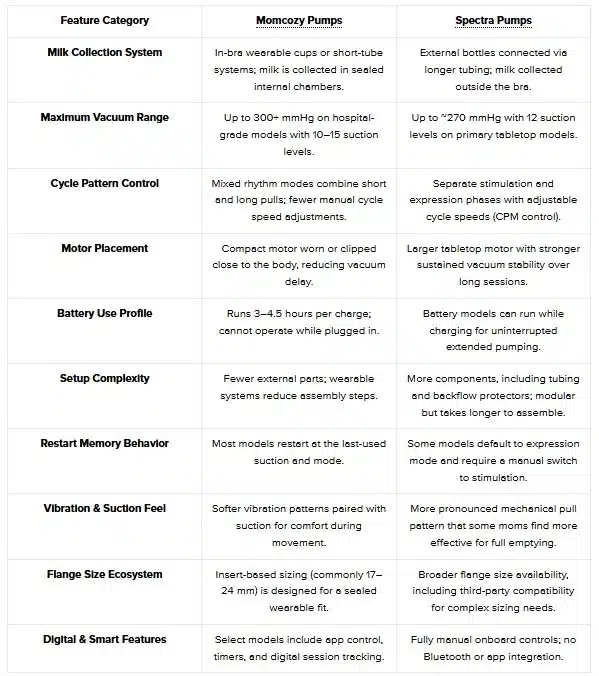
Both pumps remove milk effectively, but Momcozy supports pumping while moving through your day, while Spectra gives tighter control over suction behavior during dedicated pumping time.
Still weighing your options? Get a clearer picture of how different pump styles fit real life with Wearable Breast Pump vs Regular Pumps Pros, Cons, and Differences.
Which Momcozy and Spectra Pumps Are Better Based on Your Feeding Situation

Your ideal pump depends on supply goals, daily movement, breast sensitivity, and how often you pump. Matching pump engineering to your routine makes sessions more effective and comfortable.
Choose Momcozy Pumps When Mobility and Built-In Comfort Features Matter Most
If your day involves movement, multitasking, or pumping outside dedicated spaces, Momcozy designs prioritize wearable engineering, integrated comfort tech, and fewer external components to manage.
- Wearable cup systems maintain suction while you walk, drive, or work at a desk, using sealed collection chambers that reduce spill risk during body movement.
- Models like Mobile Flow M9 allow in-app suction and mode changes mid-session, avoiding bra readjustment and preserving flange seal during active pumping environments.
- Wellness-focused models use controlled warming and micro-vibration to stimulate let down reflex, supporting milk flow when stress or tension delays initial milk release.
Choose Spectra Pumps When Suction Precision and Long Session Stability Matter Most
If your priority is building supply, fully emptying the breast, or pumping in seated sessions, Spectra pumps emphasize motor strength, cycle control, and sustained vacuum consistency.
- Adjustable cycle speeds in expression mode let you match suction rhythm to milk flow changes, helping extend letdowns and improve total session output.
- Dual-motor systems in Synergy Gold allow different vacuum strengths per breast, useful when one side has slower flow or greater sensitivity.
- Tabletop motor design delivers stable vacuum pressure across longer sessions, reducing suction fluctuation that can occur in smaller wearable pump motors.
The Right Pump Supports Your Body, Schedule, and Milk Goals
Both brands remove milk effectively, but the better choice is the one that fits how, where, and how often you pump each day.
Not sure which style fits your routine best? Break it down simply with Manual vs Electric Breast Pump: Choosing the Best Option.
How Momcozy and Spectra Feel During a Pumping Session

The physical sensation of pumping varies between brands, influenced by suction rhythm, flange material, motor behavior, and how your body moves during milk removal.
Momcozy Feel
Momcozy sessions often feel more body-conforming and movement-friendly, with suction patterns and materials designed to mimic infant nursing while reducing pressure hotspots during longer pumping periods.
- Mixed-mode cycles alternate short stimulation pulses with longer expression pulls, creating fluctuating vacuum transitions that resemble nutritive and non-nutritive sucking patterns babies use during breastfeeding.
- DoubleFit flange systems combine a rigid outer shell with a soft silicone inner lip, distributing negative pressure more evenly across the areola tissue to reduce focal compression discomfort.
- Horizontal flange angles position the nipple tunnel to follow natural breast fall, which can reduce upward drag on tissue and lessen that stretched, tugging sensation mid-session.
Spectra Feel
Spectra sessions usually feel more controlled and steady, with finely tunable cycle speeds that allow gradual transitions between stimulation and expression without abrupt vacuum shifts on sensitive tissue.
- Independent cycle speed adjustment from 38–54 CPM in expression mode lets suction rhythm match individual let-down timing, reducing the jarring pull some feel with fixed-cycle wearables.
- Consistent vacuum waveform from Spectra’s piston motor creates a smooth, predictable pull pattern, often described as less “fluttery” and easier to relax into during longer sessions.
- Traditional flange geometry maintains a stable seal against the breast, minimizing micro-air leaks that can cause subtle vibration or tickling sensations with some in-bra collection cups.
Momcozy often feels more flexible and body-adaptive, while Spectra feels steadier and rhythm-controlled. Comfort depends on tissue sensitivity, let-down timing, and how much movement you need.
Curious when pumping can really help protect your milk flow? Learn the signs and smart timing in Common Reasons To Start Breast Pumping and Keep Your Supply Up.
Can You Get Momcozy and Spectra Pumps Free Through Insurance?
Most U.S. health plans include breast pump benefits under ACA preventive care. The exact pump you receive depends on eligibility verification, plan rules, and supplier network participation.
For understanding eligibility and coverage pathways for Momcozy and Spectra pumps, know
- Plan Eligibility Verification: Coverage depends on active maternity benefits; suppliers confirm eligibility using the member ID, due date, and insurer criteria before releasing any pump model.
- In-Network DME Requirement: Many insurers only cover pumps ordered through contracted DME suppliers; out-of-network purchases often lead to partial reimbursement or full out-of-pocket costs.
- Covered vs Upgrade Models: Standard double-electric pumps are typically fully covered; rechargeable, wearable, or specialty motors may be processed as upgrades with member cost responsibility.
- Prescription Qualification Rules: A valid prescription must include provider credentials, pregnancy or postpartum status, and date; missing clinical details frequently delay eligibility approval.
- Timing Eligibility Windows: Some plans allow ordering during pregnancy, others after delivery; eligibility is tied to plan year rules, not personal preference or retailer stock.
Insurance can absolutely cover Momcozy or Spectra, but eligibility comes first. A quick benefits check saves surprises and helps you choose the best pump with confidence.
How to Get Your Insurance-Covered Breast Pump (Step-by-Step)
Getting a pump through insurance feels complicated, but the process follows a clear medical equipment workflow. Once eligibility is confirmed, suppliers handle most of the paperwork for you.
To complete the insurance pump process smoothly, follow
- Verify Maternity Benefits: Call member services or use a DME supplier form to confirm pump eligibility, coverage limits, upgrade fees, and in-network supplier requirements under your specific plan.
- Submit Intake Information: Provide insurance ID, date of birth, shipping address, due date or delivery date, and OB provider details so the supplier can open a compliant equipment order.
- Obtain Prescription Documentation: Your OB, midwife, or primary provider sends a signed prescription including NPI, diagnosis code, and pregnancy status to meet insurer durable medical equipment requirements.
- Choose Covered Pump Model: After benefits review, select from fully covered or upgrade options; suppliers disclose out-of-pocket costs before processing to avoid unexpected billing later.
- Approve Order And Shipment: Once authorization clears, the supplier bills insurance directly and ships your pump, typically in the third trimester or immediately postpartum, depending on plan timing rules.
Most moms only complete one short form. After that, suppliers and insurers handle the rest so you can focus on the baby, not paperwork.
Final Thoughts
Every feeding journey has its own rhythm, and the right pump simply supports that flow instead of working against it. Feeling comfortable and confident during sessions can make a meaningful difference over weeks and months. Small details that fit naturally into daily life often matter more than expected. When a pump feels manageable, everything else tends to feel a bit lighter, too.
If insurance coverage is part of the plan, checking eligibility for an insurance-covered breast pump can make this step easier on your budget, too. Many moms are pleasantly surprised by what is fully covered. A little support with the paperwork can save time and stress. You deserve tools that make this season smoother, not harder.
FAQs
1. Does the suction pattern differ in Momcozy vs Spectra for letdown response?
Yes. In Momcozy vs Spectra, Momcozy models often use mixed rhythm cycles that alternate speeds automatically, while Spectra pumps allow manual cycle speed control during expression mode.
2. In Momcozy vs Spectra, which handles elastic nipple tissue more comfortably?
Spectra’s wider range of flange sizes can help fine-tune fit for elastic tissue. Momcozy’s soft silicone insert systems may reduce friction but offer fewer size increments.
3. How does motor placement impact output in Momcozy vs Spectra?
Spectra’s external motor with bottle setup maintains consistent vacuum stability. Wearable Momcozy pumps rely on compact motors, which can be more sensitive to positioning and bra compression.
4. Between Momcozy and Spectra, which is easier to maintain suction over long sessions?
Spectra tabletop systems typically maintain a steady vacuum across 20+ minute sessions. Wearable Momcozy units may require occasional readjustment if movement shifts cup alignment.
5. Does milk transfer efficiency vary in Momcozy vs Spectra with higher output moms?
Some higher-output moms find that Spectra bottles manage fast flow without backpressure. Momcozy collection cups have a smaller internal space, so frequent emptying may help maintain comfort and suction.