












Postpartum Belly Binding: Benefits, Types & Safe Use
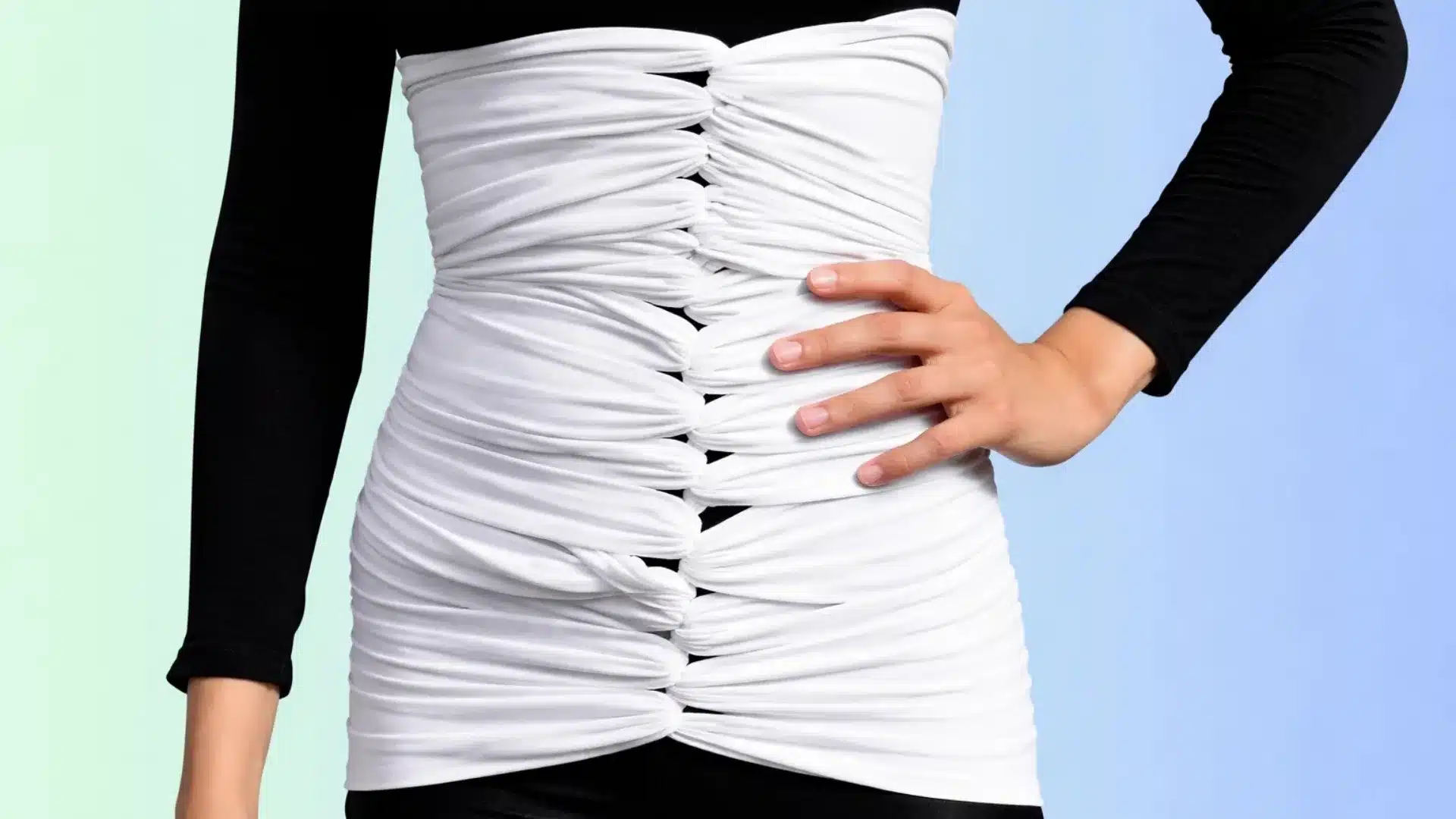
You’ve just had a baby, and your body feels different in ways you did not fully expect. Maybe your core feels weak, your back aches, or you simply want to feel more supported as you move through your day. You might be wondering if postpartum belly binding can actually help.
You’re not alone in feeling this way. Many moms look for simple ways to feel more stable and comfortable while their body heals, and it is completely normal to want that extra support.
In this guide, you will learn what postpartum belly binding really does, how it supports recovery, and how to use it safely without putting pressure on your healing body. We will walk through everything step by step so you can make the choice that feels right for you.
Key Takeaways
- Match your wrap type to your comfort and daily routine so you can stay consistent without disrupting rest, feeding, or movement.
- Focus on stability and comfort rather than expecting visible body changes, so your recovery stays aligned with how your body naturally heals.
- If something feels restrictive, uncomfortable, or off during use, adjust or pause to avoid unnecessary strain on healing tissues.
- If you are healing from a C-section or managing diastasis recti, use binding as a targeted support alongside guided recovery practices.
- Combine support tools with posture awareness, gentle movement, and rest to create a more balanced and sustainable healing process.
What Is Postpartum Belly Binding?
Postpartum belly binding is a supportive recovery practice where your abdomen is gently wrapped after birth to stabilize muscles, support healing tissues, and reduce strain on your core. Rooted in global traditions, it focuses on comfort and physical support, not reshaping your body.
Many postpartum care principles supported by the American College of Obstetricians and Gynecologists (ACOG) emphasize gradual recovery, core support, and reducing physical strain after childbirth, which aligns with how belly binding is commonly used today.
Why Many New Mothers Choose Belly Binding
Belly binding supports your body during early postpartum recovery by combining traditional methods and modern medical understanding. Here are the benefits of postpartum belly binding:
- Abdominal compression: Gentle, even pressure supports stretched connective tissues like the linea alba, the connective tissue that runs down the center of your abdomen, helping stabilize your core without restricting natural movement.
- Pelvic stabilization: Wrapping from the hips upward helps reduce pelvic joint strain, especially in the sacroiliac region, the joints connecting your lower spine to your pelvis, which often feels unstable after delivery.
- Uterine support: External compression may provide a sense of support as the uterus returns to its pre-pregnancy size, though involution (the process of your uterus shrinking back to its pre-pregnancy size) is primarily driven by natural hormonal processes.
- Muscle approximation: Binding may help support abdominal muscles and reduce strain, but true recovery of muscle separation depends on gradual strengthening and healing over time.
- Postural reinforcement: The wrap provides feedback to your body, encouraging upright posture and reducing the tendency to hunch while feeding or holding your baby.
At its core, postpartum belly binding is about giving your body steady, gentle support while it heals, helping you feel more secure and comfortable in those early weeks.
Types of Postpartum Belly Wraps and Methods
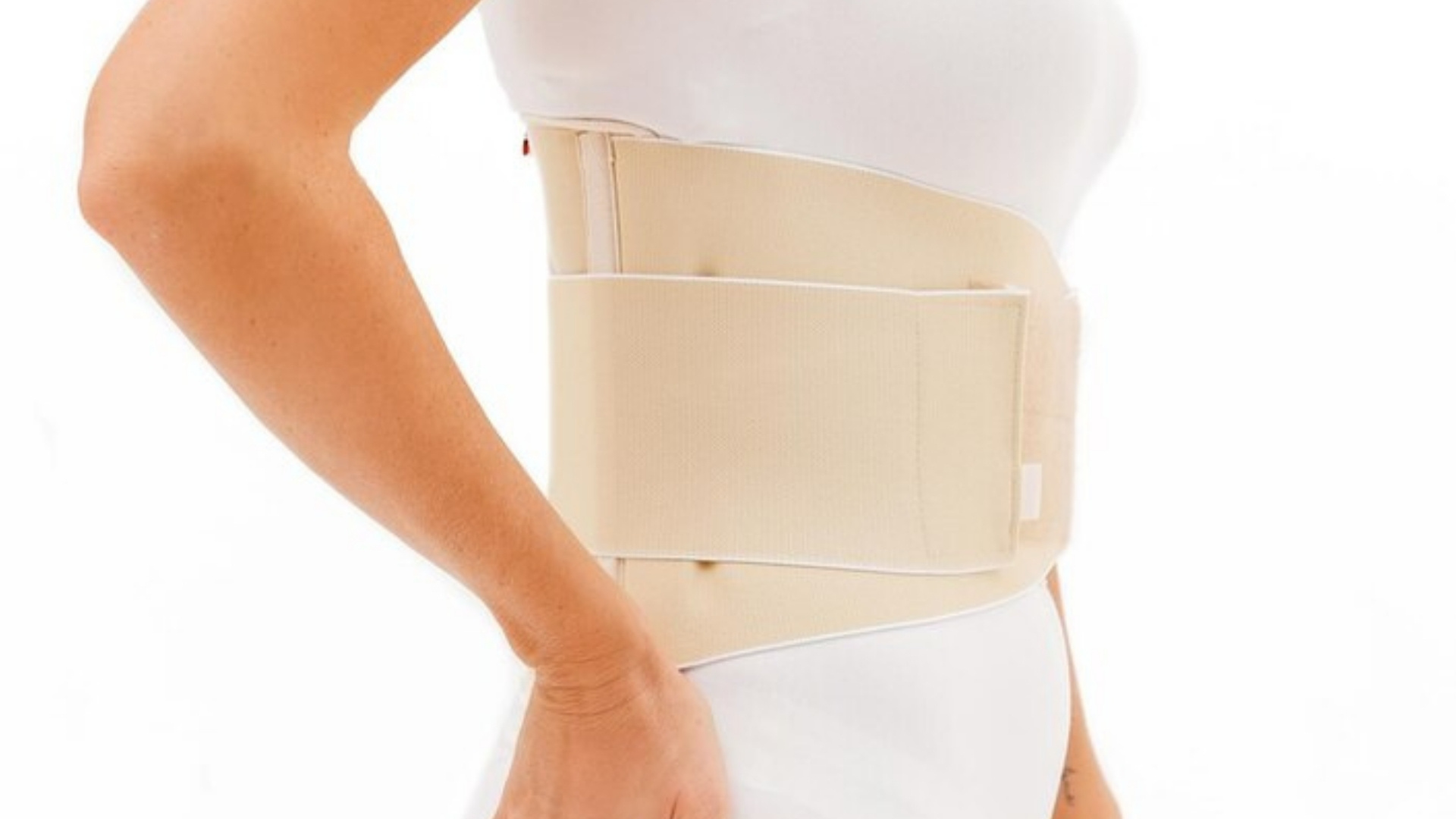
Postpartum belly binding includes both traditional cloth techniques and modern medical-style supports, each designed to stabilize your abdomen in different ways. The right option depends on your comfort, recovery stage, and how much hands-on effort you feel ready for during those early postpartum weeks.
-
Traditional Cloth Wrapping Methods
Traditional methods use long, breathable fabrics wrapped manually to create layered, adjustable support across your abdomen and pelvis.
Common traditional wrapping styles practiced across cultures include:
- Bengkung wrap: A 15–17-foot cotton cloth is wrapped in overlapping layers from the hips to the ribcage, using tension-controlled knots to create segmented abdominal support zones.
- Faja binding: A woven sash is tightly wrapped around the midsection during the 40-day postpartum period, focusing on warmth retention and gradual abdominal compression support.
- Sarashi wrap: A long cotton strip is wrapped firmly around the torso to stabilize core muscles, often used in Japan to support alignment and reduce postural strain.
-
Modern Belly Wraps and Binders
Modern options are pre-constructed and designed for ease of use, offering adjustable compression without requiring manual wrapping techniques.
Common modern belly wrap options available today include:
- Elastic abdominal binders: Wide, stretchable bands made of breathable fabric that provide uniform compression across the abdomen while allowing controlled movement and expansion during breathing.
- Postpartum girdles: Structured garments with Velcro or hook closures that offer targeted compression zones across the lower abdomen, often designed for step-in or wrap-around wear.
- Support belts: Adjustable belts that focus on pelvic and lower back stabilization, commonly used to reduce sacroiliac joint strain (lower back and pelvic joint pain) and improve functional movement during recovery.
-
Application Methods and Usage Approach
How the wrap is applied and worn plays a major role in how effective and safe it feels during your recovery.
Key application techniques and usage practices include:
- Upward wrapping direction: Wrapping begins at the hips and moves upward toward the ribs to avoid downward pressure on the pelvic floor and support natural abdominal repositioning.
- Post-delivery timing: Binding may begin within a few days after vaginal birth, while cesarean recovery requires waiting until the incision has healed and is no longer sensitive.
- Gradual wear progression: Daily usage typically starts with short durations and increases slowly, allowing your body to adapt without reducing natural muscle engagement.
Choosing between traditional and modern methods often comes down to what feels manageable and supportive for you. The best wrap is one that fits comfortably into your routine while helping you move, rest, and care for your baby with ease.
Give yourself the support and reassurance you need during this phase, and learn practical ways to care for your body and mind in How to Survive Postpartum Life
Does Belly Binding Really Work?
If you’re wondering whether postpartum belly binding truly helps, the answer is nuanced. Many moms find that it eases discomfort and adds support during early recovery, especially after a C-section. It works best as a supportive tool alongside rest, gentle movement, and guided postpartum care.
What research and clinical use show about how belly binding performs in real recovery:
- Post-surgical pain relief: Randomized trials show abdominal binders reduce pain scores after C-section, with some protocols linking use to lower opioid reliance during early recovery phases.
- Functional mobility support: External compression improves tolerance for movement, helping you sit, stand, and walk with less discomfort during the first few postpartum days.
- Intra-abdominal pressure control: Binders help distribute pressure evenly across healing tissues, reducing strain during actions like coughing, laughing, or transitioning from lying to sitting.
- Pelvic and spinal stabilization: Hormonal ligament laxity, where pregnancy hormones keep your ligaments loose after birth, can cause instability, and binding provides external support that improves alignment and reduces compensatory muscle strain.
- Circulatory and fluid response: Gentle compression may support venous return (blood flow returning to your heart) and reduce localized swelling, especially around surgical areas, aiding overall comfort during healing.
Belly binding can make a noticeable difference in how supported and comfortable you feel. Still, your body heals at its own pace, and this is one piece of your recovery, not the whole picture.
If you’ve been feeling overwhelmed or emotionally stretched, understanding what you’re experiencing can make a difference in Postpartum Rage What It Is, Why It Happens, and How to Cope
Who Should Use a Postpartum Belly Wrap
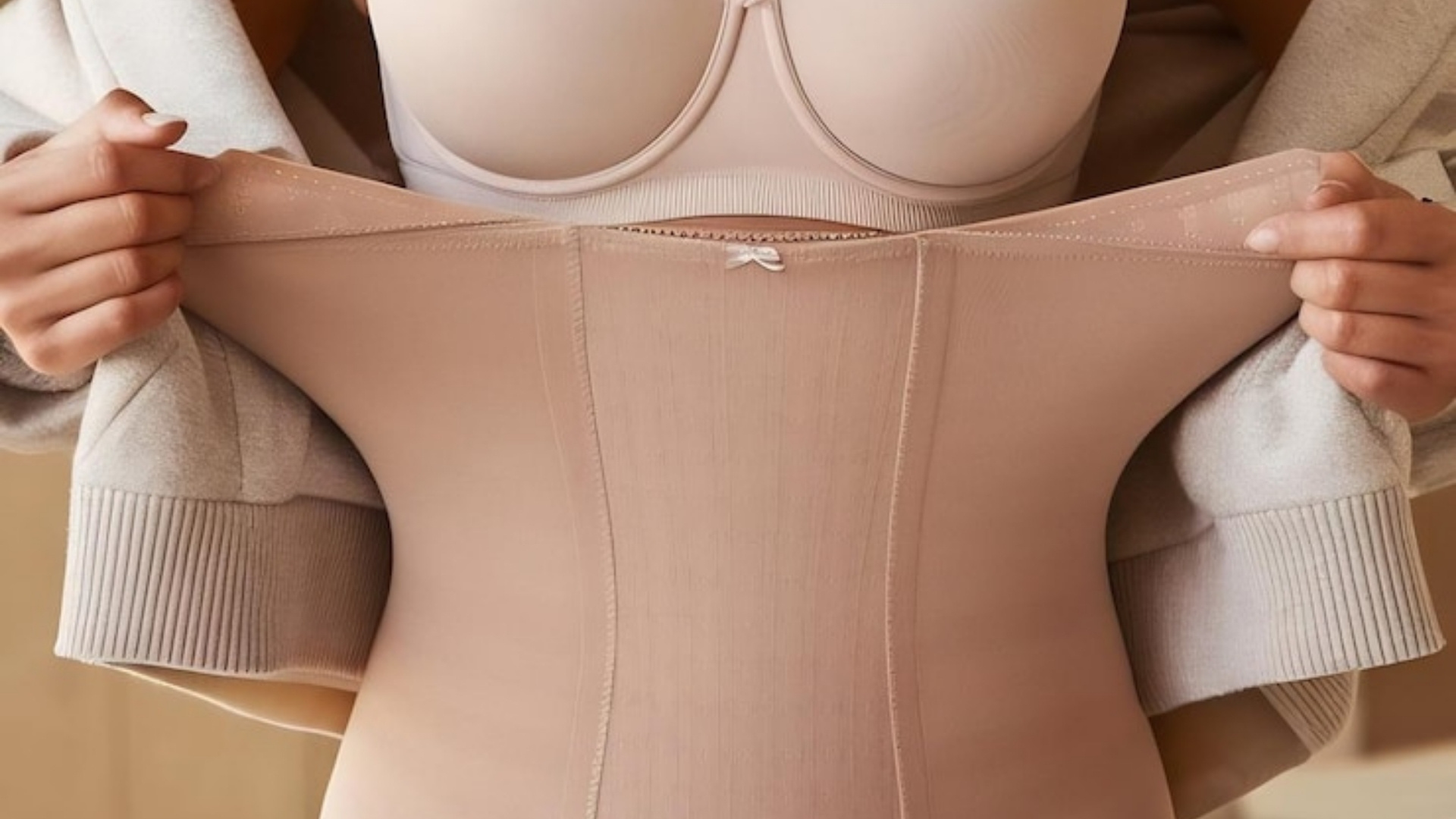
You might be wondering if a postpartum belly wrap is right for you. While many moms can benefit, it is especially helpful in specific recovery situations where your core, incision, or posture needs extra support during those early, physically demanding weeks after birth.
Postpartum belly wraps are most useful for moms experiencing the following recovery needs:
- Post-cesarean recovery: Abdominal binders support incision sites by reducing lateral tension across sutures, helping minimize discomfort during movements like standing, coughing, or repositioning in bed.
- Diastasis recti support: External compression helps approximate separated rectus abdominis muscles, reducing inter-recti distance strain while your connective tissue gradually regains tensile strength during healing.
- Pelvic and lower back instability: Residual relaxin hormone effects can leave joints unstable, and wraps provide external stabilization to reduce sacroiliac joint strain and lumbar discomfort.
- Core weakness after delivery: When deep core muscles are not yet activating effectively, a wrap offers temporary support to improve functional movements like lifting, feeding, and carrying your baby.
- High physical demand postpartum routines: Frequent bending, feeding, and baby care tasks can strain healing tissues, and wraps help distribute the load more evenly across your abdomen and pelvis.
A belly wrap can be a helpful support if your body feels unstable or strained. If something feels off or uncomfortable, it is always okay to pause and check with your provider.
Belly Binding After C-Section and Diastasis Recti
Recovering from a C-section or managing diastasis recti can leave your core feeling sore and unstable. Diastasis recti occurs when your abdominal muscles separate during pregnancy. Postpartum belly binding can help support recovery, but using it at the right time matters for safe healing.
Belly binding supports recovery in these specific conditions through targeted physical effects:
- C-section incision stabilization: External compression reduces shear forces across the surgical site, helping limit strain on healing tissue layers during movements like sitting, standing, and coughing.
- Pain modulation after surgery: Gentle abdominal support can reduce pain signals from your incision area, helping lower discomfort and making early movements like sitting or walking feel more manageable.
- Muscle gap approximation: Belly binding can help support separated abdominal muscles by keeping them aligned, giving your body a better environment to gradually heal and regain strength.
- Controlled intra-abdominal pressure: Properly fitted wraps help regulate pressure distribution across the abdomen, preventing localized strain that can worsen muscle separation or delay tissue recovery.
- Recovery timing considerations: Soft binders may be introduced soon after surgery under guidance, while structured or traditional wraps should wait until incision healing is complete to avoid irritation.
Belly binding can feel especially supportive during these recoveries, but it works best when combined with rest, gentle movement, and guidance from your care provider.
Gentle Recovery Tips for New Moms

Recovery after birth is not about doing more; it is about doing the right things at the right pace. Small, intentional habits can support tissue healing, reduce strain, and help your body regain stability without feeling overwhelmed or overworked.
Focused recovery habits that support healing without adding pressure to your routine:
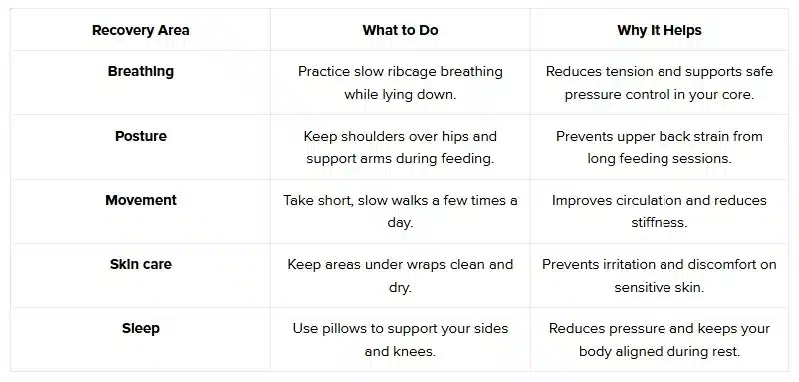
Your recovery does not need to be perfect. Gentle, consistent care can help your body feel supported while you adjust to life with your baby.
Not sure what changes are normal after birth? Get clarity and peace of mind with Postpartum Bleeding: What’s Normal and When to Seek Help
Belly Binding vs Waist Training (What It Doesn’t Do)
It’s easy to confuse belly binding with waist training, especially with social media trends. But they serve very different purposes. Belly binding supports recovery after birth, while waist training focuses on appearance. Knowing what belly binding does not do helps you use it safely and set realistic expectations.
Key differences between postpartum belly binding and waist training, including what belly binding is not designed to do:
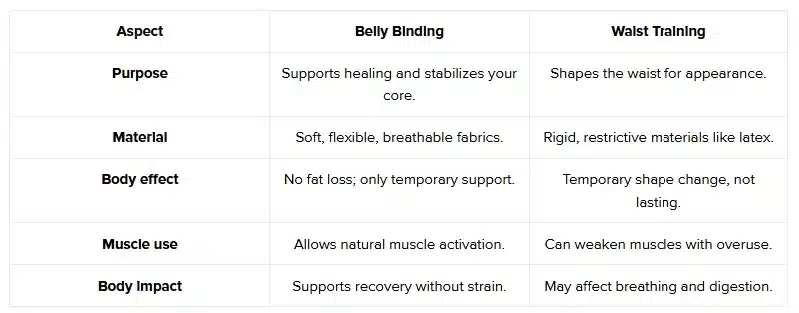
Belly binding is about supporting your body as it heals, not changing how it looks. Giving your body time and the right kind of care will always go further than forcing quick results.
Looking for thoughtful ways to support yourself or a new mom in your life? Explore comforting ideas in Best Postpartum Gifts for Mom to Ease the Journey Into Motherhood
How to Choose the Right Belly Wrap
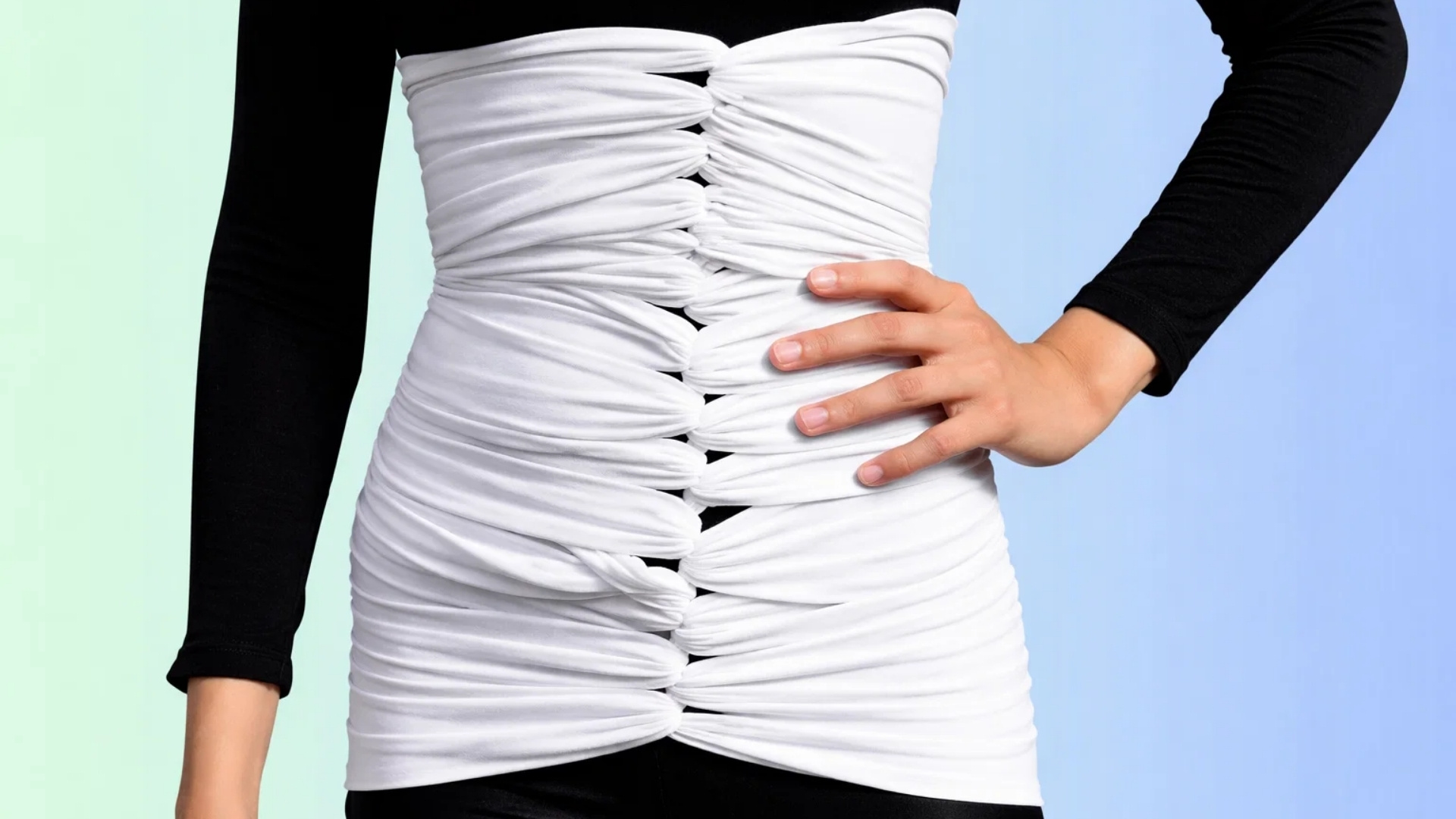
Choosing the right postpartum belly wrap can feel overwhelming, especially when your body is still adjusting after birth. The best option depends on your recovery type, comfort level, and how easily you can use it day to day while caring for your baby.
Key factors that help you select a wrap that supports healing without adding strain or discomfort:
- Fabric elasticity and breathability: Choose multi-directional stretch fabrics with moisture-wicking properties to prevent heat buildup and allow natural expansion during breathing and movement throughout the day.
- Adjustability across abdomen zones: Look for wraps with segmented or multi-panel closures that let you fine-tune compression across the upper and lower abdomen instead of applying uniform pressure.
- Coverage from pelvis to mid-abdomen: A well-fitted wrap should span from the iliac crest to above the navel to stabilize both pelvic alignment and central abdominal structures.
- Ease of independent application: Select designs that can be secured without assistance, especially during early postpartum, when mobility is limited and frequent adjustments may be needed.
- Compatibility with daily postpartum care: Ensure the wrap allows easy bathroom use, pad changes, and sitting without needing full removal, so it fits naturally into your routine.
The right wrap should feel supportive, not restrictive. If you can move, breathe, and care for your baby comfortably, you are likely choosing well.
Nourishing your body can make a big difference in how you feel each day, especially while feeding and recovering, so explore supportive nutrition options in Breastfeeding Supply Foods for Your Postpartum Days
Postpartum Belly Binding Mistakes to Avoid for Safe Recovery
Using a postpartum belly wrap can feel supportive, but small mistakes in how you wear or time it can place stress on healing tissues. Knowing what to avoid helps protect your core, pelvic floor, and incision while allowing your body to recover steadily and safely.
Common mistakes that can interfere with healing or create unnecessary strain during postpartum belly binding:
- Excessive compression levels: Over-tightening increases intra-abdominal pressure (the pressure inside your abdomen during movement or breathing) beyond physiological tolerance, which can redirect force toward the pelvic floor and compromise healing of connective tissues.
- Continuous wear without breaks: Keeping the wrap on for extended, uninterrupted periods reduces natural neuromuscular activation (how your muscles naturally engage and respond), limiting your core’s ability to gradually resume its stabilizing function.
- Incorrect wrap positioning height: Placing the wrap too high on the abdomen without anchoring at the pelvis reduces load transfer efficiency and can create uneven pressure distribution across tissues.
- Using non-adaptive materials: Choosing stiff or low-elasticity fabrics restricts dynamic abdominal expansion during breathing, which can interfere with normal diaphragm movement and pressure regulation.
- Starting without tissue readiness: Applying compression before your body shows signs of readiness, especially after surgical delivery, can irritate healing layers and increase sensitivity around the abdominal region.
Using a belly wrap should feel supportive, not restrictive or uncomfortable. If something feels off, it is always okay to pause and adjust based on what your body needs.
Final Thoughts
You’ve taken an important step in understanding how to support your body after birth, and that clarity can make a real difference in how you feel each day. If you are considering postpartum belly binding, remember that the goal is comfort, stability, and giving your body the space it needs to heal.
As you move forward, you might also be thinking about feeding, pumping, or whether you qualify for additional support. Speaking with a lactation consultant can help you go through these early decisions, especially if you are exploring pumping or checking your eligibility for covered resources.
If postpartum belly binding feels right for you, trust your instincts and take it one step at a time. You deserve support that works with your body, not against it.
FAQs
1. Is postpartum stomach binding safe if I have sensitive skin after delivery?
Yes, postpartum stomach binding can still be safe, but fabric choice matters. Soft, breathable materials like cotton reduce friction and moisture buildup, which helps prevent irritation on sensitive postpartum skin.
2. Can I switch between a postpartum binder and traditional wrapping methods?
You can alternate between a postpartum binder and traditional wraps, as long as both provide gentle, consistent support. Many moms prefer binders for daytime use and cloth wraps for longer, relaxed wear.
3. Can you wear a faja after birth if you had a vaginal delivery?
Yes, you can wear a faja after birth following a vaginal delivery, but it should offer light compression. Avoid overly tight styles that increase downward pressure on your pelvic floor.
4. How soon can I wear a faja after birth without affecting healing?
How soon you can wear a faja after birth depends on your recovery. Many moms wait a few days, allowing initial swelling and tenderness to settle before adding compression.
5. Does compression after birth help with swelling and fluid retention?
Compression after birth may help reduce mild swelling by supporting circulation and fluid movement. It works best when combined with rest, hydration, and gentle movement throughout the day.