












Blood in Breast Milk While Pumping: Causes & When to Worry

The first time you see blood in breast milk while pumping, it can be really unsettling. You might be staring at the bottle, wondering whether to throw the milk away or call your doctor right away.
If you started searching for blood in breast milk while pumping, you have probably already found a lot of mixed advice online. One article says it is normal, another says stop feeding, and suddenly it feels even more confusing.
That is why we put everything together in one place. Instead of piecing together information from different websites and forums, this guide walks you through what might be causing the blood, whether the milk is safe for your baby, and what you can do next.
Key Takeaways
- Blood During Pumping Is Usually Temporary: Most cases come from nipple irritation, strong suction, or tiny blood vessels breaking during pumping.
- Breast Milk Color Offers Clues: Pink or rusty milk may signal minor bleeding, while yellow or bluish milk reflects normal milk stages.
- Small Amounts Are Typically Safe For Babies: Babies can usually drink milk with small traces of blood, though mild spit-up or darker stools may occur.
- Pump Fit And Settings Matter: Incorrect flange size, high suction, or long pumping sessions can irritate nipple tissue and cause bleeding.
- Certain Symptoms Need Medical Care: Persistent bleeding, one-sided discharge, fever, or breast pain should be checked by a healthcare provider.
What Does Blood in Breast Milk While Pumping Mean?
Seeing pink, red, or brown streaks in your pumped milk can feel scary at first. Many moms notice this during the early weeks of pumping. In most cases, the blood comes from irritation of small nipple or breast tissue rather than a serious problem. Because pumped milk collects in a bottle, even very small amounts of blood become easier to notice.
Several common situations can cause a small amount of blood to mix with milk during pumping:
- Cracked Or Bleeding Nipples: Tiny skin cracks on the nipple can bleed slightly during pumping, especially if the skin is dry or irritated.
- Strong Pump Suction: If the pump suction is too high, it can irritate the nipple and nearby blood vessels, causing a small amount of bleeding.
- Small Broken Blood Vessels: Very tiny blood vessels inside the breast can break from pressure during pumping and release a small amount of blood into the milk.
- Early Milk Changes After Birth: During the first few days after delivery, extra blood flow to the breasts can tint milk pink, orange, or rusty brown.
- Breast Infection (Mastitis): A breast infection that causes swelling, pain, and fever can sometimes lead to small streaks of blood in pumped milk.
In most cases, the bleeding settles once the nipple heals or the pump settings are adjusted. If the blood continues for several days or appears with pain or fever, it may signal that something else is going on.
What Different Breast Milk Colors Mean
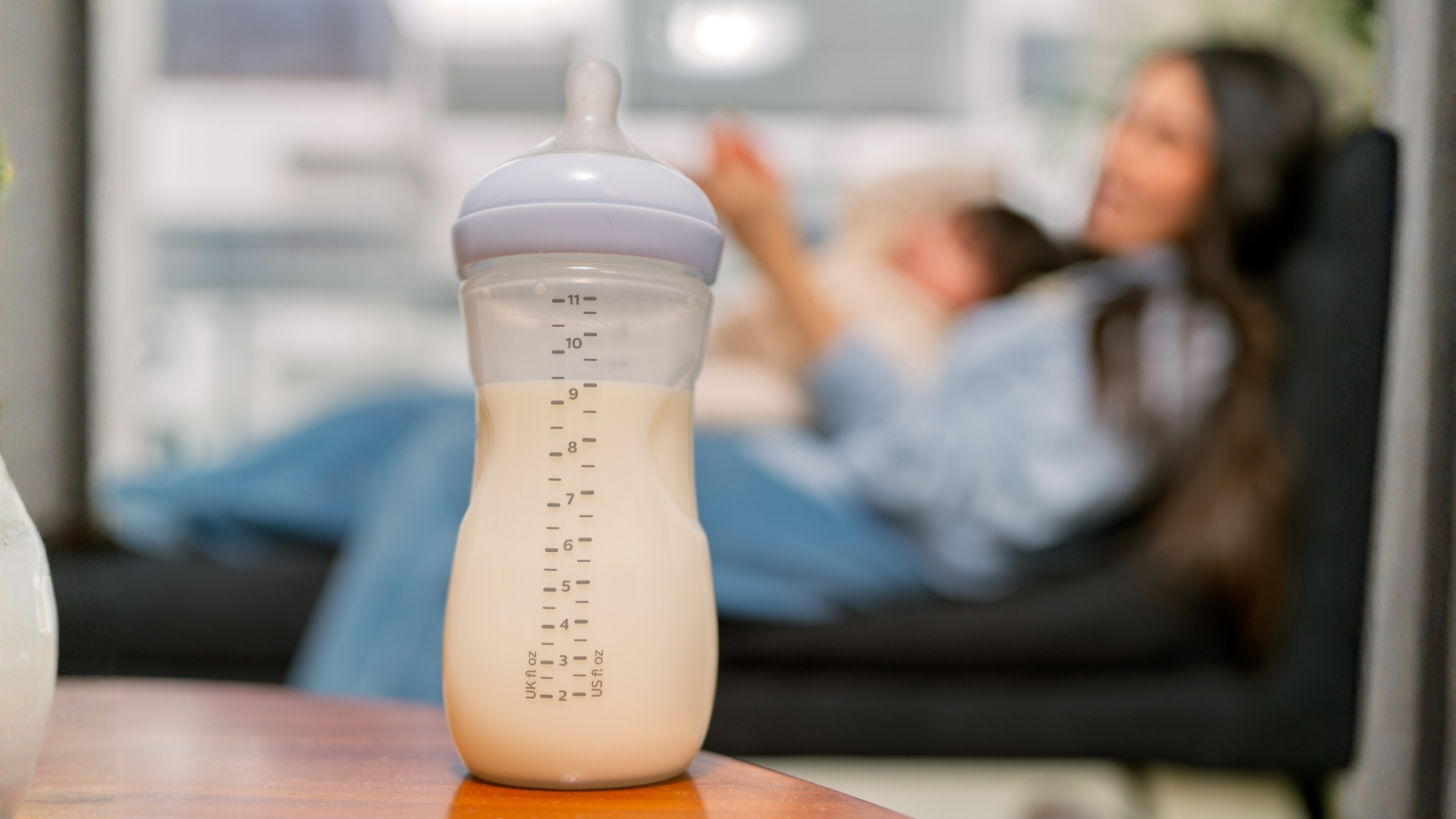
Breast milk color can change throughout your pumping and feeding journey. Many moms notice shades ranging from pale yellow to pink or even rusty brown. Most color shifts reflect normal body changes, small nipple irritation, or foods you recently ate.
Recognizing what each color usually signals can help you decide whether everything is normal or if it is time to check with a doctor.
Common changes in breast milk color and what they typically indicate are outlined below.
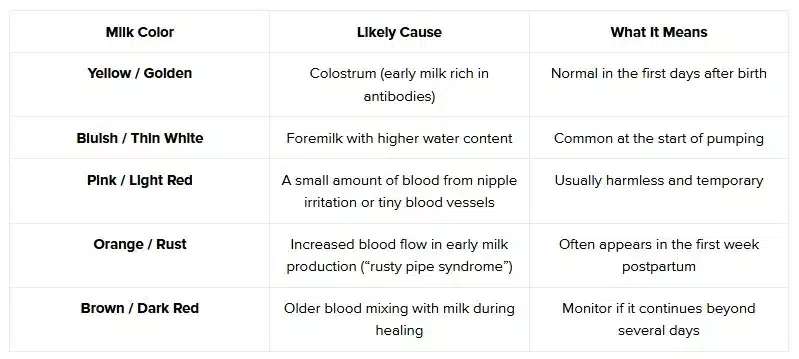
Most color changes resolve as your body adjusts to feeding and pumping. If unusual colors continue for more than a week or appear with pain, fever, or swelling, it may signal that something else is affecting the breast.
If you are working on building a healthy milk supply, this guide on Breastfeeding Benefits and Tips to Produce More Breast Milk can help.
Is Blood in Pumped Breast Milk Safe for Your Baby?
Seeing blood in a bottle of pumped milk can make any mom pause. The reassuring news is that small traces of blood usually do not harm your baby. In most cases, the blood comes from minor nipple irritation and mixes with milk during pumping.
Babies can typically drink this milk safely, although you may notice a few small changes after feeding.
Possible effects babies may experience when drinking milk with small traces of blood include:
- Slight Taste Change: Blood can slightly alter milk flavor. Some babies briefly refuse the bottle or nurse less eagerly during that feeding.
- Increased Spit-Up: Swallowed blood can slightly irritate the stomach lining, which may cause extra spit-up after feeding.
- Darker Baby Stool: Sometimes you may notice darker baby poop after feeding. This can happen when small amounts of blood pass through the digestive system.
- Rare Vomiting Reaction: Larger amounts of blood can upset a baby’s stomach, occasionally leading to vomiting shortly after feeding.
- Infection-Related Exceptions: If the mother has blood-transmitted infections like hepatitis or HIV, feeding blood-tinged milk should be paused until a doctor advises.
Most babies tolerate small amounts of blood in pumped milk without any issues. If vomiting, refusal to feed, or ongoing bleeding occurs, a pediatrician or lactation consultant can guide the next steps.
If you are still adjusting to pumping, learning about Making Sense of Pumping Let Down and Supporting Your Milk Flow can help you understand what your body is doing.
Rare Medical Causes Doctors May Check For

Occasionally, blood in breast milk can be linked to conditions affecting the milk ducts, nipple skin, or deeper breast tissue. These situations are uncommon but important to recognize, especially if bleeding lasts for several days or appears on only one side.
Less common medical or infection-related conditions that can allow blood to enter breast milk include:
- Intraductal Papilloma: A small noncancerous growth inside a milk duct can irritate the duct wall and cause intermittent nipple bleeding during milk flow.
- Breast Cancer Signs: Certain rare breast cancers affecting milk ducts or nipple skin may cause persistent bleeding or discharge from one breast.
- Serratia Bacterial Growth: A bacterium that produces a pink pigment can grow on nipples or pump parts, turning milk bright pink and leaving stains on pump equipment.
- Nipple Thrush Infection: A yeast infection on the nipple may cause shiny, flaky skin that cracks easily and bleeds during pumping.
- Certain Skin Conditions Affecting the Nipple: Skin disorders such as eczema can create dry, cracked areas on the nipple that may bleed into pumped milk.
Rare causes typically come with other symptoms like persistent bleeding, lumps, skin changes, or nipple pain. If any of these appear, a healthcare provider can help identify the cause and guide treatment.
Pumping Mistakes That Can Cause Blood in Breast Milk
Using a breast pump should feel comfortable and gentle on your breasts. When settings or equipment are not adjusted correctly, the nipple and surrounding tissue can become irritated. This irritation can allow tiny blood vessels to leak a small amount of blood into the milk during pumping.
Common pumping habits that can trigger bleeding or pink-tinged milk include the following equipment and technique issues:
- Excessive Suction Pressure: Very strong vacuum levels stretch nipple tissue and can break tiny surface blood vessels inside the breast.
- Incorrect Flange Size: A flange that is too tight rubs the nipple edges, causing friction and small skin injuries during repeated pumping cycles.
- Extended Pumping Sessions: Pumping for longer than 20–30 minutes can overwork the nipple tissue, increasing swelling and irritation.
- Improper Nipple Positioning: If the nipple sits off-center inside the flange tunnel, the pump pulls unevenly and increases skin stress.
- Poor Pump Cleaning Habits: Milk residue left on pump parts can allow bacteria to grow, sometimes producing pink discoloration that resembles blood.
Most pumping-related bleeding improves quickly once suction levels, flange fit, and pump positioning are corrected. If irritation continues despite adjustments, a lactation consultant can help evaluate your setup.
Keeping pump parts and feeding areas clean can make a big difference, which is why many moms find this guide on Breastfeeding Hygiene Tips For New Mothers helpful.
What Should You Do If You See Blood While Pumping?

Spotting blood in your pumped milk can stop you in your tracks. The good news is that most cases are due to temporary nipple irritation or pump pressure and settle quickly. A few simple checks can help you protect your nipples, keep milk flowing comfortably, and figure out whether the bleeding needs medical attention.
Helpful steps many moms take after noticing blood while pumping include:
- Inspect Nipple Skin: Look closely for cracks, scabs, or sore spots on the nipple or areola that may bleed during suction cycles.
- Lower Pump Suction: Reduce vacuum strength to a comfortable level that pulls milk without pinching or stretching the nipple tissue.
- Confirm Flange Fit: Ensure the pump flange surrounds the nipple without rubbing the sides; too-small flanges compress tissue and trigger bleeding.
- Pause And Soothe Skin: Apply nipple-safe lanolin or hydrogel pads after pumping to reduce friction and allow irritated skin to heal.
- Watch For Infection Signs: Seek care if bleeding continues with fever, breast redness, swelling, or flu-like symptoms.
Most moms find the bleeding settles once the nipple heals or pump settings are adjusted. If it lasts longer than a week or worsens, it may signal that the breast needs a closer look.
When Should You Call Your Doctor?
Most cases of blood in pumped breast milk clear up once nipple irritation heals or pumping adjustments are made. Still, certain symptoms signal that a doctor should take a closer look. Reaching out early can help rule out infections, duct problems, or other conditions that may need treatment.
Situations where medical guidance becomes important include the following warning signs:
- Bleeding Lasts Over One Week: Blood continuing beyond seven days may signal unresolved nipple injury or deeper duct irritation needing clinical evaluation.
- Bleeding From One Breast Only: Persistent blood from a single breast can indicate a milk duct growth or localized duct injury requiring imaging or examination.
- Fever or Flu-Like Symptoms: Fever, chills, breast warmth, or severe tenderness may point to mastitis, a breast infection that often requires antibiotics.
- No Visible Nipple Injury: Blood appearing without cracks, scabs, or skin irritation may suggest bleeding inside a milk duct.
- Baby Shows Feeding Reactions: Vomiting, persistent refusal of milk, or unusual stool changes after feeding may require pediatric guidance.
Most moms will never need medical treatment for blood in breast milk. If symptoms feel unusual or persist despite pumping adjustments, a quick call to your doctor can provide reassurance and the right care.
Check Your Eligibility for an Insurance-Covered Breast Pump
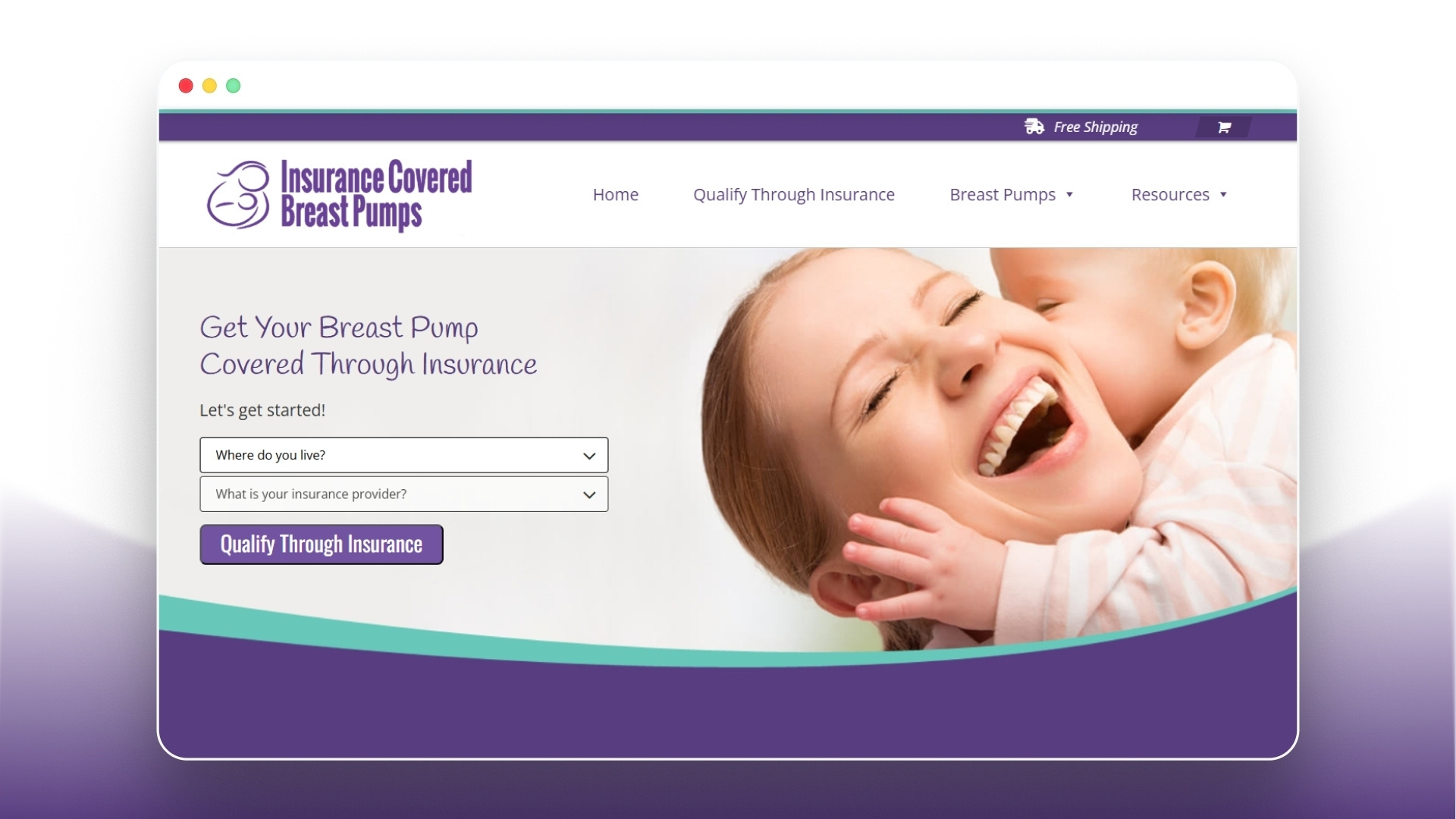
Under the Affordable Care Act, most U.S. insurance plans must cover a breast pump and lactation support, often with little or no out-of-pocket cost. Checking your eligibility only takes a minute and helps confirm which pumps your plan approves.
Simple steps can help you quickly verify coverage and start your order:
- Enter Your Insurance Details: Provide your primary insurance provider so the team can review your plan’s breast pump coverage benefits.
- Confirm Your Location: Your state helps determine eligibility rules and approved insurance programs available in your area.
- Verify Coverage With Your Plan: The provider contacts your insurance company directly to confirm what pump models are covered.
- Choose An Approved Pump Brand: Once eligibility is confirmed, you can select from trusted brands such as Medela, Spectra, Lansinoh, Willow, or Elvie.
- Receive Free Shipping: After approval and prescription verification, your pump ships directly to your doorstep at no additional shipping cost.
Checking eligibility early helps avoid paperwork stress later in pregnancy. A quick coverage check can help you secure the pump you need before your baby arrives.
Final Thoughts
Noticing unexpected changes during pumping can feel overwhelming, especially when you are already adjusting to feeding schedules, sleep changes, and caring for a newborn. Moments like this often bring a lot of questions, and that is completely normal. A quick conversation with a doctor or a lactation consultant can bring clarity and reassurance when something feels uncertain.
As you continue your feeding routine, remember that learning to pump comfortably takes time and small adjustments along the way. Many moms gradually refine their pumping technique during the first few weeks as their bodies settle into a rhythm.
If something ever feels off, reaching out for guidance can make the experience feel much more manageable and supportive.
FAQs
1. Why do some moms notice blood in milk after pumping, even when pumping feels comfortable?
Small surface blood vessels in the nipple can break during suction cycles. Even mild pressure can cause tiny streaks of blood that appear in the collected milk.
2. Can broken capillaries during breastfeeding cause bleeding while pumping breast milk later?
Yes. Broken capillaries, which are tiny blood vessels under the skin, can leak slightly during pumping if the nipple tissue is already irritated or sensitive.
3. Why might someone see blood while pumping breast milk only from one side?
Sometimes one breast experiences more suction pressure, nipple friction, or a small duct irritation, which can lead to blood appearing only from that side.
4. What causes bleeding during pumping even when nipple cracks are not visible?
Bleeding during pumping can occur when deeper breast tissue or small internal vessels become irritated from suction or pressure inside the milk ducts.
5. Why does blood when pumping milk sometimes appear only during the first few minutes?
Blood may collect in the milk ducts between sessions. Early milk flow can flush it out, so the color often clears as pumping continues.