












Can You Mix Breast Milk and Formula? Safe Guide for Moms
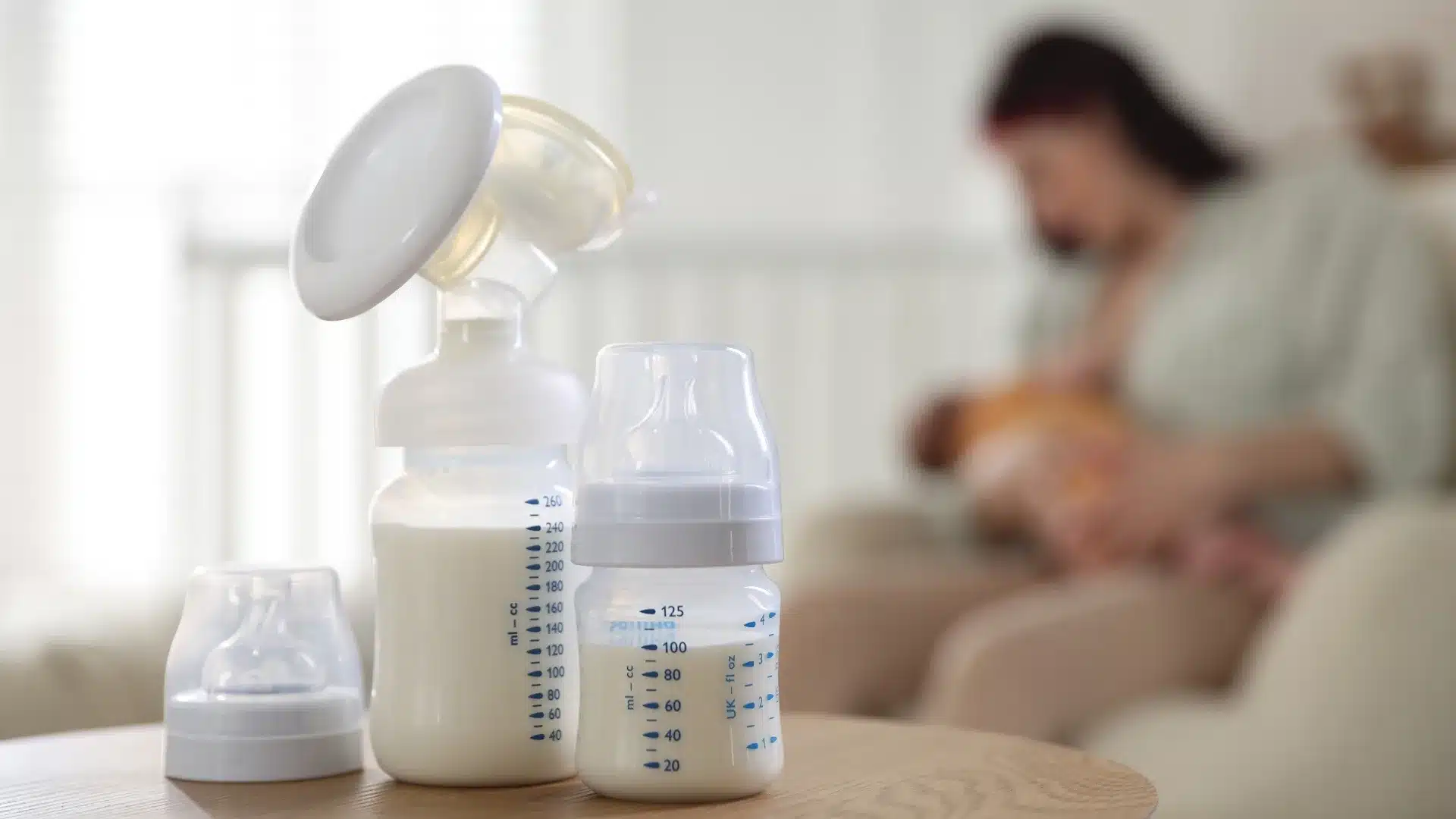
Breastfeeding does not always go the way you expected. You might be wondering if your baby is getting enough, or if adding formula could make things a little easier without taking away the benefits of breast milk.
If you’ve been asking yourself can you mix breast milk and formula, you’re not alone. Many moms start out breastfeeding, but over time, feeding often becomes a mix of breast milk and formula as needs change.
In this guide, we’ll explain whether you can mix breast milk and formula safely, what it means for your baby, and how to make feeding feel more manageable and less stressful.
Key Takeaways
- Always mix the formula with water first to maintain the correct nutrient concentration and prevent kidney strain or improper digestion in infants.
- Clean equipment, measure precisely, and combine in the right order to keep every bottle safe and nutritionally balanced.
- Once combined, breast milk and formula follow stricter storage timelines, requiring careful planning to avoid spoilage or waste.
- Low supply, work schedules, or recovery needs are common, valid reasons many moms shift to a mixed feeding approach.
- Mixing can support feeding consistency, but it may affect milk supply and requires extra attention to preparation and storage rules.
Can You Mix Breast Milk and Formula in the Same Bottle?
Yes, you can mix breast milk and formula in the same bottle when the formula is prepared correctly first. Many moms use this approach during combination feeding to meet their baby’s needs while easing feeding stress and creating a more flexible routine.
Mixing both in one bottle can support both you and your baby in these meaningful ways:
- Eases The Transition To Formula: Babies used to breast milk often accept formula more easily when flavors are combined gradually, reducing feeding resistance and bottle refusal.
- Supports Consistent Nutrition Intake: When supply feels unpredictable, mixing helps ensure your baby still receives enough calories, protein, and essential nutrients in every feed.
- Reduces Feeding Pressure On Moms: You can continue offering breast milk without feeling the need to produce full feeds every time, which can feel relieving during recovery or low supply phases.
- Helps Extend Breast Milk Usage: If you have limited pumped milk, combining it with formula allows you to stretch its use across more feeds instead of relying on it for a full bottle.
- Simplifies Feeding For Caregivers: A single mixed bottle makes it easier for partners or caregivers to handle feeds without needing to manage multiple bottles or feeding steps.
When done safely, mixing can give you a practical middle ground, helping you care for your baby while also taking care of yourself.
Still unsure how long a prepared bottle stays safe once warmed? Get clear, mom-friendly guidance here: How Long Is Breast Milk Good After Warming?
How to Mix Breast Milk and Formula Safely (Step-by-Step)

Mixing breast milk and formula safely comes down to following the correct preparation order and handling each component carefully. Small mistakes in ratios, hygiene, or storage can affect your baby’s digestion and safety, so having a clear, step-by-step process helps you feel confident every time you prepare a bottle.
The following steps walk you through safe preparation from start to finish:
Step 1: Clean and Sterilize Feeding Equipment
Before preparing any bottle, wash your hands thoroughly and sterilize bottles, nipples, and pump parts. This reduces bacterial contamination risk, especially for newborns with developing immune systems.
Helpful practices that keep feeding equipment safe and ready:
- Use hot soapy water and a bottle brush to clean all surfaces thoroughly after each feed.
- Sterilize daily using boiling water, a steam sterilizer, or a dishwasher with a sanitizing cycle.
- Allow all parts to air dry completely on a clean, dedicated drying rack.
Step 2: Prepare Formula with the Correct Water Ratio
Always mix the powdered or concentrated formula with the exact amount of safe drinking water before adding breast milk. Incorrect ratios can overload the kidneys or dilute essential nutrients needed for growth.
Practical ways to get formula preparation right every time:
- Measure water first, then add formula powder using the scoop provided in the container.
- Level each scoop without packing to maintain the intended nutrient concentration.
- Use previously boiled and cooled water if your pediatrician recommends it.
Step 3: Add Breast Milk After Formula Is Prepared
Once the formula is fully mixed, add expressed breast milk to the same bottle. This sequence preserves the formula’s nutritional balance and avoids creating an overly concentrated feed.
Smart ways to combine both without affecting quality:
- Pour breast milk gently into the prepared formula to reach the desired total volume.
- Swirl the bottle lightly instead of shaking to protect delicate proteins in breast milk.
- Use freshly expressed or properly stored breast milk within recommended time limits.
Step 4: Handle Feeding Timing and Temperature Carefully
Feed your baby soon after preparing the bottle, or store it correctly if not used immediately. Temperature and timing directly affect bacterial growth and milk safety.
Simple handling habits that protect your baby during feeding:
- Warm the bottle by placing it in warm water, not using a microwave.
- Test the temperature on your wrist to avoid burns before feeding.
- Feed promptly once warmed and avoid repeated reheating cycles.
Step 5: Follow Storage and Disposal Timelines Strictly
Mixed bottles have a shorter shelf life than breast milk alone, so timing matters. Following strict storage rules helps prevent bacterial growth and keeps every feed safe.
Clear timelines to guide safe storage and disposal:
- Refrigerate unused mixed milk and use it within 24 hours if untouched.
- Avoid leaving mixed milk at room temperature beyond one to two hours.
Mixing breast milk and formula can feel overwhelming at first, but once you follow a consistent process, it becomes second nature and keeps every feed safe and reassuring.
If you’re trying to keep your supply steady while combining feeds, this can help you stay on track: Tips to Increase Breast Milk Supply When Pumping
What Is Combination Feeding and When Do Moms Choose It?
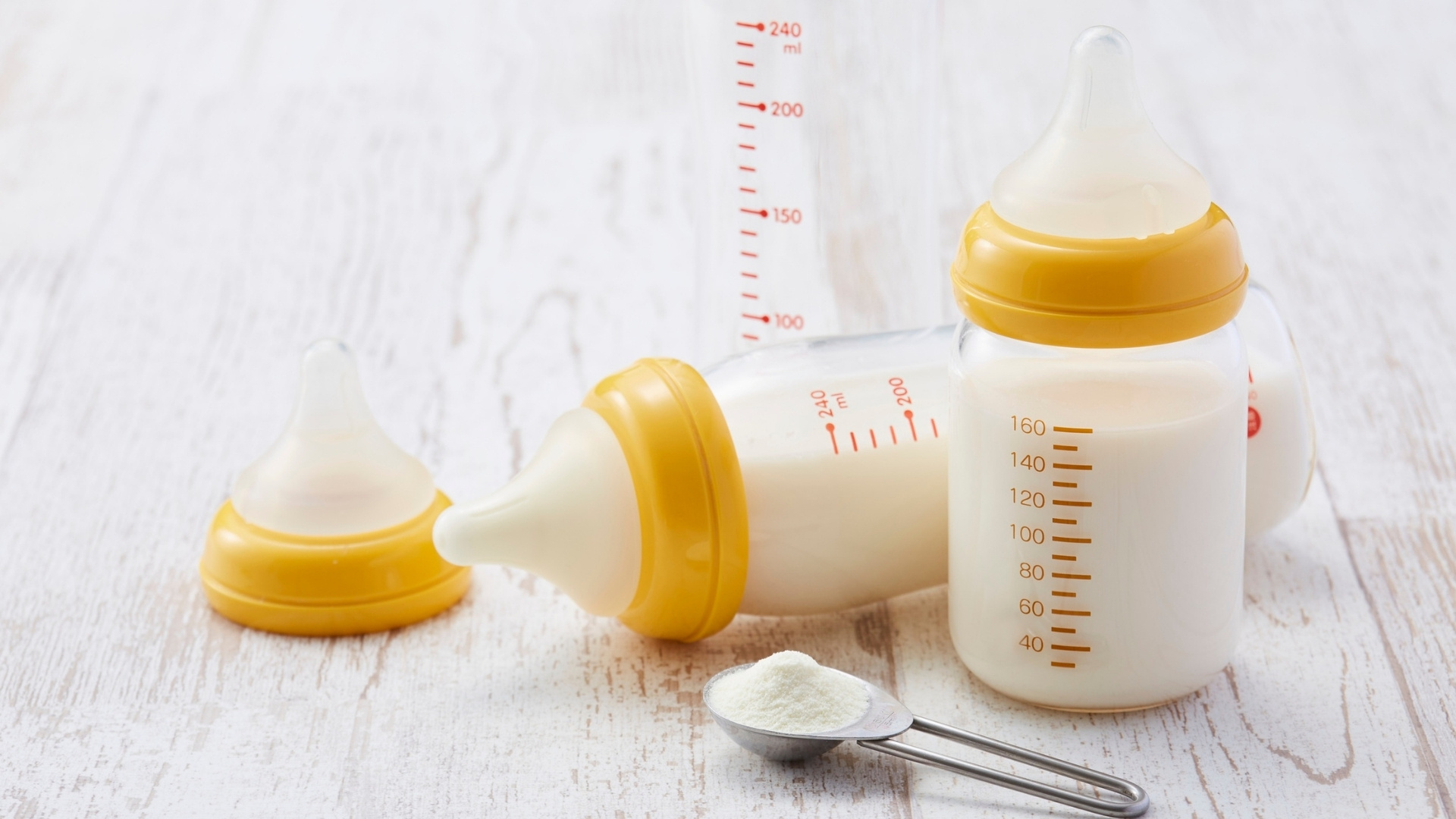
Combination feeding means feeding your baby both breast milk and infant formula, either in separate feeds or the same bottle. While the American Academy of Pediatrics (AAP) recommends exclusive breastfeeding for the first 6 months, many moms find that a mixed approach works better for their real-life needs.
Common situations where moms choose combination feeding include:
- Low Milk Supply Concerns: When milk production does not meet your baby’s daily intake needs, combination feeding helps maintain consistent calorie intake without compromising growth or weight gain expectations.
- Returning to Work or Limited Pumping Access: Busy work schedules or lack of private pumping spaces often lead moms to combine breastfeeding at home with formula feeds during working hours.
- Feeding Twins or Multiples: Producing enough milk for more than one baby can be physically demanding, so adding formula helps meet higher volume requirements without exhausting the mother.
- Medical or Weight-Gain Guidance: Pediatricians may recommend supplementing with formula if your baby shows slow weight gain, signs of dehydration, or needs higher-calorie intake for recovery.
- Mental and Physical Recovery Needs: Many moms use combination feeding to reduce exhaustion, recover postpartum, or share feeding responsibilities while continuing to offer some breast milk benefits.
Combination feeding gives you flexibility without taking away the value of breast milk, helping you find a routine that feels sustainable for both you and your baby.
Why Mixing Breast Milk and Formula Can Help You and Your Baby
Mixing breast milk and formula can offer a practical balance between nutrition and flexibility. Many moms find this approach helps meet their baby’s feeding needs while easing physical and emotional strain, especially during recovery, low supply phases, or changing daily routines.
This approach supports both your baby’s development and your day-to-day experience in meaningful ways:
- Maintains Immune Protection While Increasing Intake: Even partial breast milk feeds deliver antibodies like IgA (Immunoglobulin A), which help shield your baby from infections, while formula provides steady nutrients like protein, fats, and calories to support your baby’s daily needs.
- Helps Stabilize Weight Gain Patterns: When intake varies across feeds, adding formula ensures predictable calorie delivery, which pediatricians often monitor closely during early growth and weight check milestones.
- Supports Smoother Feeding Transitions Over Time: Combining both allows gradual sensory adaptation, helping babies adjust to differences in taste, smell, and texture without sudden feeding refusal.
- Creates Longer Gaps Between Feeds At Times: The formula is digested more slowly, which can help your baby stay full for a longer time and may help structure feeding intervals during certain parts of the day or night.
- Reduces Physical Strain During Postpartum Recovery: Mixing feeds can lower the frequency of direct breastfeeding or pumping sessions, giving your body more time to heal while still supporting your baby’s nutrition.
Finding this balance can make feeding feel more manageable, helping you care for your baby while also taking care of yourself.
Worried your baby might be reacting to formula or showing signs of sensitivity? Learn what to look for and safer options: Milk Allergy in Babies: Best Formula Options for Safe Feeding
Important Safety Rules Every Mom Should Know

When you’re mixing breast milk and formula, small preparation mistakes can affect your baby’s hydration, digestion, and safety. Following a few non-negotiable rules helps protect nutrient balance, prevent contamination, and give you peace of mind during every feed.
Critical safety principles that keep every mixed bottle safe and nutritionally accurate:
- Never Substitute Breast Milk For Water: Using breast milk instead of water when preparing formula creates a concentrated feed, which can put stress on your baby’s kidneys and affect their body’s fluid balance.
- Follow Exact Formula Measurements Every Time: Even small changes in how you mix the formula can make it too strong or too diluted, which can affect digestion and hydration for your baby.
- Respect Strict Discard Timelines After Feeding Begins: Once your baby drinks from the bottle, saliva introduces bacteria, requiring disposal within one hour to prevent immediate microbial growth.
- Monitor For Feeding Reactions Carefully: When combining both, symptoms like rash, gas, or vomiting become harder to trace, especially with cow’s milk protein sensitivities or dietary triggers.
- Check Formula Integrity Before Every Use: Always verify expiration dates, packaging seals, and storage conditions, since compromised formula can lose nutrient stability or harbor harmful bacteria.
Sticking to these safety rules helps you feed with confidence, knowing each bottle supports your baby’s health while avoiding preventable risks.
Breast Milk and Formula Storage Guidelines Made Simple
Storing breast milk, formula, and mixed bottles safely can feel confusing because each has different time limits. Once combined, the rules become stricter. Following guidance from trusted sources like the CDC can help you handle every bottle safely and with confidence.
Storage timelines and handling rules that keep every feed safe and fresh:
- Fresh Breast Milk Storage Windows: Freshly expressed milk can stay at room temperature up to four hours, in the refrigerator up to four days, and frozen up to six months.
- Prepared Formula Storage Limits: Formula should be used within 2 hours at room temperature or stored in the refrigerator and used within 24 hours after preparation.
- Mixed Bottle Follows Formula Rules: Once breast milk and formula are combined, the mixture must follow formula safety timelines, not breast milk’s longer storage allowances.
- Avoid Temperature Fluctuations During Storage: Repeated warming and cooling cycles can accelerate bacterial growth and break down nutrients, so only warm the portion you plan to feed immediately.
Keeping these timelines in mind makes feeding feel less stressful, helping you handle every bottle with confidence and care.
Are There Any Risks or Downsides to Mixing?

Mixing breast milk and formula is safe when done correctly, but it does come with a few practical and physiological trade-offs. Knowing these helps you make informed choices, avoid common frustrations, and adjust your feeding routine in a way that still supports your baby’s growth and your well-being.
Key risks and considerations to keep in mind when mixing both in the same bottle:
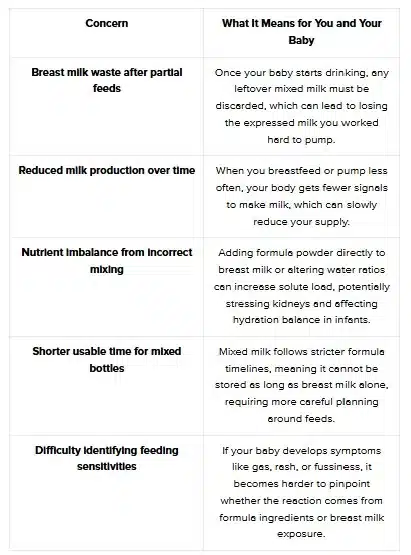
Mixing can still work beautifully for many moms, but being aware of these trade-offs helps you stay in control and adjust your approach with confidence.
If reflux is making feeding difficult, finding the right formula can make a big difference for your baby’s comfort: Best Formula for GERD in Infants With Persistent Reflux Symptoms
When to Talk to Your Doctor or Lactation Consultant
Combination feeding can feel like a balancing act, and getting expert guidance early can make a big difference. A pediatrician or lactation consultant can help you fine-tune feeding volumes, protect your milk supply, and make sure your baby is growing comfortably and safely.
Situations where reaching out for professional support can help you feel more confident and supported:
- Before Introducing Formula Into Your Routine: A specialist can calculate how many ounces your baby needs per feed or per day based on age, weight, and feeding patterns.
- If Your Baby Is Not Gaining Weight As Expected: Slower weight gain, fewer wet diapers, or growth chart dips may require adjusted feeding plans or targeted supplementation strategies.
- If You Notice Frequent Vomiting Or Digestive Discomfort: Repeated spit-ups, reflux signs, or unusual fussiness during feeds may signal intolerance, requiring evaluation of feeding technique or formula type.
- If Your Baby Refuses Breast or Bottle Feeds: Feeding refusal can stem from latch issues, flow preferences, or sensory changes, which a lactation consultant can assess and correct.
- If You Want To Maintain Milk Supply While Supplementing, Professionals can guide pumping frequency, timing, and breast stimulation techniques to help maintain consistent milk production alongside formula use.
You do not have to figure this out alone. Getting support early can make feeding feel more manageable and reassuring for both you and your baby.
Final Thoughts
As you’ve seen, can you mix breast milk and formula comes down to doing it safely while finding a routine that fits your real life, not a perfect plan. Many moms use this approach to keep feeding consistent while balancing recovery, supply, and daily demands.
If you are still unsure about mixing breast milk and formula, getting the right support can make things feel much easier. A well-suited breast pump can also help you maintain your supply while combining feeding methods.
You can also check your pump eligibility through insurance and explore breastfeeding support resources to make feeding feel more manageable day by day.
You’re allowed to choose what works for you and your baby. And you don’t have to figure it out alone.
FAQs
1. Can you mix a liquid formula with breast milk without changing digestion?
Yes, you can mix ready-to-feed liquid formula with breast milk without affecting digestion, as long as the formula is already properly prepared and not altered before combining.
2. How to supplement breast milk and formula without affecting feeding patterns?
To supplement effectively, offer breast milk first, then follow with formula based on your baby’s hunger cues to maintain feeding rhythm and avoid overfeeding.
3. Can I mix breastfeeding and formula during the same feeding session?
Yes, many moms nurse first and then offer a bottle of formula in the same session, allowing the baby to receive both comfort and additional nutrition.
4. What are combo feeding bottles and do you need special ones?
Combo feeding bottles are regular baby bottles used for mixed or alternating feeds. No special bottle is required, but slow-flow nipples help mimic breastfeeding patterns.
5. How to combine breast milk across multiple pumping sessions safely?
You can combine breast milk from different sessions if all milk is cooled to the same temperature first, which helps prevent bacterial growth and preserves quality.