











How to Get a Breast Pump Through Blue Cross Blue Shield: A Step-by-Step Guide

You just found out you are pregnant, and your to-do list is already a mile long. Managing insurance paperwork is the last thing you want to handle while you prepare for a baby.
You know your Blue Cross Blue Shield (BCBS) plan should cover a breast pump, but the “how” feels confusing. Between finding a prescription and choosing a vendor, it’s easy to hit a roadblock.
You have a right to this benefit, and accessing it should be straightforward. With the correct information, you can get your pump without the hassle and focus on what truly matters.
This guide breaks down exactly how to get a breast pump through Blue Cross Blue Shield. We’ll walk you through verifying your coverage, completing each step, and selecting the right pump for your life.
Key Takeaways
- Most BCBS plans cover a double electric pump due to the Affordable Care Act.
- You must have a specific prescription from your doctor that includes your Member ID and code E0603.
- Follow the 30-30 Rule by ordering 30 days before your due date for a 30-day delivery.
- Standard pumps are usually free, while wearable models may require an extra out-of-pocket upgrade fee.
- Avoid buying from retail stores like Amazon if you want your insurance provider to pay for it.
Does My Blue Cross Blue Shield Plan Cover a Breast Pump?
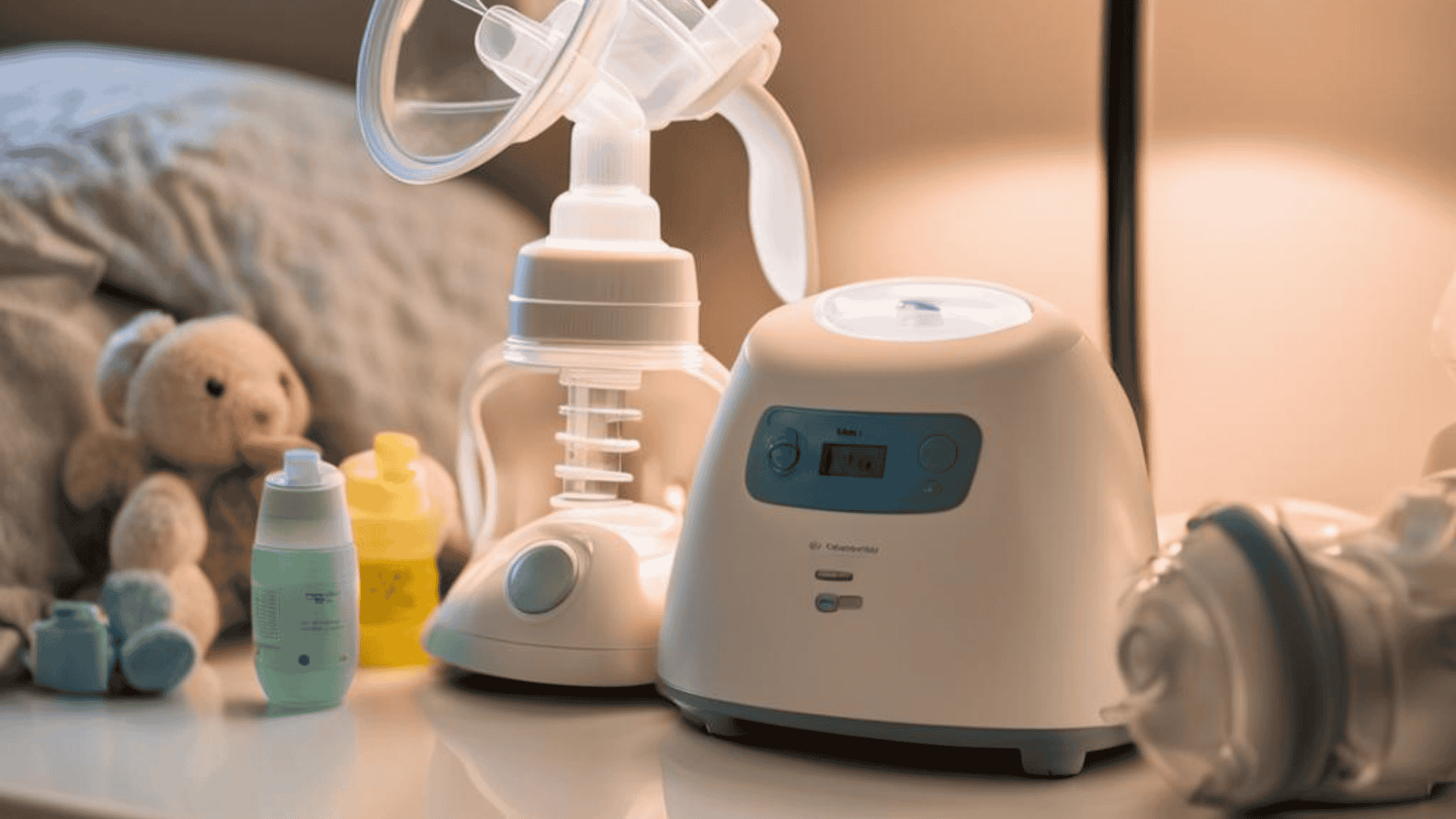
The Affordable Care Act requires most health plans to provide breastfeeding equipment and support for new mothers. Most Blue Cross Blue Shield plans cover a double electric breast pump at no cost to the member. You should check if your plan is a grandfathered plan that might have different coverage rules.
Standard pumps are often covered in full, but you might want a high-tech wearable or portable model. These premium pumps are considered upgrades and usually require you to pay a small out-of-pocket fee. Understanding the difference between these two categories helps you set a realistic budget for your maternity supplies.
Knowing your coverage type is the foundation for a successful claim before you begin the ordering process.
Also Read: Why Does My Breast Milk Smell When Pumping?
The Step-by-Step Workflow: How to Secure Your Pump
Getting your pump involves a specific order of operations to ensure your insurance claim is approved quickly. You should begin by locating your member ID card to find the specific contact information for your plan.
This helps you identify the correct regional office that will process your medical equipment request without delays.
Step 1: Check Your Rx Code
- Look at the back of your BCBS ID card to find your specific pharmacy or medical benefit codes.
- You need to ensure your plan includes coverage for Durable Medical Equipment, which is often abbreviated as DME.
- This simple check confirms that your policy supports the cost of a double electric breast pump for you.
Step 2: The Prescription Framework
- Ask your doctor to write a prescription for a “Double Electric Breast Pump” using the medical code E0603.
- Ensure your doctor includes your full legal name, date of birth, and BCBS Member ID on the script.
- This level of detail prevents the insurance company from rejecting your claim due to missing patient information.
Step 3: Selecting an In-Network DME Vendor
- You must use an approved Durable Medical Equipment vendor like Insurance Covered Breast Pumps to receive your benefits.
- These vendors work directly with BCBS to verify your coverage and handle all the complicated medical billing.
- Choosing an in-network partner ensures you do not have to pay full price and wait for reimbursement.
Insurance Covered Breast Pumps can help you get your BCBS-covered pump today. Our team will verify your benefits and coordinate with your doctor, so you don’t have to handle the process yourself. Get your breast pump today.
Special Situations to Consider
- If you have secondary insurance, you must inform the vendor so they can coordinate benefits between both plans.
- Mothers who recently changed jobs should verify that their new BCBS policy is active before they place an order.
- Staying updated on these small details prevents unexpected bills from arriving at your door after the baby is born.
Choosing the right pump is your next priority once you understand the steps to get your claim approved.
Choosing the Right BCBS-Covered Pump for Your Lifestyle
Selecting the right equipment depends on whether you will be working, traveling, or staying at home with a baby. Some mothers prefer the maximum power of a plug-in model for a faster and more productive pumping session. Other parents need the flexibility of a wearable pump that fits inside a bra for a hands-free experience.
The following table compares the most popular pumps covered by Blue Cross Blue Shield plans for new mothers:
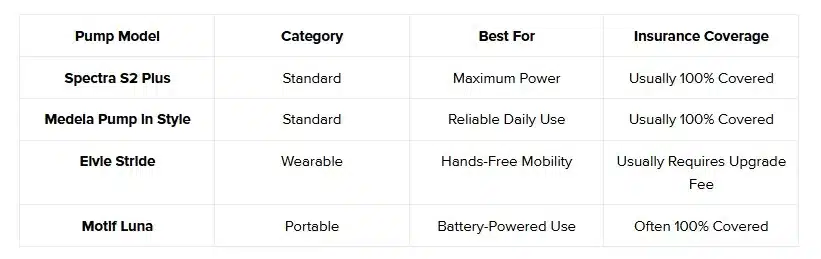
You might choose to pay an upgrade fee for wearable tech to count toward your annual health deductible. This is a smart way to get the best equipment while also meeting your yearly out-of-pocket insurance limits.
Planning your delivery timeline ensures your chosen pump arrives exactly when you need it for your first feeding.
Also Read: Breast Pumping Tips: Finding the Right Pump and Making It Work for You
Timeline & Logistics: When Should You Start the Process?

Timing is everything when you are trying to coordinate medical equipment deliveries with a fast-approaching due date. Most Blue Cross Blue Shield plans allow you to order your pump during your third trimester of pregnancy.
Starting early gives you plenty of time to learn how to use the machine before your baby arrives. Use these specific milestones to manage your timeline and avoid any last-minute stress during your final weeks:
1. The 30-30 Rule
Order your pump at least 30 days before your due date to ensure it arrives at your home early. This gives the insurance company 30 days to process the paperwork and ship the device to your front door. You will feel much better knowing your equipment is ready and waiting in your nursery before the big day.
2. Avoiding the Delivery Gap
Waiting until after the baby is born can cause a five to ten-day gap without a needed pump. This delay is often difficult for mothers who need to stimulate their milk supply or manage a painful engorgement. Having your pump on hand the day you come home from the hospital is a much better plan.
3. Understanding Plan Restrictions
Some BCBS plans have a specific rule that prevents them from shipping the pump until the baby is born. You should call your provider to see if they follow this “birth-contingent” shipping policy for their maternity benefits. Knowing this rule ahead of time helps you manage your expectations for when the box will actually arrive.
Anticipating potential problems with your claim is the best way to ensure a fast and easy approval process.
Common Pitfalls That Lead to Claim Denials (And How to Fix Them)
Even with great insurance, small mistakes in the application process can lead to an annoying and temporary claim denial. Most issues are caused by simple clerical errors or using a store that does not accept medical insurance. You can avoid these headaches by following the correct procedures and double-checking all of your personal information.
Follow these guidelines to steer clear of common obstacles and keep your breast pump order moving forward smoothly:
1. The Retail Purchase Trap
Blue Cross Blue Shield will often deny claims for breast pumps purchased directly from big retail stores like Amazon. These stores are not considered medical equipment providers and cannot bill your insurance company for the total cost.
Tip: Always order through a certified DME provider to ensure your insurance covers the full price of the pump.
2. The Name Discrepancy
Your doctor’s office must use the exact legal name that is listed on your Blue Cross Blue Shield ID. If your medical records use a maiden name but your insurance uses a married name, the claim fails.
Tip: Verify that your OBGYN has your current insurance name on file before they send the prescription over.
3. The Newborn Diagnosis Loophole
A few specific BCBS plans require a “medical necessity” diagnosis that can only be issued after the baby arrives. This can happen if the baby is in the NICU or if there are immediate latching or feeding issues.
Tip: If your claim is denied, ask your pediatrician to provide a letter of medical necessity for the equipment.
Selecting a partner to manage these details for you can make your entire pregnancy much easier and more enjoyable.
Why Working With Experts Makes a Difference

Managing your own insurance claims while pregnant can feel like a full-time job that you do not want. You have to call doctors, wait on hold with insurance agents, and track down missing medical files for weeks. This stress can take away from the joy of preparing for your new baby and your recovery period.
Insurance Covered Breast Pumps provides a simple solution by handling the entire process for you from start to finish. Our team specializes in coordinating with Blue Cross Blue Shield to ensure you get the best equipment possible. We take care of the hard work so you can focus on your health and your growing family.
- Free insurance verification for all major Blue Cross Blue Shield plans across the United States.
- Direct coordination with your OBGYN to secure the required medical prescription for your new pump.
- A wide selection of top brands, including Spectra, Medela, Elvie, and Motif, for you to choose from.
- Fast and free shipping directly to your home so you are ready for your baby’s first day.
Our goal is to support your breastfeeding journey by providing the high-quality tools and resources you need today.
Conclusion
Getting a breast pump through Blue Cross Blue Shield does not have to be a complicated or stressful experience. By following the steps in this guide, you can secure your equipment and focus on your new baby. Remember to use the 30-30 rule and work with an in-network provider to maximize your maternity benefits.
Insurance Covered Breast Pumps is here to handle the paperwork and the phone calls with your insurance company. We partner with the best brands and BCBS to deliver your pump at little or no cost. Our team is dedicated to making this part of your motherhood journey as easy and smooth as possible.
Check your insurance eligibility today to see which top-rated breast pumps are covered by your specific BCBS plan.
FAQs
Q. Does Blue Cross Blue Shield cover a second pump for a second pregnancy?
Yes, most BCBS plans cover one new breast pump for every new pregnancy you have under your policy. You will still need a new prescription from your doctor for the current pregnancy to start the claim.
Q. Will BCBS pay for milk storage bags and replacement parts?
Many Blue Cross Blue Shield plans cover replacement supplies like tubing and valves every few months of your journey. You should check your specific plan to see if milk storage bags are included in your maternity supply benefits.
Q. Can I get a hospital-grade pump through Blue Cross Blue Shield?
BCBS usually covers hospital-grade pump rentals only when there is a documented medical necessity, like a NICU stay. Most mothers find that a high-quality personal double electric pump meets all of their daily needs at home.
Q. Is Elvie or Willow covered by my Blue Cross Blue Shield insurance?
BCBS often covers the base cost of these pumps, but you will likely pay an upgrade fee for them. These wearable models are popular but are priced higher than the standard equipment usually covered by most basic plans.
Q. What if I bought a pump at Target and want a refund from BCBS?
It is very rare for BCBS to reimburse a retail purchase made at a store like Target or Walmart. It is much safer to order through a DME provider that bills your insurance directly for the equipment.