











Choose the Best Compact Breast Pump Based on Your Lifestyle

A compact breast pump can save you time and hassle, but with so many options out there, choosing the right one can feel overwhelming.
If you’re constantly on the go, traveling, working, or just managing everyday tasks, you need a pump that’s small, portable, and easy to use.
This guide will walk you through how to find the perfect compact breast pump for your lifestyle and how to get it covered through your insurance, so you can focus on what matters most: caring for your baby.
Keep reading to simplify your decision and get the support you need.
Key Takeaways
- Compact breast pumps offer portability and convenience without compromising efficiency.
- Smaller designs are ideal for busy moms who need quick, discreet pumping sessions.
- Suction power and performance vary, so it’s important to choose based on personal pumping needs.
- Wearable pumps offer hands-free convenience but may not match the suction strength of portable or manual options.
- Insurance coverage is often available for compact breast pumps, making them more accessible.
Insurance Coverage for Compact Pumps: What You Need to Know
While breast pump insurance coverage is often available, it can vary significantly by plan and provider. To ensure you’re getting the best coverage, verify which pumps are eligible and the steps you need to take to secure one. Different plans have different eligibility windows and coverage requirements, including the potential for upgrades to more advanced pumps or replacements.
What does this mean? You may need to confirm:
- Eligibility Period: Some plans only allow you to order a pump during pregnancy, while others extend coverage up to one year postpartum.
- Covered Brands & Models: Your insurance might limit you to specific brands or types, so make sure your preferred compact pump is included.
- Prescription Requirements: Some plans require a prescription from your doctor before you can receive your pump.
Efficiency of Compact Pumps: What Does It Mean?

When we say compact pumps offer efficiency, we’re referring to the pump’s ability to extract milk effectively within a reasonable time. Efficiency involves multiple factors, including:
- Suction Power: How well the pump can stimulate letdown and express milk. While compact pumps are smaller, many models still provide strong suction similar to larger pumps.
- Battery Life: Compact pumps often come with rechargeable batteries, providing convenience for moms on the go, though battery life can vary by model.
- Milk Output: Efficiency also refers to how quickly a compact pump can empty the breast, so you don’t need to spend extra time pumping.
While compact pumps are smaller, many models still match traditional pumps in suction and performance, ensuring they meet your needs despite their portable size.
What Is a Compact Breast Pump?
A compact breast pump is a smaller, portable device designed to express milk efficiently while being easy to carry and store. These pumps are ideal for moms on the go and offer the convenience of a lightweight design without sacrificing suction power.
Whether for quick sessions at work, travel, or occasional pumping, compact pumps are a practical solution for busy mothers.
Portable Pumps vs Wearable Pumps
Both portable and wearable pumps offer mobility, but each comes with distinct features that suit different needs and preferences.
a) Motor-based Portable Pumps
These battery-operated pumps offer strong suction and are portable, but they require a carrying case for the motor and accessories, making them great for quick sessions when on the go.
b) True In-Bra Wearable Pumps
Wearable pumps fit directly inside the bra for hands-free pumping, offering discreet, silent operation, ideal for multitasking. However, their suction power is typically lower compared to motorized portable pumps.
c) Practical Day-to-Day Differences
Motorized portable pumps are typically stronger and more efficient but less discreet. Wearable pumps are more discreet and convenient, especially for multitasking, but offer slightly less suction power.
Who Benefits Most from a Small Breast Pump?
Compact pumps are best suited for specific lifestyles and needs, including busy work schedules, frequent travel, and exclusive pumping.
a) Working Moms
Compact pumps are great for working mothers who need to express milk during breaks or while working, thanks to their portability and ease of use.
b) Frequent Travelers
For frequent travelers, a compact pump is an essential tool, fitting easily in luggage and allowing for quick pumping sessions while traveling or staying in hotels.
c) Exclusive Pumpers Needing Mobility
Exclusive pumpers will appreciate the compact pump’s mobility, making it easier to pump while balancing work and daily activities without being tied to an electric pump.
d) Occasional Pumpers
For occasional pumpers, compact pumps offer a convenient, quick solution without the need for larger, more expensive equipment, making them perfect for sporadic pumping needs.
Suggested Read: How to Get a Breast Pump Through Blue Cross Blue Shield: A Step-by-Step Guide
Why Compact Breast Pumps Are in High Demand?
Compact breast pumps are in high demand as modern moms seek portable, efficient, and convenient solutions for their pumping needs. Here are the key reasons why:
- Pumping at Work Without an Outlet: Battery-operated or manual, compact pumps let moms pump discreetly during breaks, making them ideal for quick sessions in offices or shared spaces, without needing an outlet.
- Breast Pump Travel & Commuting: Their small size and battery-powered or manual operation make compact pumps perfect for travel. Moms can pump anywhere, even without power access, making them highly portable.
- Discreet Pumping & Noise: Compact pumps are quieter than traditional models, enabling discreet use in public places like coffee shops or offices. The low-noise design ensures pumping doesn’t draw unwanted attention.
- Reduced Setup & Cleanup Time: With fewer parts, compact pumps are easier to assemble and clean, saving moms time and ensuring they can focus on other important tasks.
This combination of portability, quietness, and ease of use makes compact pumps essential for moms managing work, travel, and daily life.
Choose the Right Compact Pump for Your Needs

When selecting a compact breast pump, it’s crucial to assess your personal needs, whether that’s for travel, comfort, or daily usability.
Different pumps offer varied features, so making the right choice involves understanding which characteristics matter most to you.
Suction Strength vs Comfort Balance
Finding the right balance between strong suction and comfort is crucial for a smooth pumping experience. Here’s why:
- Suction Strength: While strong suction helps express more milk in less time, it can sometimes cause discomfort or even nipple pain.
- Comfort Balance: A pump that’s too gentle might not empty the breast fully, while too much suction can lead to irritation. The ideal pump should give you efficient milk expression while keeping comfort at the forefront.
Noise, Discretion & Daily Usability
When using a compact pump on a daily basis, noise and discretion become important. These factors are especially critical for working moms or anyone pumping in public:
- Noise: Some pumps can be loud, making them difficult to use discreetly in shared spaces. A quiet, compact pump allows for more subtle pumping without drawing attention.
- Discretion: A pump that’s discreet and easy to use in public places gives you more freedom to express milk on the go.
- Daily Usability: Consider how easy the pump is to assemble, clean, and maintain for daily use. Fewer parts and easy-to-assemble designs ensure you don’t waste time.
The ease of use and discreet nature of the pump are crucial for moms who rely on it for daily milk expression.
Compact Breast Pump Comparison Table
This comparison table helps you quickly evaluate different compact pump options based on their suitability for your needs. Whether you’re looking for wearable, manual, or motorized pumps, this breakdown will guide you through the key factors to consider when selecting the right pump for your routine.
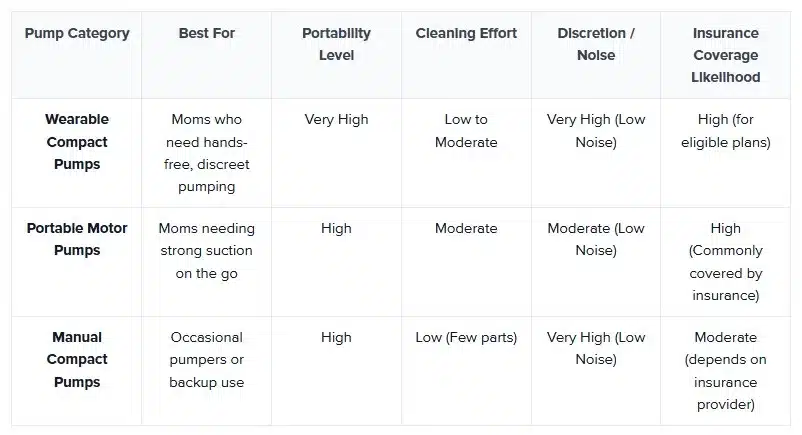
Explanations:
- Pump Category: The type of compact pump, ranging from wearable (hands-free), motorized portable (battery-operated), and manual (hand-operated).
- Best For: This column highlights the ideal user scenario for each type of pump, ensuring you can find the one suited to your routine.
- Portability Level: Reflects how easy it is to carry and use the pump on the go, with wearable pumps offering the highest mobility.
- Cleaning Effort: Indicates how much effort is required to clean the pump based on its number of parts and design complexity.
- Discretion / Noise: Highlights the noise level of each pump, ensuring that you can pump discreetly in public or shared spaces.
- Insurance Coverage Likelihood: This column offers insight into how likely each type of pump is covered by insurance, saving time and effort during the process.
How Compact Breast Pumps Perform in Real Life
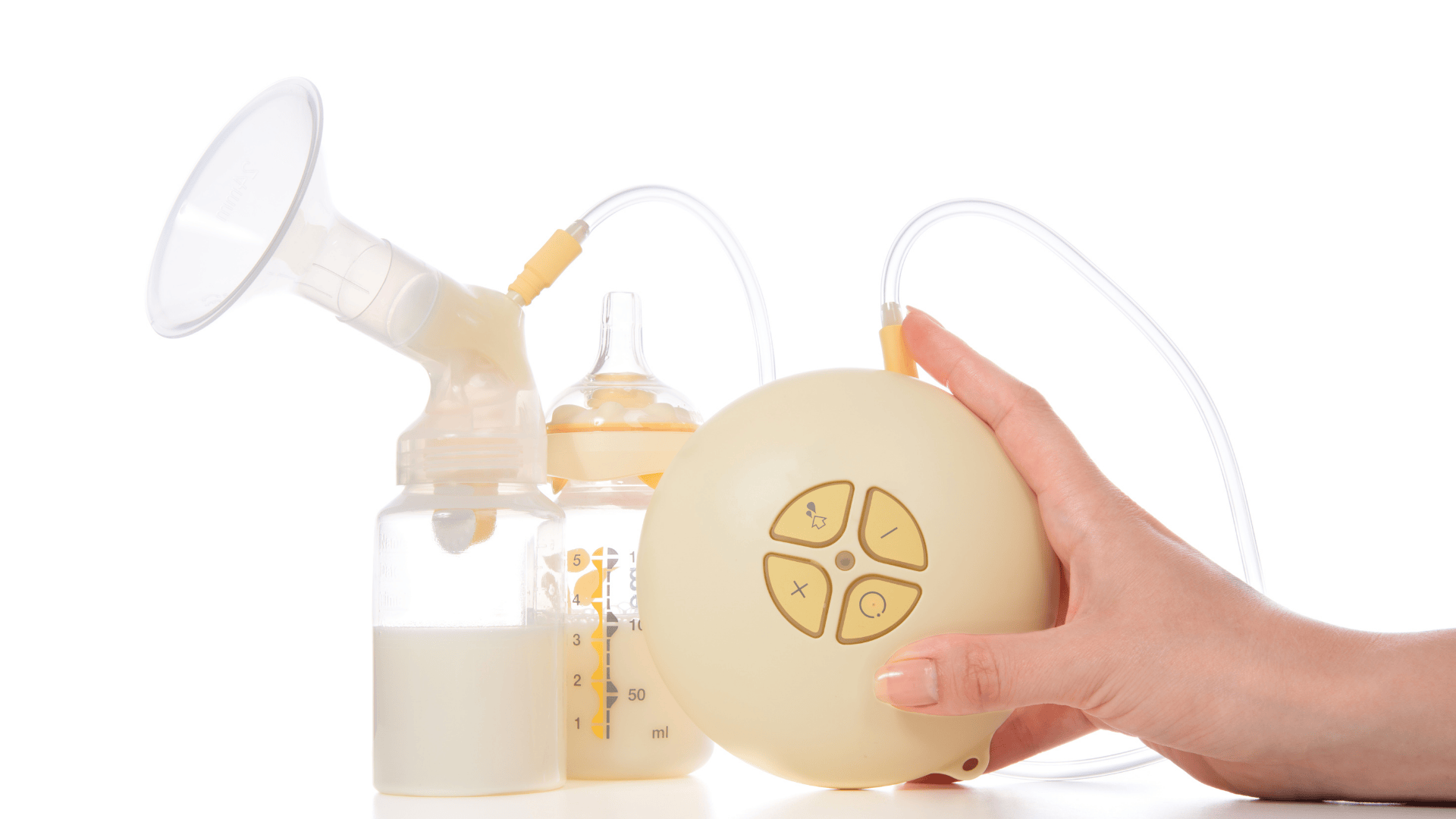
Compact breast pumps are designed to provide a convenient solution for moms on the go, but understanding how they perform in real-life situations is essential for making the best choice. Here’s how smaller pumps stack up in terms of milk output, strength, and daily use.
a) Milk Output Expectations with Smaller Pumps
Compact pumps generally have lower suction power than larger models, leading to moderate milk output.
Portable and wearable pumps are best suited for occasional or short pumping sessions, while manual pumps work well for quick relief but may cause hand fatigue during longer sessions.
b) Are Wearable Pumps Strong Enough?
Wearable pumps are designed for hands-free pumping but often have lower suction power than motorized portable pumps:
- Strength Comparison: Best for moms with an established milk supply, wearable pumps work well for occasional or light pumping, but may not meet the needs of exclusive pumpers.
- Output Expectations: They are perfect for short or travel-related sessions, but may struggle to meet the output needs of moms with low milk supply.
c) When Portable Pumps Make More Sense?
Portable motor pumps are ideal for moms who need quicker milk expression with stronger suction. They offer a reliable solution for frequent pumping, providing efficiency and convenience even during travel.
d) Situations Where Manual Pumps Still Win
Manual pumps are perfect for occasional use or backup, offering portability and simplicity. They’re lightweight, easy to clean, and don’t require charging, making them convenient for quick sessions or when on the go.
Are Compact Breast Pumps Covered by Insurance?

Understanding if a compact breast pump is covered by insurance is crucial, as many moms seek affordable solutions for expressing milk. Coverage often varies, but knowing the typical coverage scenarios and how to qualify can ease the process.
What Insurance Typically Covers?
Most insurance plans, under the Affordable Care Act, cover the cost of breast pumps. However, the type of pump and whether it’s manual, portable, or motorized can influence whether it’s included.
- Manual Pumps: Often covered with little to no cost, but may vary based on the plan.
- Portable & Wearable Pumps: Frequently covered by insurance, though it depends on your provider’s coverage details and whether the model is deemed necessary.
In most cases, insurance covers the full cost of a standard, non-electric pump, or a small upgrade fee if you opt for a more advanced model.
Why Coverage Differs by Plan?
Insurance coverage for breast pumps varies significantly between plans and providers. Understanding the key factors that impact coverage can help you avoid unexpected costs:
- Plan Benefits: Some plans cover only basic models, while others may include advanced or wearable pumps.
- Approved Manufacturers: Coverage may be restricted to specific brands or models, limiting your options.
- Eligibility Timing: Some plans may cover pumps only during pregnancy, while others extend coverage up to one year postpartum. Be sure to confirm your plan’s eligibility window.
- Other Factors: Some insurers require a prescription or have guidelines on what qualifies as a “covered” pump. Verifying these details early helps avoid delays.
When are Compact Pumps Considered Upgrades?
Some compact pumps, such as wearable or premium motorized models, may be considered upgrades by your insurer, potentially requiring an additional fee or partial payment.
Always check with your insurance provider to understand if these models incur extra costs and whether they are classified as upgrades.
Replacement Parts & Supplies Coverage
Insurance may also cover replacement parts and supplies, but details vary by plan:
- Parts: Items like valves, tubing, and flanges are typically covered, though some plans limit the number of replacements.
- Supplies: Coverage for storage bags, bottles, and other accessories may apply, but limits could be in place.
Verify the details of your plan to avoid unexpected out-of-pocket costs for replacement parts and supplies.
How to Get a Compact Breast Pump Through Insurance

Navigating the process of getting a compact breast pump through insurance is easier than it may seem. Follow these steps to ensure that you receive the pump that suits your needs without stress.
Step 1: Check Your Insurance Eligibility
Start by contacting your insurance provider to verify your breast pump eligibility. Many plans cover breast pumps under preventive care, but it’s essential to confirm the specifics:
- What’s Covered: Verify whether a manual or portable pump is covered under your plan.
- Eligible Models: Ensure that the models you prefer are included in your coverage options.
Some providers may require you to work with a Durable Medical Equipment (DME) supplier.
Step 2: Select Your Preferred Pump Type
Once you’ve confirmed eligibility, choose the type of pump that best fits your needs, such as:
- Manual pumps: Ideal for occasional use, travel, or backup.
- Portable pumps: Great for daily pumping with the convenience of mobility.
- Wearable pumps: Best for hands-free, discreet pumping.
Review the pumps that are available under your insurance coverage and consider what best fits your daily routine.
Step 3: Prescription & Provider Coordination
Most insurance plans require a prescription from your doctor or OB/GYN to qualify for coverage. Your DME supplier will typically handle this, but it’s essential to:
- Request a prescription for the specific pump you want.
- Coordinate with your provider to ensure they are on board with the pump model and your coverage needs.
This step can help avoid unnecessary delays in receiving your pump.
Step 4: Order & Shipping Process
Once your eligibility and prescription are verified, the next step is placing your order through your DME supplier or directly with the pump company. Here’s what happens next:
- Order Placement: Your pump will be shipped directly to your home, or you may need to pick it up at a local provider.
- Insurance Billing: Your insurance provider will be billed for the pump, and any out-of-pocket costs (such as upgrade fees) will be communicated beforehand.
With the right paperwork and coverage verification, the process should be smooth and hassle-free. Check Your Insurance Eligibility for a Compact Breast Pump.
Why Moms Use Insurance-Covered Breast Pumps (ICBP)?
For many moms, navigating the process of obtaining a breast pump through insurance can be stressful and confusing. That’s why Insurance Covered Breast Pumps (ICBP) is a go-to solution. ICBP simplifies the entire process, from choosing the right pump to handling all the paperwork and insurance coordination, ensuring that moms get the right equipment without the hassle.
No Insurance Paperwork Confusion
Insurance paperwork can be complex due to numerous forms and steps, causing confusion about required actions.
- ICBP handles all the paperwork for you, ensuring that you don’t have to deal with confusing claims or missed forms.
- You can rest easy knowing that ICBP will verify your eligibility, submit necessary documents, and ensure you get your pump without delays or confusion.
Help Choosing the Right Pump
With so many breast pump options on the market, it can be hard to decide which one is the best fit for your needs. Some moms worry about choosing the right pump, considering factors like comfort, suction power, and portability.
- ICBP helps you navigate this decision by offering personalized recommendations based on your needs and lifestyle.
- Whether you’re looking for a portable pump for travel or a hospital-grade model for frequent use, ICBP ensures you have access to trusted models that align with your requirements.
Access to Trusted Brands (Medela, Spectra, Elvie, Willow, Motif, Ameda)
Moms want reliable, trusted brands when it comes to breast pumps, as these brands offer quality, performance, and durability. ICBP partners with top-rated breast pump brands, including:
- Medela: Known for hospital-grade efficiency and ease of use.
- Spectra: Renowned for quiet operation and strong suction.
- Elvie & Willow: Leading wearable pumps offering hands-free convenience.
- Motif & Ameda: Affordable yet high-performance options for moms with varying needs.
By working with ICBP, moms can access a range of reliable brands and select the best breast pump that fits their preferences and lifestyle.
Avoiding Claim Errors & Delays
Navigating the claims process can be frustrating, especially when errors or delays occur. Many moms face the stress of dealing with claim denials or waiting weeks to receive their pump.
- With ICBP, all claims are verified and processed accurately, ensuring you avoid errors or delays.
- ICBP handles everything from submitting prescriptions to ensuring your insurance covers the correct model, giving you peace of mind and a smooth experience.
Compact Breast Pump Travel & Daily Use Tips
Compact breast pumps are designed for portability, making them ideal for daily use and travel. Whether commuting, working, or navigating a busy routine, knowing how to maximize your pump’s potential will help ensure efficient milk expression without disruption.
a) Travel Packing Essentials
To ensure a smooth pumping experience while traveling, pack these essentials:
- Portable Pump: Choose a lightweight pump with rechargeable batteries or no need for an outlet.
- Extra Bottles & Storage Bags: Pack enough milk storage items to match your pumping schedule.
- Cleaning Wipes: Carry disinfectant wipes or sanitizing wipes for quick cleaning on the go.
- Pump Bag: Use a dedicated bag to organize your pump and accessories.
b) Battery & Charging Planning
Ensure your pump stays powered throughout the day:
- Portable Power: Pack spare batteries or a portable charger.
- Charging Station: Bring a power bank and charging cable for rechargeable pumps.
- Plan Your Schedule: Sync your pump usage with your travel itinerary to avoid running out of power.
c) Cleaning Strategy
Keep your pump parts clean when on the go:
- Portable Sanitizers: Use a steam sterilizer bag or wipes for quick cleaning.
- Extra Parts: Bring spare flanges, valves, and tubing to swap out as needed.
- On-the-Go Cleaning: If no sink is available, use disinfecting wipes to clean parts between sessions.
d) Discreet Pumping
For moms pumping in public or shared spaces:
- Wearable Pumps: Enjoy hands-free pumping with discreet designs that fit under clothing.
- Cover-Up Options: Bring a nursing scarf or poncho for privacy in public areas.
- Noise Reduction: Opt for quiet pumps to ensure a discreet experience even in quieter spaces.
Conclusion
Choosing a compact breast pump is a smart decision for moms who need a convenient, portable, and efficient solution that fits seamlessly into their busy lives. Traveling, working, or managing daily tasks, a compact pump offers the flexibility and discretion you need, without compromising on comfort or performance.
By now, you should feel more confident in selecting the right pump for your lifestyle, whether it’s the Medela Harmony, the Lansinoh Manual, or another compact model. These pumps are perfect for occasional pumping, backup use, and on-the-go situations, making them a valuable addition to your breastfeeding journey.
Before making your final decision, take a moment to check your insurance coverage options and understand what’s available to you.
Visit Insurance Covered Breast Pumps to check your eligibility or contact them for assistance in navigating your options.
FAQs
Q1. Does a compact breast pump affect milk supply?
A1. Compact breast pumps generally do not affect milk supply if used properly. However, they may be less powerful than full-size electric pumps, which can lead to longer pumping sessions. For moms with low milk supply or those who need to pump frequently, manual and wearable pumps may take more time to express milk compared to hospital-grade pumps.
Q2. What is the smallest breast pump available?
A2. The smallest breast pumps available are wearable pumps like the Elvie and Willow pumps, which fit discreetly inside your bra. These pumps offer true hands-free pumping, making them highly portable and ideal for moms on the go. While manual compact pumps are also small and portable, wearable pumps provide even more mobility.
Q3. Are wearable pumps good for exclusive pumping?
A3. Wearable pumps, like Elvie and Willow, are convenient and discreet but may not be the best choice for exclusive pumping. These pumps are generally designed for occasional use or light pumping sessions. For exclusive pumping, you may want to consider a more powerful pump with stronger suction, such as a motorized portable or electric pump that offers more efficient milk expression.
Q4. Can insurance fully cover compact pumps?
A4. Yes, many insurance plans fully cover compact pumps, including manual and motorized portable models, as part of preventive care under the Affordable Care Act. However, if you opt for a wearable pump or a higher-end model, there may be an additional cost or upgrade fee depending on your insurance provider and plan. It’s important to check with your insurer to confirm the details.
Q5. When should you order a breast pump through insurance?
A5. It’s best to order your breast pump through insurance around your third trimester, typically 3-4 weeks before your due date. Insurance providers often require a prescription from your doctor and may only cover the cost once you’re in the later stages of pregnancy. By ordering early, you ensure the pump is delivered before your baby arrives, so you’re ready to start your breastfeeding journey without delay.